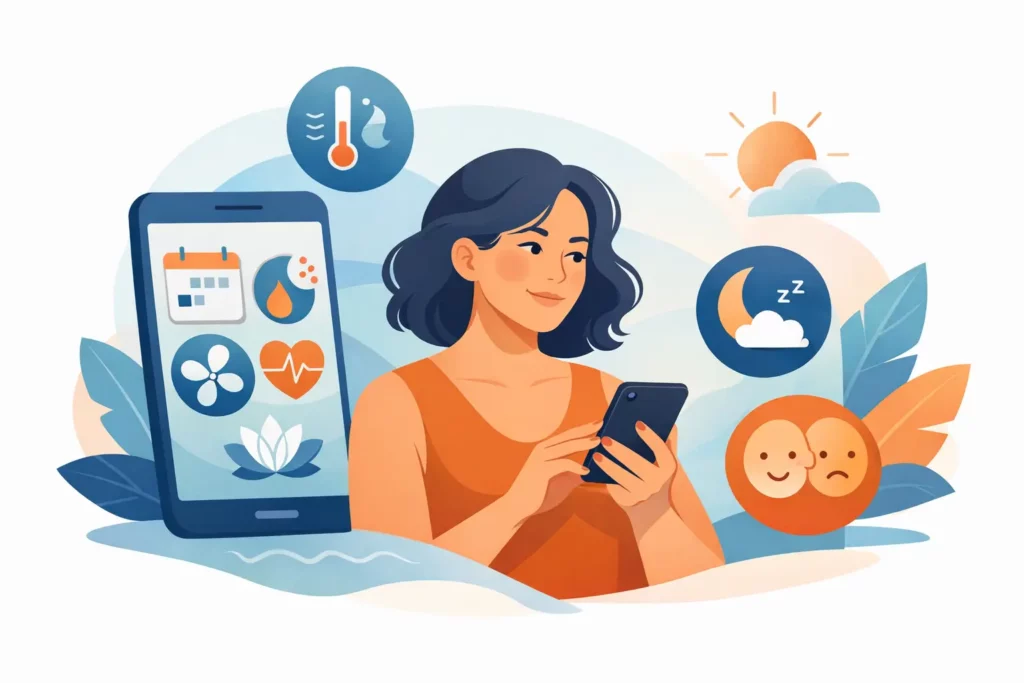
The moment you start wondering whether your sleep, mood, energy, and cycle changes are connected, a phone app can feel like a lifeline. If you are searching for the best app for menopause symptoms, what you usually want is not more noise. You want clarity, patterns, and something you can actually use when your body feels unfamiliar.
That distinction matters. Many health apps promise support, but menopause is not a simple checklist problem. Symptoms can shift month to month, overlap with stress, and show up differently in perimenopause than they do after your periods stop. The right app should help you feel more informed and more prepared, not more overwhelmed.
What makes the best app for menopause symptoms?
The best app for menopause symptoms is rarely the one with the flashiest design or the longest feature list. It is the one that helps you notice what is happening in your body, organize it in a way that makes sense, and bring that information into real-life decisions.
For many women, the most useful feature is symptom tracking that goes beyond hot flashes. Sleep disruption, anxiety, brain fog, fatigue, headaches, mood changes, cycle irregularity, vaginal dryness, and joint discomfort can all be part of the picture. If an app only tracks one or two symptoms, it may miss the pattern that explains why you have felt off for weeks.
A strong menopause app also needs context. Logging a symptom without seeing trends over time is only mildly helpful. What tends to matter more is whether you can spot connections – for example, whether poor sleep clusters around cycle changes, whether caffeine worsens night sweats, or whether anxiety rises after several days of fragmented rest.
Just as important, the app should make it easier to talk with a healthcare provider. If your notes stay buried in a dashboard that is hard to interpret, they will not help much at an appointment. Look for tools that organize symptoms into a clear timeline, summary, or report you can reference when you need to describe what has been happening.
The features that actually help
A good app should feel supportive without trying to replace medical care. That balance is especially important in menopause, where symptoms can be hormonal, lifestyle-related, medication-related, or tied to another health issue entirely.
Symptom tracking that reflects real life
The most helpful apps let you track more than one thing at a time. Menopause symptoms often travel together. A night of waking up drenched in sweat may lead to irritability, low concentration, and an afternoon crash the next day. If an app treats each symptom as isolated, it misses the lived experience.
Flexible tracking matters too. Some women want daily logging, while others need a simpler check-in a few times a week. If the process feels tedious, most people stop using it. The best tool is one you will return to consistently.
Pattern recognition instead of raw data overload
Data alone is not reassurance. Seeing a wall of entries can even make you feel worse if there is no guidance built into the experience. Better apps help organize information into trends you can understand quickly.
That might mean charts showing symptom frequency, notes tied to cycle timing, or prompts that help you reflect on possible triggers like alcohol, stress, food, or sleep changes. The goal is not to turn you into your own clinician. It is to help you arrive at a clearer picture of what your body may be responding to.
Education that is calm and credible
This is where many apps fall short. Some track well but offer little explanation. Others flood users with generic wellness content that sounds polished but says very little.
If an app includes educational support, it should explain symptoms in plain language and acknowledge uncertainty where it exists. You are not imagining it, and you also do not need exaggerated claims. Menopause support should help you understand what may be common, what may be worth monitoring, and when it is time to check in with a healthcare professional.
Appointment preparation tools
This feature is easy to overlook until you need it. Many women arrive at a visit knowing they feel different but struggle to explain how often symptoms happen, how severe they are, or how long they have been going on.
An app that helps you summarize changes, organize questions, or generate a simple symptom history can be far more valuable than one packed with lifestyle badges and reminders. Good care often starts with better communication.
What to be cautious about
Not every app marketed to midlife women is built with real menopause needs in mind. Some are repurposed period trackers with a few menopause labels added on top. Others are so broad that they lose practical value.
Be cautious if an app makes big treatment claims, presents supplements as a cure-all, or implies that symptom tracking alone can tell you exactly what is happening hormonally. Menopause is a transition, not a single data point. Tracking can support awareness, but it cannot diagnose every issue.
It is also worth watching for apps that make you do too much work for too little insight. If you spend ten minutes entering data and get nothing meaningful back, that is not support. That is homework.
Privacy matters as well. Menopause symptoms touch mental health, sexual health, sleep, medications, and cycle history. Before you commit, check whether the app is clear about how your data is stored and used. Trust should extend beyond the interface.
The best app for menopause symptoms depends on what you need most
There is no single perfect app for every woman, because the season you are in shapes what support feels most useful.
If you are in early perimenopause
You may still be asking, Is this really hormonal? In that stage, the best app is often one that helps you track irregular cycles alongside less obvious symptoms like irritability, waking at 3 a.m., headaches, or sudden changes in focus. You are looking for pattern recognition and education that validates subtle shifts.
If symptoms are affecting daily life
When hot flashes, sleep issues, anxiety, or brain fog are starting to interfere with work or relationships, you may need an app with more structured symptom severity tracking and better reporting. In this phase, the app should help you document impact, not just occurrence. That can make clinical conversations more productive.
If you are already working with a healthcare provider
The most useful tool may be one that helps you monitor response to treatment or lifestyle changes over time. Whether you are adjusting hormone therapy, trying nonhormonal options, or focusing on sleep and stress support, it helps to see whether things are actually improving instead of relying on memory alone.
How to choose without getting overwhelmed
Start by being honest about what you want help with right now. If your main issue is remembering symptoms before an appointment, you do not need the most complex app on the market. If your bigger need is understanding fluctuating patterns across months, a simple note-taking tool may not be enough.
It can help to ask three questions before downloading anything. Does this app track the symptoms I am actually having? Does it make my information understandable? Does it support conversations with a healthcare professional rather than replace them?
If the answer to any of those is no, keep looking.
A calm, well-designed tool often works better than an ambitious one that tries to do everything. Menopause already brings enough mental load. Your app should reduce that load.
A better standard for menopause support
Women in midlife have spent far too long piecing this together on their own. The growing interest in digital menopause tools is a good sign, but it also raises the standard. The best app for menopause symptoms should not treat your experience like a niche add-on or a wellness trend. It should respect the fact that you are trying to make sense of real changes that affect your sleep, confidence, work, and quality of life.
That is why practical support matters more than hype. A useful app helps you track, reflect, prepare, and advocate for yourself. It gives shape to symptoms that can otherwise feel scattered. And if it includes education, that education should leave you feeling steadier, not more frightened.
At Novelle Journey, that kind of clarity is the standard women deserve. Whether you use a dedicated menopause app, printable trackers, a journal, or a combination of tools, the goal is the same: to help you see your patterns clearly enough to make informed next steps.
You do not need a perfect app. You need support that helps you feel more grounded in your own experience, and more confident when it is time to ask for care.
This article is for educational purposes only and is not medical advice. Always consult a qualified healthcare provider about your health.