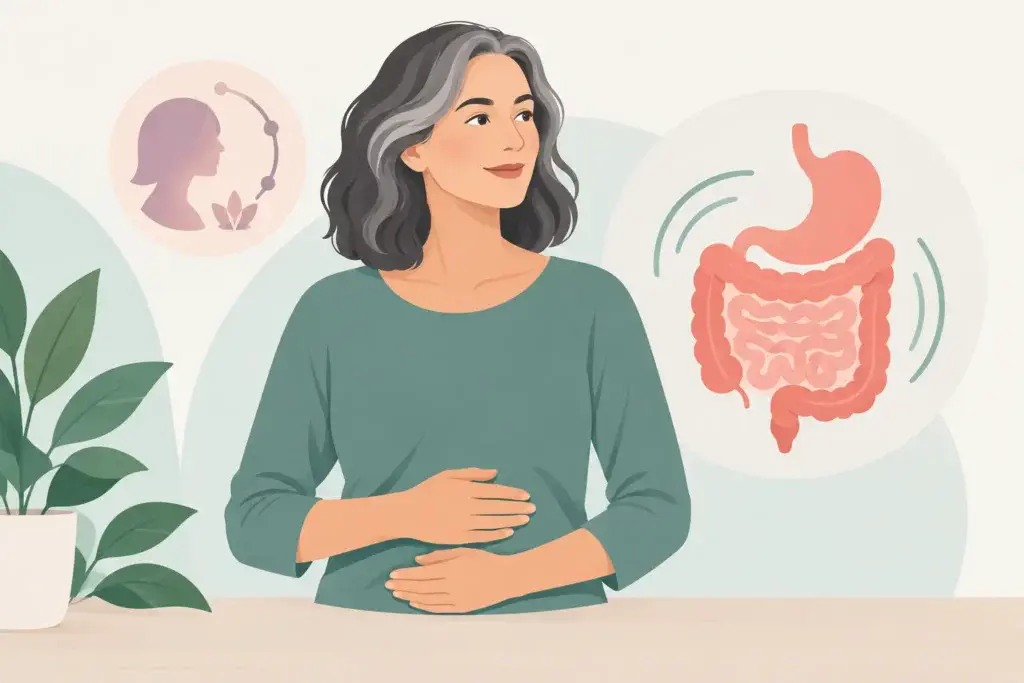
A meal that never used to bother you suddenly leaves you bloated. Your usual morning routine changes. Reflux shows up at night, or constipation seems to appear out of nowhere. If you are asking, does perimenopause affect digestion? the short answer is: it can. You are not imagining the connection, though digestive symptoms always deserve a thoughtful look rather than an automatic assumption that hormones are the only cause.
Perimenopause is the transition before menopause, when estrogen and progesterone levels begin to fluctuate. It can last several years, and its timing and symptoms vary widely. Digestive changes may be part of the picture for some women, alongside more familiar shifts in sleep, periods, mood, and temperature regulation.
This article offers general education, not personal medical advice. New, persistent, or concerning digestive symptoms should be discussed with a qualified healthcare professional.
Does Perimenopause Affect Digestion?
Changing hormones may influence how the digestive system feels and functions. Estrogen and progesterone interact with many systems throughout the body, including the gut, the nervous system, and the muscles that help move food through the digestive tract. When those hormone levels rise and fall unpredictably, some women notice changes in bowel habits, bloating, nausea, or reflux.
The research does not support a simple rule that perimenopause causes every digestive symptom. Gut health is shaped by many factors: stress, sleep, diet, activity, medications, underlying health conditions, and the natural effects of aging. Still, if digestive discomfort follows a pattern with cycle changes, hot flashes, disrupted sleep, or a period of heightened stress, that pattern is useful information.
Why hormone shifts may feel like gut shifts
Progesterone can have a relaxing effect on smooth muscle, including muscles in the digestive tract. For some people, higher progesterone phases may be associated with slower movement through the intestines and constipation. As hormones fluctuate in perimenopause, the pattern may become less predictable.
Estrogen changes may also affect gut sensitivity, inflammation, and the way the brain and digestive system communicate. The gut and brain are closely connected, which helps explain why a poor night of sleep, anxiety, or a stressful week can make bloating, cramps, or urgency feel more intense. This does not mean symptoms are all in your head. It means your body is responding through an interconnected system.
Digestive Changes You May Notice During Perimenopause
There is no single perimenopause digestive profile. One woman may become more constipated, while another notices looser stools or more urgency around her period. Common concerns include bloating or a fuller feeling after meals, constipation, changes in stool frequency or consistency, gas, nausea, abdominal discomfort, and heartburn or reflux.
Bloating is especially frustrating because it can change from day to day and may affect body comfort, clothing choices, and confidence. It can be related to slower digestion, fluid shifts, constipation, certain foods, or conditions such as irritable bowel syndrome. A sudden increase in bloating is worth tracking, but it is not a reason to blame yourself or immediately cut out large groups of foods.
Reflux can also become more noticeable during midlife. Hormone changes may play a role for some women, but late meals, alcohol, coffee, spicy or fatty foods, body position after eating, certain medications, and weight changes can all contribute. The most helpful approach is usually to look for your own pattern rather than follow a rigid list of restrictions.
Do Not Assume It Is Only Perimenopause
It can be comforting to have an explanation, but it is also wise to leave room for other possibilities. Thyroid disorders, food intolerances, celiac disease, gallbladder concerns, pelvic conditions, infections, medication side effects, and gastrointestinal disorders can overlap with perimenopause symptoms.
Pay particular attention if symptoms are new after age 45, steadily worsening, or not responding to basic adjustments. Digestive symptoms can be common during hormonal transition, but common does not mean you have to simply tolerate them.
Seek timely medical care for symptoms such as:
- Blood in the stool, black or tarry stool, or rectal bleeding
- Unexplained weight loss, ongoing vomiting, or trouble swallowing
- Severe or persistent abdominal or pelvic pain
- A lasting change in bowel habits, especially if it continues for several weeks
- Feeling full very quickly, increasing abdominal swelling, or marked fatigue
These signs do not automatically point to a serious condition, but they deserve prompt evaluation.
A Calm, Practical Way to Track What Is Happening
When symptoms feel unpredictable, detailed tracking can bring clarity without turning every meal into a test. For two to four weeks, make brief notes about your bowel habits, bloating, reflux, meals, sleep, stress level, menstrual cycle changes, and any new supplements or medications.
Keep it simple enough that you will actually use it. You might record whether you had constipation, loose stools, reflux, or bloating; rate discomfort from 0 to 10; and note what else was happening that day. Did symptoms follow a late dinner, several nights of poor sleep, a heavier period, or a high-stress workweek? Patterns are often more valuable than a perfect diary.
A few supportive basics can help while you track. Aim for regular meals, adequate fluids, gentle movement, and fiber-rich foods that your body tolerates well. Increase fiber gradually, especially if constipation is new, because a sudden jump can worsen gas and bloating. For reflux, eating earlier in the evening and staying upright after meals may be useful.
Be cautious with broad elimination diets or stacks of digestive supplements. They can be expensive, stressful, and sometimes make it harder to identify what is actually helping. If you suspect a specific food is a trigger, a clinician or registered dietitian can help you evaluate it safely and without unnecessary restriction.
Bring Digestive Symptoms Into Your Perimenopause Conversation
You do not need to separate gut concerns from the rest of your perimenopause experience. At an appointment, describe when symptoms started, how often they occur, whether they relate to your cycle, and how they affect daily life. Share your medication and supplement list, including over-the-counter products. Some common medications, including certain iron supplements, pain relievers, and antidepressants, can affect digestion.
It can also help to ask direct questions: Could this be related to hormonal changes? What other causes should we rule out? Are there tests, screenings, or referrals that make sense based on my symptoms and history? If you are considering menopausal hormone therapy, ask how it may affect your specific symptoms. Hormone therapy is not a universal digestive treatment, and its benefits and risks should be considered personally with your clinician.
A concise symptom record can help you feel more prepared and make the conversation more productive. Novelle Journey’s approach is built around that kind of clarity: noticing patterns, naming what has changed, and bringing useful details into your care.
Frequently Asked Questions
Can perimenopause cause constipation?
It may contribute for some women. Hormonal fluctuations, sleep disruption, stress, lower activity, medication changes, and not drinking enough fluids can all slow bowel movements. If constipation is persistent, painful, or significantly different from your usual pattern, speak with a healthcare professional.
Can perimenopause make IBS worse?
Some women with irritable bowel syndrome notice that symptoms fluctuate with their cycle or become harder to predict during perimenopause. Because IBS symptoms overlap with other digestive conditions, new or changing symptoms still warrant a medical conversation rather than self-diagnosis.
Will digestive symptoms stop after menopause?
They may improve, stay the same, or continue for different reasons. Hormones often become more stable after menopause, but digestion remains influenced by diet, stress, sleep, medications, and health conditions. Your experience can change over time.
Your body is giving you information, not failing you. Meet those signals with curiosity, gentle documentation, and appropriate care. Clearer patterns can make the next step feel less overwhelming and help you move through this transition with more confidence.
This article is for educational purposes only and is not medical advice. Always consult a qualified healthcare provider about your health.