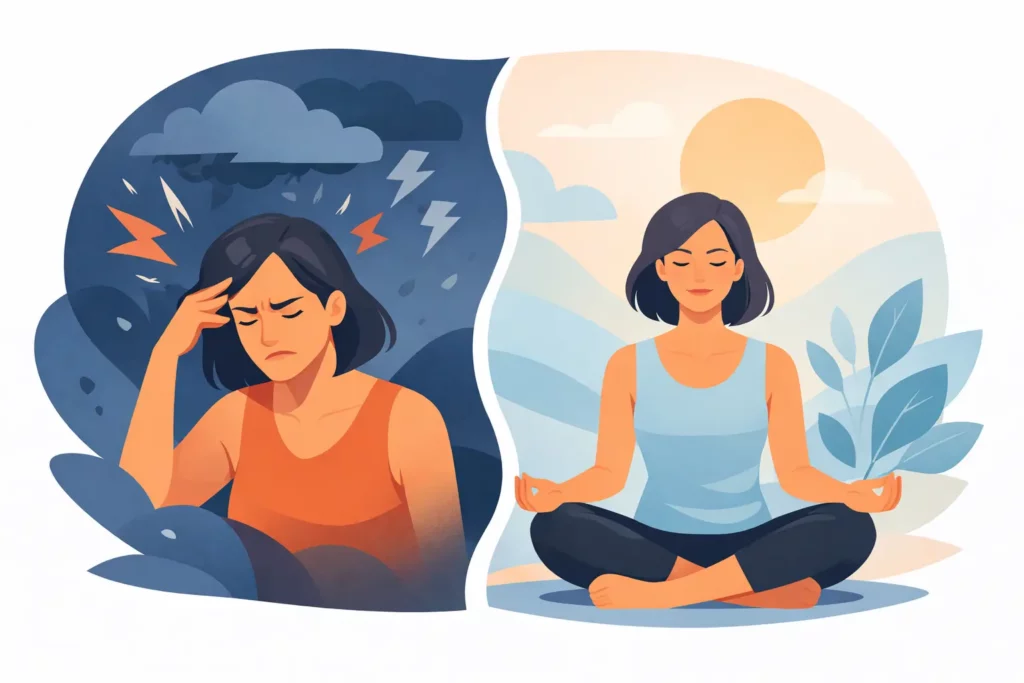
A small interruption can suddenly feel enormous: the unanswered question, the loud kitchen, the person who needs one more thing from you. If you are wondering how to manage menopause irritability, start here: this reaction is not a character flaw, and you are not imagining it. Hormonal changes can lower your margin for stress, especially when poor sleep, hot flashes, anxiety, and a full daily schedule are already asking too much of your nervous system.
Irritability during perimenopause and menopause is common, but it can still feel unlike you. The goal is not to force yourself to be endlessly patient. It is to understand what is contributing to the feeling, create more room between the trigger and your response, and get support when symptoms are disrupting your life.
Why menopause can make you feel more irritable
Estrogen does more than affect periods and hot flashes. It also interacts with brain chemicals involved in mood, stress response, and sleep. During perimenopause, estrogen can rise and fall unpredictably; after menopause, levels remain lower. For some women, those shifts can make emotions feel sharper, quicker, or harder to regulate.
The hormonal piece is only part of the picture. A hot flash that wakes you at 3 a.m., followed by a rushed morning and a demanding workday, can leave anyone short-tempered. Brain fog may make routine decisions feel exhausting. Anxiety, grief about body changes, caregiving responsibilities, relationship strain, and the pressure to keep functioning as usual can all add weight.
That is why it helps to think of irritability as information rather than evidence that you are failing. Ask: What is my body trying to tell me it needs right now? The answer may be rest, food, quiet, help, a boundary, or a conversation with a clinician.
How to manage menopause irritability in the moment
When irritation is rising, your first job is not to solve the whole problem. It is to give your body a brief chance to come down from high alert.
Try a simple pause before responding. Step into another room, put both feet on the floor, loosen your jaw and shoulders, and take a few slower breaths. Longer exhales can be particularly calming: inhale gently, then exhale a little more slowly. This will not erase a legitimate frustration, but it can help you respond with more choice.
A short, honest script can protect both your relationships and your energy: “I want to talk about this, but I need ten minutes to reset.” Or: “I am feeling overloaded and may sound sharper than I mean to.” Naming what is happening is often kinder than pushing through until you snap.
It can also help to check the basics before interpreting every feeling. Are you hungry, overheated, dehydrated, in pain, or running on too little sleep? These needs are not trivial. During menopause, they can strongly shape your emotional capacity.
Look for your personal pattern
Irritability can feel random until you track it for a few weeks. A brief daily note may reveal that your mood is worse after several nights of waking, during hot flashes, after alcohol, or on days when you skip lunch and work through breaks. You may notice that certain conversations or obligations consistently leave you depleted.
Keep the process light enough that you will actually use it. Record your irritability level from 1 to 10, sleep quality, hot flashes or night sweats, stress level, movement, alcohol or caffeine, and anything notable about the day. If you still have menstrual cycles, include where you are in your cycle.
The purpose is not to monitor yourself perfectly. It is to turn a vague experience into useful information. A symptom tracker or simple journal can also make a future medical appointment more productive, because you can describe patterns rather than trying to remember difficult weeks on the spot.
Protect sleep as a mood-support tool
Sleep disruption is one of the most common drivers of menopause irritability. If night sweats or racing thoughts are waking you regularly, “just get more sleep” is not realistic advice. Focus instead on making sleep more supported and identifying what is interfering with it.
Keep your bedroom cool if possible, use breathable bedding, and consider layers you can remove easily. A consistent wind-down routine can help signal that the day is ending, even if sleep is not immediate. Dim lights, set aside work and stressful messages when you can, and choose a quiet activity that does not pull you into another mental task.
Caffeine affects people differently, but an afternoon coffee may be more disruptive during this stage than it was years ago. Alcohol may initially make you sleepy yet worsen night waking, hot flashes, or anxiety for some women. You do not necessarily need to eliminate either. Experimenting with timing and noticing your response is often more useful than following rigid rules.
If sleep problems persist, bring them to a healthcare professional. Treating hot flashes, insomnia, anxiety, sleep apnea, or another underlying issue can improve mood far more than trying to will yourself into calmness.
Make your days less demanding on your nervous system
You may not be able to remove every stressor, but you can reduce the number of decisions and demands that land on you when your reserves are low. Think in terms of support, not perfection.
Regular meals with protein and fiber can prevent the energy dips that make patience harder to access. Gentle, consistent movement can support mood, sleep, and stress regulation, whether that means walking, strength training, yoga, dancing, or stretching between meetings. The best choice is one you can return to without turning it into another obligation.
Build small recovery moments into the day before you are at a breaking point. Five quiet minutes in the car, a walk around the block, a phone-free lunch, or a few minutes outside can create a meaningful reset. These are not indulgences. They are practical ways to care for a system that is carrying a lot.
Communicate before resentment builds
Menopause irritability can be especially painful when loved ones interpret it as anger toward them. You do not owe anyone a detailed explanation of your health, but sharing a little context can reduce misunderstanding.
You might say, “I have been dealing with disrupted sleep and mood changes related to menopause. I am working on it, and I could use more patience and practical help right now.” Be specific where you can. Asking a partner to handle dinner twice a week, requesting quieter mornings, or telling a colleague that you need an agenda before a high-stakes meeting may be more effective than hoping others notice your strain.
Boundaries matter, too. Irritability sometimes points to a real mismatch between what you are being asked to carry and what is sustainable. Hormonal change does not make every concern irrational. It may simply make it harder to ignore needs that have been pushed aside for years.
When to talk with a healthcare professional
You deserve support if irritability is frequent, intense, affecting work or relationships, or arriving alongside anxiety, depression, severe sleep loss, or a loss of interest in things you usually enjoy. A clinician can help consider whether symptoms are related to perimenopause or menopause, another health condition, medications, thyroid changes, depression, anxiety, or a combination of factors.
Treatment is individual. Depending on your symptoms, health history, and preferences, options may include menopause hormone therapy, nonhormonal treatment for hot flashes, therapy, treatment for mood or sleep concerns, or lifestyle changes with more structure and support. No single approach is right for everyone, and you should not feel pressured to choose a treatment that does not fit your situation.
Prepare for the appointment by bringing your symptom notes and a short list of questions. For example: When did these changes begin? How often are they happening? What has changed in your sleep? What treatment options are appropriate for my health history? Clear details can help you feel more confident in the conversation.
Seek urgent help right away if you are having thoughts of harming yourself or feel unable to stay safe. In the US, call or text 988 for immediate crisis support, or call emergency services.
A gentler standard for this season
Some days, managing menopause irritability will mean a walk, an earlier bedtime, and a better conversation. Other days, it may mean recognizing that your symptoms need clinical care. Both are valid responses.
You do not have to earn compassion by handling this transition quietly. Notice the patterns, honor the signals, and let support be part of how you navigate your next chapter with confidence.
This article is for educational purposes only and is not medical advice. Always consult a qualified healthcare provider about your health.