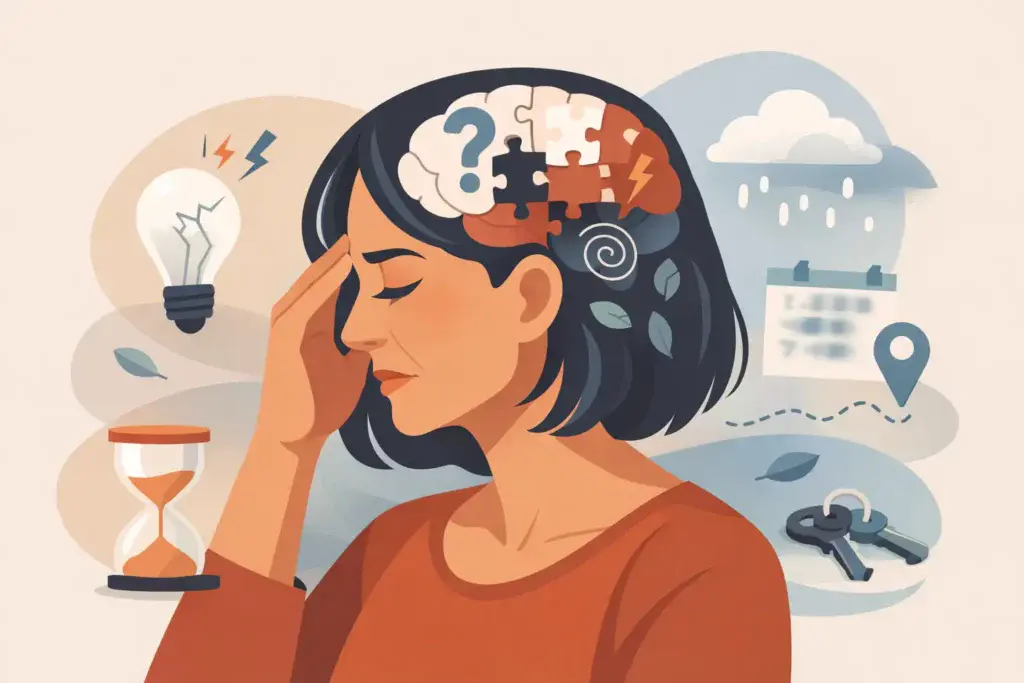
You walk into a room and forget why. A familiar word sits just out of reach. You reread an email three times before it clicks. These moments can feel unsettling, especially if you have always relied on your memory, focus, and ability to keep many details moving at once. Menopause cognitive changes are real, common, and often frustrating – but they do not automatically mean that something is seriously wrong.
For many women, the most difficult part is not only the symptom itself. It is the uncertainty around it. Is this stress? Poor sleep? Aging? Hormones? The answer may be a combination. Understanding the pattern can replace some of that worry with practical next steps.
What are menopause cognitive changes?
Cognitive changes describe shifts in mental processes such as attention, memory, processing speed, planning, and word recall. During perimenopause and menopause, many women describe this experience as brain fog. It is not a medical diagnosis, but it is a useful way to name the fuzzy, less-efficient feeling that can make everyday tasks take more effort.
You may notice that it is harder to concentrate during meetings, keep track of appointments, find the word you want, or switch between tasks without losing your place. Some women feel less mentally sharp in the afternoon. Others notice problems most clearly after a poor night of sleep or during a stressful week.
These changes can begin in perimenopause, when hormone levels may fluctuate widely, and may continue for a time after periods have stopped. The experience varies greatly. Some women notice only occasional lapses, while others feel that brain fog affects work, relationships, and self-confidence.
Why cognitive changes can happen during menopause
Estrogen has roles throughout the brain, including areas involved in memory and attention. As estrogen changes during the menopause transition, some women may experience temporary shifts in how efficiently they think and recall information. Research suggests that verbal learning and memory can be affected for some women, particularly during perimenopause.
Hormones are only part of the picture. Menopause symptoms often travel together, and several can make thinking feel harder. Hot flashes can interrupt sleep. Sleep loss can affect concentration, mood, and short-term memory the next day. Anxiety, low mood, caregiving demands, work pressure, pain, and changes in physical health can all add to the mental load.
This is why there is rarely a single simple explanation or a perfect solution. If your brain fog seems to rise and fall with insomnia or night sweats, improving sleep may make a meaningful difference. If it is most noticeable during a demanding season at work, reducing task switching and building in recovery time may help. Your patterns matter.
Brain fog is not the same as dementia
Forgetfulness during menopause can understandably trigger fear about dementia. In most cases, typical menopause-related cognitive symptoms are not a sign of dementia. They tend to involve attention, multitasking, and retrieving information you still know – like a name that comes back to you later.
Still, it is wise to speak with a clinician about new or worsening cognitive concerns. Memory changes can also be related to thyroid conditions, anemia, vitamin deficiencies, medication effects, depression, sleep apnea, alcohol use, or other health issues that deserve care.
Seek prompt medical attention if confusion comes on suddenly, follows a head injury, occurs with weakness or trouble speaking, or is accompanied by severe headache, fainting, or vision changes. Those symptoms need urgent evaluation.
Practical support for a foggy day
You do not need to push through every difficult day by trying harder. Cognitive energy is a real resource, and small systems can lower the pressure on memory.
Start by noticing when symptoms show up. For two to four weeks, track your sleep, hot flashes or night sweats, stress level, cycle changes if you are still having periods, mood, and moments of brain fog. A simple note can reveal useful connections, such as poor concentration after several disrupted nights or increased forgetfulness during heavier bleeding.
External supports are not a failure of memory. Keep one calendar, use reminders for time-sensitive tasks, write down decisions during meetings, and create a short daily priority list. If you are managing a complex project, break it into the next visible action rather than relying on mental tracking. Reducing multitasking is often more effective than trying to become better at it.
Protecting sleep can also support clearer thinking. Keep a consistent wake time when possible, limit alcohol if it worsens sleep or hot flashes, and talk with a clinician about persistent insomnia, loud snoring, or waking unrefreshed. Regular movement, balanced meals, hydration, and time outdoors can support overall energy and mood, although they are not quick fixes for every symptom.
Be gentle with the story you tell yourself. Forgetting a word does not mean you are incapable, lazy, or losing yourself. Many highly capable women find that their usual pace is temporarily harder to sustain during this transition. Adjusting expectations is not giving up. It is a practical form of care.
Talking with your clinician about menopause cognitive changes
If cognitive symptoms are affecting your quality of life, bring them up directly. You deserve more than a vague reassurance to “just manage stress.” A clear conversation can help identify whether menopause is likely part of the picture and whether other causes should be evaluated.
Before your appointment, write down when the symptoms began, how often they occur, and how they affect your work or home life. Include related symptoms such as irregular periods, hot flashes, sleep disruption, anxiety, low mood, headaches, heavy bleeding, or fatigue. Also bring a current list of medications, supplements, and any family history that feels relevant.
You might ask whether blood work or other evaluation makes sense based on your symptoms and health history. There is no single test that confirms menopause-related brain fog, but a clinician may consider testing for conditions such as thyroid dysfunction, anemia, or vitamin B12 deficiency when appropriate.
Menopausal hormone therapy may be an option for some women, particularly when hot flashes and night sweats are disrupting sleep and daily life. It is not prescribed solely as a treatment to prevent cognitive decline, and it is not the right choice for everyone. The decision depends on factors including your age, timing of menopause, symptoms, medical history, and personal preferences. A thoughtful conversation about benefits, risks, and alternatives is the right place to start.
If anxiety, depression, or persistent insomnia are contributing, treatment for those concerns may be part of the plan too. Support can include counseling, sleep-focused care, medication when appropriate, and lifestyle changes that fit your real life rather than an idealized routine.
When to ask for more support
Consider scheduling an appointment if your symptoms are steadily worsening, interfere with your ability to work or manage daily responsibilities, or feel different from the occasional forgetfulness you have experienced before. It is also worth speaking up if loved ones have noticed significant changes, you are getting lost in familiar places, or you are having trouble managing finances, medications, or essential tasks.
A symptom tracker and a few specific examples can make the conversation easier. Instead of saying, “My memory is bad,” you might say, “For the past three months, I have lost my train of thought in meetings several times a week, especially after nights with hot flashes.” That level of detail gives your clinician a more useful starting point.
Your mind is still yours, even when it feels less predictable. Meet this season with curiosity, support, and enough structure to give yourself some breathing room. Clarity often begins with noticing the pattern and allowing yourself to ask for help.
This article is for educational purposes only and is not medical advice. Always consult a qualified healthcare provider about your health.