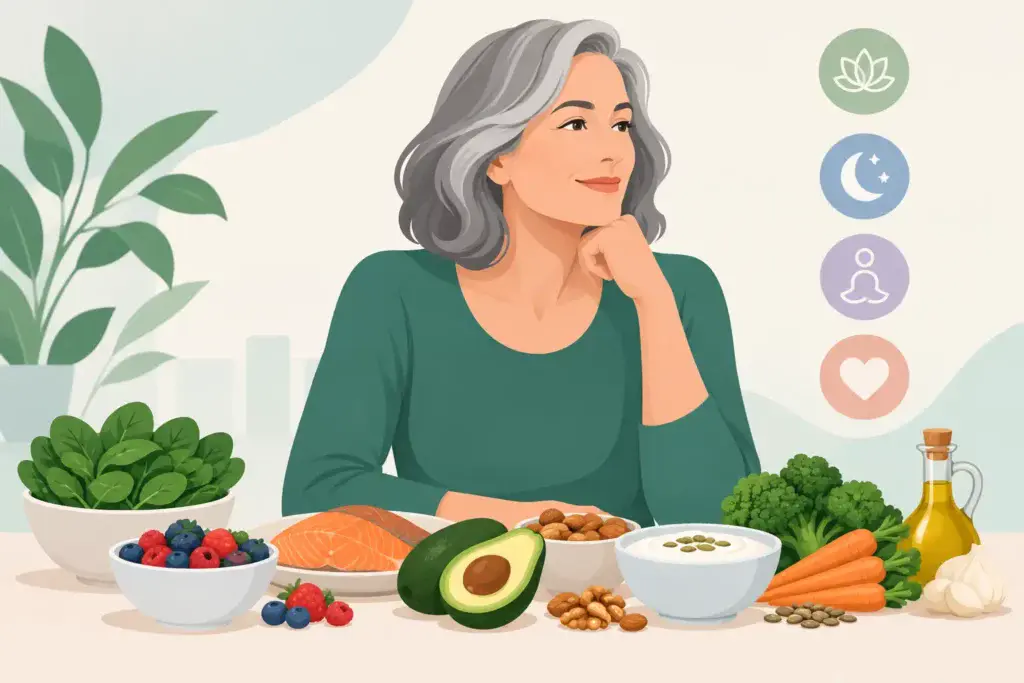
When sleep is disrupted, your body feels unfamiliar, and the advice around weight seems to contradict itself, food can become one more source of pressure. A menopause diet is not a strict plan or a promise that you can eat your way out of every symptom. It is a steady, flexible way of eating that supports the parts of your health that deserve extra attention during this transition: your bones, heart, muscles, brain, digestion, and daily energy.
You are not imagining the changes. Shifting estrogen levels can influence where your body stores fat, how your muscles respond to exercise, cholesterol levels, blood sugar regulation, and bone density. At the same time, poor sleep, stress, caregiving, work, and changing activity levels may all affect what and how you eat. The goal is not perfection. It is to create a pattern that helps you feel more supported in your body.
What a menopause diet is really meant to support
There is no single menopause diet that is right for every woman. Your needs may look different if you are managing high cholesterol, insulin resistance, digestive symptoms, migraines, thyroid disease, or a history of disordered eating. Still, evidence-based eating patterns tend to have a few things in common: plenty of plant foods, adequate protein, fiber-rich carbohydrates, healthy fats, and key nutrients for bone health.
This approach is less about cutting out entire food groups and more about making your meals work harder for you. A breakfast with protein and fiber may keep you steadier through a demanding morning. A calcium-rich snack can contribute to bone support. Eating regularly may reduce the late-afternoon crash that makes convenience foods feel like the only option.
Weight changes can be particularly frustrating in perimenopause and menopause. Metabolism does not simply stop, but aging, hormone changes, sleep loss, and a gradual loss of muscle can all shift the equation. Extreme restriction may backfire by leaving you under-fueled, hungry, or missing nutrients your body needs. A more sustainable focus is preserving muscle, building satisfying meals, and noticing patterns without turning food into a daily test of willpower.
Build meals around protein, plants, and fiber
Protein becomes especially valuable as we age because it helps support muscle maintenance. Muscle matters for strength, mobility, metabolism, and bone health. Rather than saving most of your protein for dinner, try including a meaningful source at meals throughout the day.
That might look like eggs, Greek yogurt, cottage cheese, fish, chicken, turkey, tofu, tempeh, edamame, beans, lentils, or a protein-rich smoothie. The best choice is one you enjoy, can access, and can eat consistently. If you are vegetarian or vegan, a little planning can help ensure you are getting enough protein and nutrients such as calcium, vitamin B12, iron, iodine, and omega-3 fats.
Plants bring fiber, vitamins, minerals, and protective compounds that support heart and digestive health. Aim for variety over rigid rules. Berries at breakfast, a handful of greens at lunch, beans in a soup, or roasted vegetables at dinner all count. Color is useful, but you do not need a picture-perfect plate for your meal to be nourishing.
Fiber deserves special attention. It can support regular digestion, help you feel full after meals, and contribute to healthier cholesterol and blood sugar levels. Increase it gradually and drink enough fluids, particularly if constipation has become part of your menopause experience. Oats, beans, lentils, pears, berries, vegetables, chia seeds, and whole grains are practical options.
Prioritize calcium and vitamin D for bone health
Bone loss can speed up during the menopause transition as estrogen declines. This does not mean a fracture is inevitable, but it does make bone-supportive habits worth prioritizing now. Calcium helps maintain bone structure, while vitamin D helps your body absorb calcium.
Dairy foods such as milk, yogurt, and cheese can be useful calcium sources if you tolerate them. Fortified plant milks and yogurts, calcium-set tofu, canned salmon or sardines with bones, kale, bok choy, and fortified foods can also contribute. Check labels on plant-based products, since calcium and vitamin D levels vary widely.
Food is one piece of the picture. Weight-bearing and resistance exercise are also important for bone strength, and some women may need a conversation with their clinician about vitamin D testing, supplements, or a bone density scan. Supplements can be helpful in specific situations, but more is not always better. Your personal medical history should guide those decisions.
Choose fats that support your heart and brain
Heart disease risk rises after menopause, which makes heart-supportive eating especially relevant. Focus less on fearing all fat and more on the type of fat you eat most often. Olive oil, avocado, nuts, seeds, and fatty fish such as salmon can fit well into a supportive eating pattern.
Omega-3 fats from fish may be particularly useful for overall cardiovascular health. If fish is not part of your diet, chia seeds, flaxseed, walnuts, and some algae-based supplements provide alternatives, though they are not identical sources. If you have high triglycerides, take blood thinners, or are considering a supplement, check with your healthcare professional first.
You do not need to eliminate favorite foods to care for your heart. A helpful question is whether your usual routine has enough foods that add fiber, protein, and unsaturated fats. Small shifts, repeated often, tend to matter more than an intense reset that lasts two weeks.
Notice possible hot-flash and sleep triggers without blaming yourself
Spicy foods, alcohol, caffeine, and large late-night meals can trigger hot flashes or disrupt sleep for some women. For others, they make no noticeable difference. This is one area where personal tracking can offer more clarity than broad rules.
If you suspect a connection, change one variable at a time for one or two weeks. You might move coffee earlier in the day, reduce alcohol for a period, or choose a lighter evening meal. Record your meals alongside sleep quality, hot flashes, night sweats, mood, and stress level. Patterns are easier to spot when you are not relying on memory alone.
Alcohol is worth considering with particular care because it can fragment sleep even when it initially makes you feel drowsy. It may also worsen hot flashes for some people and can affect breast cancer risk. That does not require an all-or-nothing decision, but it can be useful information when you are deciding what helps you feel your best.
Let your menopause diet be practical, not punitive
A supportive routine needs to fit real life. Start by strengthening one meal you already eat rather than trying to overhaul every grocery trip. Add yogurt and fruit to breakfast, keep beans or tuna on hand for lunch, or pair an afternoon snack with protein and fiber instead of relying on coffee to carry you through.
Planning can reduce decision fatigue, especially during periods of brain fog or low energy. Keep a short list of easy meals that require little thought: a bagged salad with rotisserie chicken and beans, eggs with whole-grain toast and fruit, or a grain bowl with frozen vegetables and tofu. Convenience is not failure. It is often a form of support.
It is also okay if your appetite changes. Some women feel less hungry in the morning; others find hunger more intense after a poor night of sleep. Instead of judging the change, get curious. A simple food and symptom journal can help you bring useful observations to a doctor or registered dietitian, especially if weight changes are rapid, digestive symptoms are persistent, or eating feels increasingly stressful.
Food can support your next chapter, but it does not have to carry the full weight of menopause. Let your meals be one calm, dependable part of your care: a way to nourish your strength, gather information about what helps, and meet your changing body with more confidence than criticism.
This article is for educational purposes only and is not medical advice. Always consult a qualified healthcare provider about your health.