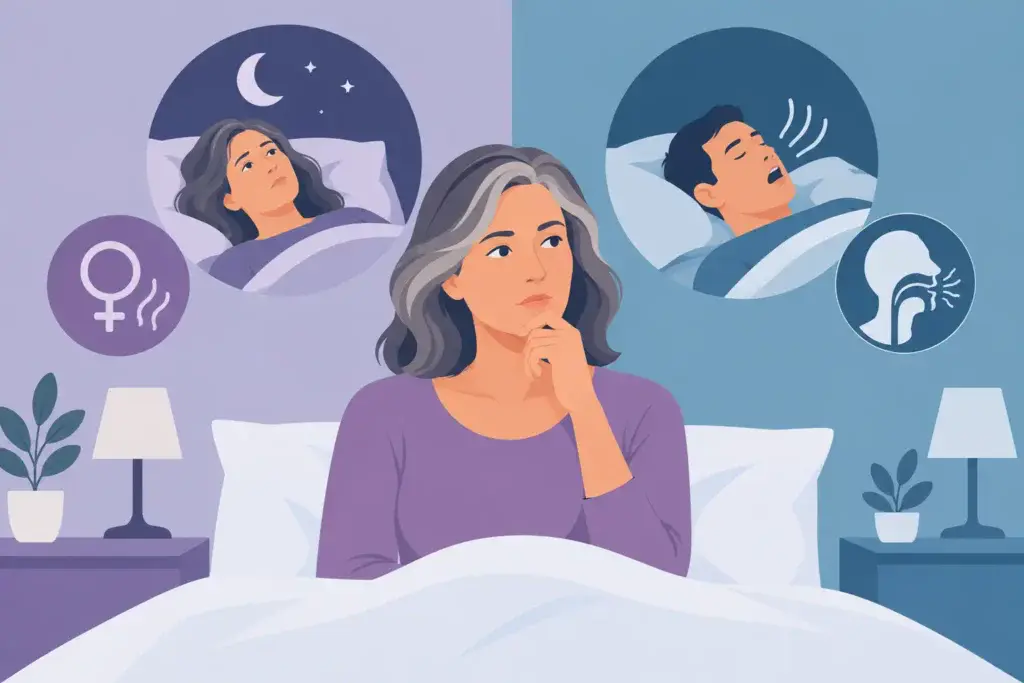
A 3 a.m. wake-up can feel like one more frustrating part of menopause. But when sleep loss becomes a regular pattern, it is worth looking beyond the assumption that hormones are the whole story. Menopause insomnia vs sleep apnea is not always an either-or question. Both can disrupt sleep, leave you depleted, and deserve thoughtful attention.
You are not imagining the impact. Poor sleep can magnify brain fog, irritability, anxiety, hot flashes, and daytime fatigue. Understanding the pattern behind your wake-ups can help you have a clearer, more productive conversation with a healthcare professional.
What menopause-related insomnia often feels like
Insomnia means difficulty falling asleep, staying asleep, or returning to sleep after waking, even when you have enough opportunity to rest. During perimenopause and menopause, changing estrogen and progesterone levels can affect temperature regulation, mood, and the brain systems involved in sleep.
For many women, the pattern is familiar: you fall asleep normally, then wake drenched in sweat at 2 or 3 a.m. Others lie awake with a busy mind, feel unusually alert after waking, or begin to dread bedtime because another restless night feels inevitable.
Menopause-related insomnia may be connected to hot flashes and night sweats, but not always. Stress, caregiving, work demands, depression, anxiety, pain, alcohol, caffeine, and an irregular schedule can all add to the problem. Sometimes the original trigger is hormonal, while the ongoing pattern becomes reinforced by worry about sleep itself.
A few clues may point more strongly toward insomnia related to menopause:
- Your sleep changed alongside cycle changes, hot flashes, mood shifts, or other perimenopause symptoms.
- You wake feeling hot, sweaty, or chilled after a hot flash.
- Your main experience is being awake and unable to settle, rather than waking short of breath.
- You are tired, but you do not have consistent reports of loud snoring, gasping, or breathing pauses.
These clues are not a diagnosis. They are simply useful observations to bring to your care team.
How sleep apnea can look different in midlife women
Obstructive sleep apnea happens when the upper airway repeatedly narrows or closes during sleep. Breathing pauses briefly, oxygen levels can dip, and the brain partially wakes the body to reopen the airway. Many people do not remember these awakenings, but repeated interruptions can make sleep feel unrefreshing.
Sleep apnea becomes more common after menopause. Hormonal changes may influence airway muscle tone and where the body stores fat, while age and weight changes can contribute for some people. That does not mean sleep apnea is inevitable, or that it only affects women in larger bodies. It can occur across body sizes and activity levels.
The picture in women is often less obvious than the stereotype of very loud snoring. Some women do snore loudly or wake up choking. Others report insomnia, frequent bathroom trips overnight, morning headaches, dry mouth, low mood, trouble concentrating, or exhaustion that does not improve after what appears to be a full night in bed.
Consider asking about sleep apnea if you notice snoring, witnessed pauses in breathing, gasping or choking awake, morning headaches, dry mouth, high blood pressure, heart rhythm concerns, or pronounced daytime sleepiness. A partner’s observations can be especially helpful, though living alone does not rule anything out.
Menopause insomnia vs sleep apnea: the key difference
The simplest distinction is what interrupts sleep. With insomnia, the central problem is often difficulty initiating or maintaining sleep. With sleep apnea, breathing disruptions repeatedly fragment sleep, sometimes without your awareness.
In real life, the distinction can blur. A woman with sleep apnea may wake often and assume it is insomnia. A woman with hot flashes may snore more when she is congested, exhausted, or sleeping on her back. You can also have both conditions. In fact, treating only one may leave you wondering why you are still tired.
Pay attention to how you feel when you wake. Menopause-related sleep disruption may be closely tied to feeling overheated or mentally alert. Sleep apnea is more likely if you wake suddenly with a snort, gasp, racing heart, or dry mouth, or if you feel unrefreshed despite getting plenty of sleep. Still, symptoms overlap enough that self-diagnosis is rarely the answer.
A practical way to track your sleep pattern
A short sleep record can turn a vague concern into useful information. For two weeks, note your bedtime, estimated time to fall asleep, overnight wake-ups, final wake time, naps, alcohol use, caffeine timing, and how rested you feel in the morning. Also record hot flashes, night sweats, headaches, snoring reports, gasping, and any medications or supplements that may affect sleep.
Keep the notes simple enough to maintain. The goal is not perfect data. It is to spot patterns: perhaps wake-ups cluster on nights with night sweats, or perhaps your fatigue is strongest after nights when a partner notices snoring. A symptom tracker or a few notes in your phone can give your healthcare professional a much clearer starting point.
If you share a bed, consider asking your partner what they notice. Do they hear snoring most nights? Have they noticed breathing pauses, restless movement, or gasping? These details can be more informative than a sleep app alone. Consumer wearables may reveal trends, but they cannot diagnose sleep apnea.
What to discuss at a medical visit
Start with the full picture, not just the word “insomnia.” Explain when the problem began, how often it happens, what wakes you, and how it affects your days. Mention menopause symptoms, mood changes, medications, medical conditions, and family history of sleep apnea if relevant.
A clinician may consider blood pressure, thyroid concerns, iron deficiency, depression or anxiety, chronic pain, medication effects, and other contributors to poor sleep. If sleep apnea is suspected, they may recommend a home sleep apnea test or an overnight sleep study. The right test depends on your symptoms and health history, so it is worth asking why one option is being recommended over another.
If hot flashes are driving sleep disruption, discuss menopause treatment options. Menopausal hormone therapy can reduce hot flashes and may improve sleep for some women who are appropriate candidates, but it is not a treatment for sleep apnea. Nonhormonal options may also be available. Your individual history, including clotting risks, cancer history, and cardiovascular health, matters in that conversation.
For persistent insomnia, cognitive behavioral therapy for insomnia, often called CBT-I, is a well-supported first-line treatment. It is not simply advice to “sleep better.” It addresses the habits and thought patterns that can keep insomnia going. Short-term medication may help in select situations, but the best approach depends on the cause of your disrupted sleep and should be individualized.
When sleep apnea is confirmed, treatment might include positive airway pressure therapy, an oral appliance, positional strategies, or other options. Treatment can take adjustment, and there is no prize in forcing yourself through an approach that isn’t working. Let your sleep specialist know about discomfort or barriers so the plan can be refined.
When not to wait
Make an appointment promptly if you have repeated gasping or choking during sleep, severe daytime sleepiness, near-misses while driving, new or worsening high blood pressure, or a partner who observes frequent breathing pauses. Seek urgent care for chest pain, severe shortness of breath, or sudden or alarming symptoms.
In the meantime, gentle basics can support sleep without replacing assessment: keep a consistent wake time, create a cool sleep environment, limit alcohol close to bedtime, and avoid driving when you feel dangerously sleepy. Be cautious with sleep aids or sedating supplements if sleep apnea is possible, since they may worsen breathing problems for some people.
Your sleep is not a minor symptom to push through. A few well-kept notes and an honest conversation can help you move from “I am exhausted” to a clearer next step. You deserve care that looks at your whole experience and helps you navigate this chapter with more confidence.
This article is for educational purposes only and is not medical advice. Always consult a qualified healthcare provider about your health.