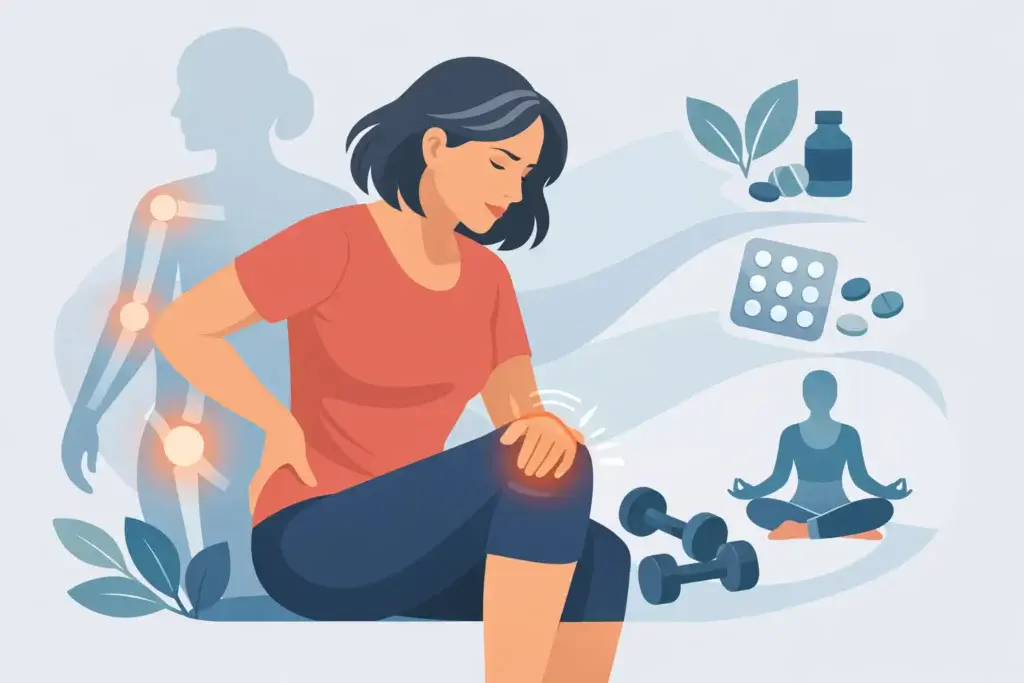
Waking up with stiff fingers, sore knees, or an aching shoulder can be disorienting, especially when your usual routine has not changed. Menopause joint pain is a real and commonly reported experience, yet many women are never told that changing hormones may affect how their bodies feel in motion. You are not imagining it, and you do not have to simply push through it.
Joint pain during perimenopause or menopause can have more than one cause. The goal is not to assume every ache is hormonal. It is to notice the pattern, support your comfort, and know when a conversation with a clinician could bring useful answers.
Why menopause joint pain can happen
Estrogen has effects throughout the body, including in tissues that support joints, muscles, and bones. As estrogen levels become less predictable in perimenopause and lower after menopause, some women notice more stiffness, soreness, or discomfort in their hands, wrists, hips, knees, feet, neck, or shoulders.
Researchers are still learning exactly why this happens for each individual. Hormonal shifts may influence inflammation, pain sensitivity, fluid balance, and the health of connective tissues. Lower estrogen can also coincide with changes in sleep, stress, mood, and activity levels. A poor night of sleep or a stretch of high stress can make pain feel sharper and recovery feel slower.
For some women, discomfort arrives alongside other familiar changes, such as hot flashes, irregular periods, fatigue, or brain fog. For others, it appears first. That timing can make it easy to wonder whether you have overdone a workout, slept in an awkward position, or developed something more serious.
Age-related changes matter, too. Osteoarthritis becomes more common with age, and old injuries may become more noticeable. Conditions such as rheumatoid arthritis, thyroid disease, gout, vitamin D deficiency, and certain medication effects can also cause joint symptoms. Menopause may be part of the picture, but it is not automatically the whole explanation.
What menopause-related joint discomfort may feel like
Menopausal joint pain does not follow a single universal pattern. Some women describe a dull ache at the end of the day. Others notice morning stiffness that improves after they begin moving, or hands that feel puffy and less flexible when opening jars or typing.
Pain may shift from one area to another, or it may concentrate in a joint that has been troublesome before. You may also feel more muscular soreness than usual after activity. Symptoms can fluctuate, much like other perimenopause symptoms, which is one reason a simple record can be more helpful than trying to remember every detail at an appointment.
Pay attention to the bigger context. Is the pain worse after poor sleep? Does it flare during a stressful week, after long periods of sitting, or around changes in your menstrual cycle? Does gentle movement help, or does a particular activity reliably make it worse? These details can help distinguish a temporary flare from a pattern worth evaluating.
Practical ways to support sore, stiff joints
There is no single solution that works for everyone, but small, steady adjustments often make a meaningful difference. The most useful approach is usually one that supports mobility without asking your body to ignore pain.
Keep movement gentle and consistent
When joints ache, resting completely can feel tempting. But prolonged inactivity may increase stiffness and reduce strength around the joint. Low-impact movement such as walking, swimming, cycling, tai chi, or gentle yoga can help maintain range of motion and support mood and sleep.
The right amount depends on your starting point. If a 30-minute walk leaves you significantly sorer the next day, begin with 10 minutes and build up gradually. Strength training can also be valuable because stronger muscles help support joints and bone health. If you are new to it, a physical therapist, qualified trainer, or clinician can help you choose movements that fit your needs.
Use warmth, recovery, and pacing
A warm shower, heating pad, or warm compress may ease stiffness, particularly in the morning. Some people prefer a cold pack after a specific activity if a joint feels irritated or swollen. Use a barrier between your skin and the pack, and avoid prolonged exposure.
Pacing is not giving up. It means breaking demanding tasks into smaller portions, alternating repetitive activities, and allowing recovery after a busy day. Supportive shoes, an ergonomic workstation, and small adjustments to how you lift, carry, or garden can reduce unnecessary strain.
Protect the basics that influence pain
Sleep, nutrition, hydration, and stress support are not quick fixes, but they can affect how resilient your body feels. Aim for regular meals with enough protein, fiber-rich foods, and calcium-rich choices. Vitamin D is important for bone health, but whether you need a supplement depends on your diet, health history, and sometimes lab results. A clinician can offer individualized guidance.
If hot flashes or night sweats are disrupting sleep, addressing those symptoms may also improve your ability to cope with pain. Menopause treatment is not one-size-fits-all. Some women may want to discuss menopausal hormone therapy, while others may need or prefer nonhormonal options. Your personal risks, medical history, timing, and symptoms all matter.
When to talk with a clinician about joint pain
You deserve to have new or changing pain taken seriously. Bring it up during a routine visit if it is persistent, interfering with sleep or daily life, limiting activities you enjoy, or leading you to avoid movement altogether.
Seek prompt medical care for a joint that is suddenly very painful, red, hot, markedly swollen, or difficult to bear weight on. Get urgent care for joint pain with fever, a new rash, chest pain, shortness of breath, weakness, or symptoms after a significant injury.
It is also worth asking for an evaluation if you have prolonged morning stiffness, swelling in several joints, numbness or tingling, unexplained weight changes, or a family history of autoimmune disease. These signs do not necessarily mean something serious is happening, but they deserve a thoughtful assessment rather than a quick dismissal.
A clinician may ask about your symptoms, activity, injuries, medications, sleep, menstrual changes, and family history. Depending on your situation, they may recommend an exam, blood work, imaging, physical therapy, or a referral to a specialist. The purpose is not to make the process more complicated. It is to rule out conditions that need different care and create a plan that fits your life.
Make your appointment more productive
Before your visit, keep a brief symptom log for two to four weeks. Note the location of pain, severity on a 0 to 10 scale, stiffness, swelling, what you were doing before symptoms began, and what seemed to help. Include sleep quality, hot flashes, cycle changes if you are still menstruating, and any new supplements or medications.
You might ask: “Could hormonal changes be contributing to this?” “What other causes should we consider?” and “What movement is safe for me right now?” If you feel rushed or brushed aside, returning to your written pattern can keep the conversation focused. Resources from Novelle Journey can also help you organize symptoms and prepare questions before a visit.
Joint pain can feel like one more unexpected demand during a transition that already asks a lot of you. Start with compassionate curiosity instead of self-criticism. Notice what your body is telling you, make room for steady support, and let clear information guide your next step.
This article is for educational purposes only and is not medical advice. Always consult a qualified healthcare provider about your health.