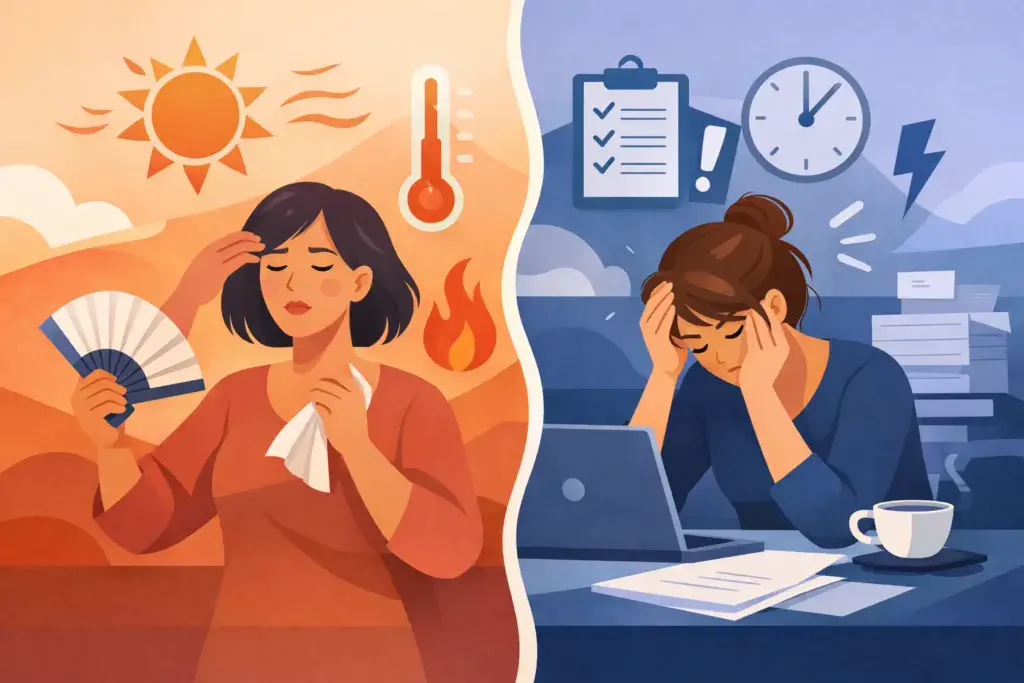
A demanding season at work can leave anyone tired, distracted, and short-tempered. But when you are also waking at 3 a.m., forgetting familiar words, or feeling unexpectedly anxious, the question can become more personal: Is this stress, burnout, perimenopause, or some combination of all three?
Menopause vs burnout signs are often difficult to separate because both can affect sleep, mood, energy, focus, and motivation. The overlap is real, and it can feel especially confusing when life is already full of work, caregiving, relationships, and responsibilities. You are not imagining it, and you do not need to figure it out by guessing alone.
Why menopause and burnout can feel so similar
Burnout is a state of physical, mental, and emotional exhaustion linked to prolonged stress, often when demands consistently outweigh the support, control, rest, or recognition available to you. It may show up as cynicism about work, a sense of detachment, reduced effectiveness, or the feeling that even small tasks require too much effort.
Perimenopause is the transition leading up to menopause, when estrogen and progesterone levels can fluctuate. Those shifts may affect temperature regulation, sleep, menstrual cycles, mood, concentration, and energy. Menopause is reached after 12 consecutive months without a menstrual period, although symptoms may continue into postmenopause.
A night of poor sleep can make either experience feel worse. So can chronic stress. Hormonal changes may lower your capacity to cope with a workload that once felt manageable, while burnout can intensify anxiety, fatigue, and sleep disruption that might otherwise be easier to navigate. This is why the most honest answer is sometimes: it may be both.
Menopause vs burnout signs: look for the pattern
A single symptom rarely provides a clear answer. Patterns over time are more informative. Consider what else is changing, when symptoms began, and whether they follow a cycle, stressful period, or particular environment.
Signs that may point more strongly toward perimenopause
Changes in your menstrual cycle are one of the clearest clues, though not everyone notices them right away. Periods may become closer together, farther apart, heavier, lighter, or less predictable. A missed period is not automatically perimenopause, especially if pregnancy is possible, but cycle changes are worth tracking and discussing with a clinician.
Vasomotor symptoms can also be telling. Hot flashes, night sweats, sudden warmth in the face or chest, chills after sweating, or waking drenched at night are commonly associated with perimenopause and menopause. These symptoms can interrupt sleep repeatedly, creating daytime exhaustion that resembles burnout.
Other hormonal-transition clues can include vaginal dryness, discomfort during sex, urinary changes, new or worsening premenstrual symptoms, breast tenderness, headaches, joint aches, or changes in skin and hair. None of these proves menopause on its own, but several changes occurring together offer useful context.
Signs that may point more strongly toward burnout
Burnout often has a recognizable connection to ongoing demands. You may feel a surge of dread on Sunday evening, become unusually irritable during meetings, or notice that your energy drops sharply around specific responsibilities. Emotional numbness, persistent resentment, and feeling disconnected from work you once cared about can be meaningful signals.
Rest may help somewhat, particularly when it is paired with a real reduction in pressure. A few days away from the source of strain may bring a noticeable lift, even if you are not fully restored. That does not mean burnout is minor. It means the context around your symptoms deserves attention alongside your health.
Burnout is also more likely to bring a sense of depleted capacity in the area creating the stress. For example, a teacher may feel unable to tolerate one more classroom demand but still find genuine relief in a quiet weekend with family or a hobby. Perimenopause-related fatigue and disrupted sleep may follow you into every setting, even the ones you usually enjoy.
Symptoms that belong in both columns
Brain fog, low motivation, anxiety, poor sleep, fatigue, forgetfulness, appetite changes, and mood shifts can occur with either burnout or perimenopause. They can also be related to depression, anxiety disorders, thyroid conditions, anemia, sleep apnea, medication effects, nutritional deficiencies, or other health concerns.
That overlap is not a reason to dismiss your experience. It is a reason to take a wider view. If you hear, “It is just stress,” but your cycle has changed and you are having night sweats, you deserve a conversation that considers both. If someone assumes every new symptom is hormonal while your workload is unsustainable, your stress needs care too.
Track what your memory cannot hold
When you feel foggy and exhausted, it is hard to remember whether symptoms began two weeks ago or six months ago. A simple record can turn a vague concern into a clearer picture for you and your healthcare provider.
For several weeks, note your period dates and flow, sleep quality, hot flashes or night sweats, mood, energy, concentration, major stressors, alcohol or caffeine use, and any new medications or supplements. You do not need a perfect spreadsheet. A few words each day in a journal or symptom tracker can reveal whether insomnia clusters around night sweats, whether anxiety rises before a period, or whether your worst days consistently follow high-pressure work events.
Also record what helps, even a little. Does a cooler bedroom reduce awakenings? Do boundaries around email improve your evening mood? Does movement help your energy, or does it leave you more depleted? These observations are not about proving that you are struggling. They are practical information that can guide next steps.
When to bring symptoms to a healthcare provider
You do not need to wait until symptoms become unbearable. Make an appointment if changes are affecting your sleep, work, relationships, confidence, or ability to function. A clinician can review your health history, menstrual pattern, medications, mental health, and possible non-menopause causes of fatigue or mood changes.
For many women in their 40s and 50s, perimenopause is identified largely through symptoms and cycle changes rather than a single hormone test. Hormone levels can fluctuate significantly during this transition, so one test may not offer a complete answer. Your clinician can help determine whether testing is useful for your particular age, symptoms, and medical history.
Bring your symptom notes and be direct about impact. You might say: “My sleep has changed, my periods are less predictable, and I am struggling to focus at work. I would like to talk through whether perimenopause, burnout, or another health issue could be contributing.” Clear language helps move the conversation beyond a quick label.
Seek urgent support if you have thoughts of harming yourself, feel unsafe, have chest pain, severe shortness of breath, fainting, or sudden neurological symptoms such as weakness on one side of the body or difficulty speaking. These symptoms should not be assumed to be stress or menopause.
Support the whole picture, not just the label
If perimenopause is part of the picture, support may include discussing treatment options with a qualified clinician, improving sleep conditions, adjusting movement to match your energy, and building regular nourishment into busy days. If burnout is present, support may require changes that are not solved by a supplement or a better morning routine: workload boundaries, time off, counseling, delegation, or asking for more help at home.
The trade-off is that small wellness habits can be helpful but may not be enough when the underlying strain is significant. A five-minute walk cannot fix an impossible workload, and a weekend away may not resolve ongoing hormone-related insomnia. Both realities deserve compassion and practical care.
You do not have to earn support by reaching a breaking point. Start with the pattern you can see today, write it down without judgment, and let that clarity guide your next conversation. Your symptoms are information, and they can help you navigate your next chapter with more confidence.
This article is for educational purposes only and is not medical advice. Always consult a qualified healthcare provider about your health.