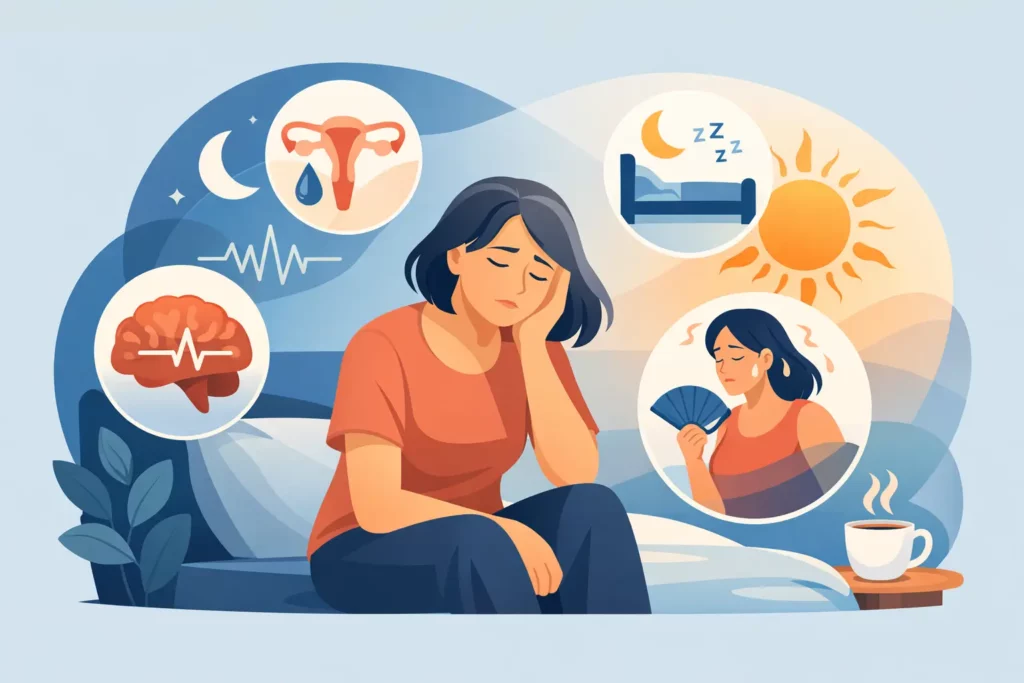
Some women notice it first at 3 p.m., when their usual energy simply disappears. Others feel it before the day even starts, after what seemed like a full night’s sleep. If you have been trying to make sense of perimenopause fatigue causes, you are not imagining it. This kind of tired can feel different – heavier, less predictable, and harder to fix with rest alone.
Why fatigue can show up in perimenopause
Perimenopause is the transition leading up to menopause, and it can begin years before periods fully stop. During this time, estrogen and progesterone do not decline in a smooth, steady line. They fluctuate. Those shifts can affect sleep, mood, body temperature, metabolism, and stress response, all of which shape your energy.
That is why fatigue in perimenopause is rarely about one single thing. For many women, it is a layered symptom. Hormonal changes may be the starting point, but sleep disruption, heavier periods, anxiety, and everyday stress often pile on. When you understand the pattern, the exhaustion can feel less mysterious and easier to discuss with a healthcare provider.
The most common perimenopause fatigue causes
Hormone fluctuations can drain energy
Estrogen helps regulate many systems involved in energy regulation, including brain function, temperature regulation, and sleep quality. Progesterone also plays a role, especially because it can have a calming effect. When these hormones rise and fall unevenly, your body may feel like it is constantly adjusting.
Some women feel wired at night and worn out during the day. Others notice mood swings, headaches, or brain fog alongside low energy. Fatigue does not happen in isolation. It often comes with a cluster of symptoms that point back to hormonal instability rather than a simple lack of motivation or fitness.
Sleep disruption is one of the biggest drivers
Many women who say they are exhausted also sleep poorly, even if they are technically getting enough hours in bed. Night sweats, hot flashes, early waking, restless sleep, and increased anxiety can all interrupt deep, restorative sleep.
This is one reason perimenopause fatigue can be easy to miss. If you are waking several times a night, your body may never fully recharge. Even mild sleep disruption, repeated often enough, can create major daytime exhaustion. If your fatigue is accompanied by snoring, gasping, or morning headaches, sleep apnea is also worth discussing with a clinician, especially since risk can increase in midlife.
Stress and anxiety can make fatigue worse
Perimenopause often overlaps with a very demanding life stage. Many women are managing careers, parenting, caregiving, relationship strain, and aging-related health worries at the same time. Add hormonal sensitivity, and your nervous system may start running on overdrive.
That can look like feeling tired but unable to relax. Chronic stress can affect cortisol patterns, sleep quality, appetite, and blood sugar regulation. Anxiety can be especially sneaky here. It does not always show up as obvious panic. Sometimes it feels like tension, irritability, racing thoughts, or waking at 4 a.m. unable to fall back asleep.
Heavier or irregular periods can lead to iron deficiency
One of the more overlooked perimenopause fatigue causes is blood loss. In perimenopause, cycles can become heavier, longer, or closer together before they become less frequent. Over time, that can lower iron stores and lead to iron deficiency, with or without anemia.
If fatigue is accompanied by shortness of breath, dizziness, headaches, paleness, hair shedding, or weakness during exercise, it is reasonable to ask about iron testing. This matters because exhaustion from low iron will not improve just by sleeping more. You need to identify the reason behind it.
Blood sugar swings can leave you wiped out
Hormonal shifts can change how your body responds to food, stress, and insulin. Some women notice they feel shaky, irritable, foggy, or suddenly depleted if they go too long without eating or eat meals that spike blood sugar and then crash it.
This does not mean every woman in perimenopause develops a blood sugar problem. It does mean energy can become more sensitive to meal timing, protein intake, sleep loss, and stress. If you feel a strong afternoon crash, it can help to look at what happened earlier in the day rather than just assume your body is failing you.
Thyroid issues can overlap with perimenopause
Thyroid changes become more common with age, and symptoms can overlap with perimenopause in frustrating ways. Fatigue, weight changes, brain fog, low mood, dry skin, and menstrual changes can fit either picture.
This is where nuance matters. Not every symptom in your 40s or 50s is automatically hormonal. If fatigue is significant, persistent, or getting worse, thyroid screening may be part of the conversation with your healthcare provider.
Mood changes can show up as physical exhaustion
Depression does not always look like sadness. Sometimes it looks like heaviness, low motivation, irritability, numbness, or a sense that basic tasks take too much effort. Perimenopause can increase vulnerability to mood changes, especially in women with a prior history of PMS, postpartum depression, or anxiety.
If your fatigue is wrapped together with loss of interest, hopelessness, or a sense that you do not feel like yourself anymore, emotional health deserves just as much attention as physical health. Both can be true at once.
When fatigue is probably not just perimenopause
Fatigue is common in this transition, but common does not mean you should automatically dismiss it. It is worth checking in with a clinician if the fatigue feels extreme, comes on suddenly, or interferes with daily life in a major way.
Pay close attention if you also have chest pain, shortness of breath, fainting, unexplained weight loss, severe depression, very heavy bleeding, or symptoms of sleep apnea. These signs deserve prompt medical evaluation. Perimenopause can be part of the story without being the whole story.
How to make sense of your own pattern
When energy feels unpredictable, tracking can be more useful than guessing. A simple record of sleep, cycle changes, bleeding patterns, stress levels, meals, and fatigue severity can reveal connections you might otherwise miss. You may notice that your worst exhaustion follows poor sleep, heavy bleeding, or certain points in your cycle.
This kind of pattern awareness can also make medical appointments more productive. Instead of saying, “I am always tired,” you can say, “My fatigue is worse the week before my period, after night sweats, and during heavier bleeding.” That level of detail helps move the conversation forward.
For many women, this is where a calm, organized approach matters most. Tools that help you track symptoms and prepare for appointments can bring clarity when your experience feels scattered.
What can actually help
The next right step depends on the cause. If sleep disruption is driving your fatigue, improving sleep conditions, reviewing caffeine and alcohol habits, and addressing hot flashes may matter more than forcing exercise. If heavy bleeding is part of the issue, testing for iron deficiency may be key. If mood symptoms are strong, mental health support may be part of the solution, not a separate issue.
There is also value in the basics, even though they can sound too simple. Regular meals with protein and fiber, light movement, morning daylight exposure, realistic stress support, and protecting sleep are not magic fixes. But they can reduce the load on a body already adapting to hormonal change.
It also helps to let go of the idea that you should respond to fatigue the same way you did ten years ago. Pushing harder is not always the answer. Sometimes the more effective move is to get curious, track what is happening, and respond to the actual pattern instead of judging yourself for having one.
If you have been feeling drained and wondering whether this is normal, the answer is that fatigue can absolutely be part of perimenopause. But you still deserve clear answers. Your body is giving you information, and with the right support, that information can become a useful map for what comes next.
This article is for educational purposes only and is not medical advice. Always consult a qualified healthcare provider about your health.