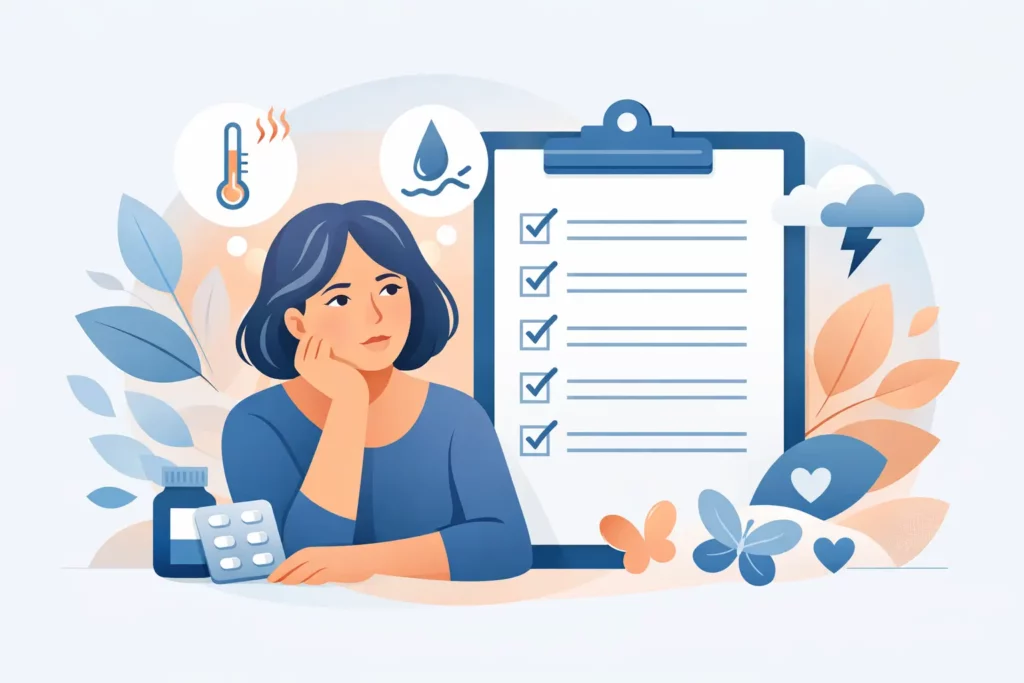
Some women first notice perimenopause when their periods change. Others notice it when sleep falls apart, anxiety ramps up, or they suddenly do not feel like themselves. A perimenopause symptoms checklist can help bring order to that confusion. It does not diagnose you, but it can help you recognize patterns, feel more grounded, and walk into a medical appointment with clearer information.
Perimenopause is the transition leading up to menopause, when hormone levels begin to shift and menstrual cycles become less predictable. It often starts in the 40s, but it can begin earlier for some women. The experience is not the same for everyone. That is one reason this stage can feel so frustrating – symptoms may come and go, overlap with stress, or look like something else entirely.
Why a perimenopause symptoms checklist matters
Many women are told to expect hot flashes and irregular periods, then feel caught off guard by the rest. Brain fog, joint aches, mood swings, heart palpitations, and changes in libido can all show up during perimenopause too. When symptoms seem random, it is easy to second-guess yourself.
A checklist gives you a structure. Instead of trying to remember everything at once, you can begin to notice what is happening, how often it happens, and whether it seems tied to your cycle, sleep, stress, or lifestyle. That kind of information is useful emotionally and practically. It can reassure you that you are not imagining it and help a healthcare provider understand the full picture.
It also helps with one of the hardest parts of this transition: symptoms do not always fit neatly into categories. You might have sleep trouble first, then heavier periods months later. Or your cycles may still look fairly regular while mood or energy changes become the bigger issue. A checklist helps you see the whole pattern, not just the loudest symptom of the week.
A practical perimenopause symptoms checklist
The most helpful checklist is not just a list of possible symptoms. It is a way to group changes so they are easier to recognize and track over time.
Period and cycle changes
For many women, menstrual shifts are the clearest early sign. Your cycles may become shorter, longer, heavier, lighter, or more unpredictable. You may notice spotting between periods or a change in PMS symptoms.
Pay attention to whether your period arrives earlier than usual, skips months, or becomes unusually heavy. A changing cycle can be part of perimenopause, but very heavy bleeding, bleeding after sex, or bleeding patterns that feel abrupt or extreme deserve medical attention rather than assumption.
Temperature and vasomotor symptoms
Hot flashes and night sweats get the most attention for a reason – they are common. But they do not happen to everyone, and they do not always look dramatic. Some women feel a sudden wave of heat in the face, neck, or chest. Others wake damp at 3 a.m. without knowing why.
Notice whether you feel flushed, sweaty, chilled afterward, or more sensitive to warm rooms, spicy foods, alcohol, or stress. These patterns can help distinguish occasional overheating from hormonally driven symptoms.
Sleep changes
Sleep disruption is one of the most common and least appreciated signs of perimenopause. You might fall asleep easily but wake at 2 or 4 a.m. You might sleep through the night and still feel exhausted in the morning. Night sweats can be part of it, but sometimes poor sleep shows up without them.
Track how often you wake, whether you feel restless, and whether your sleep problems cluster around certain parts of your cycle. This matters because poor sleep can intensify many other symptoms, including anxiety, brain fog, irritability, and cravings.
Mood and emotional changes
Hormonal shifts can affect emotional steadiness in ways that feel unfamiliar. Some women describe increased anxiety, irritability, low mood, tearfulness, impatience, or a reduced ability to cope with everyday stress. If you have a history of PMS, postpartum depression, or mood sensitivity during hormonal shifts, you may be more likely to notice emotional symptoms in perimenopause.
This does not mean every mood change is hormonal. Life stress, caregiving, work pressure, and sleep loss matter too. Still, if your emotional baseline feels different, it is worth documenting rather than dismissing.
Brain fog and cognitive changes
Forgetfulness during perimenopause is real. You may lose words mid-sentence, walk into a room and forget why you went, struggle to focus, or feel mentally slower than usual. This can be unsettling, especially for women used to being organized and sharp.
Brain fog is often made worse by poor sleep and stress, so context matters. A checklist helps you see whether cognitive changes rise and fall with other symptoms rather than appearing in isolation.
Energy, body, and metabolism changes
Fatigue is common, but not all fatigue is the same. You may feel physically drained, mentally depleted, or both. Some women also notice weight changes, increased belly fat, slower recovery after exercise, stronger cravings, or reduced stamina.
These shifts can be related to hormones, but they can also overlap with thyroid issues, low iron, blood sugar changes, and chronic stress. That is why tracking matters. A checklist is not about assuming everything is perimenopause. It is about identifying what needs a closer look.
Sexual and vaginal changes
Perimenopause can affect sexual wellness in subtle or obvious ways. You may notice vaginal dryness, irritation, discomfort with sex, lower libido, delayed arousal, or more frequent urinary urgency and irritation.
These symptoms are common and treatable, but many women do not mention them because they feel private or embarrassing. Including them on your checklist can make it easier to bring them up with a doctor when you are ready.
Physical symptoms that are easy to overlook
Hormonal shifts can show up beyond the symptoms most people expect. Some women notice headaches, joint pain, breast tenderness, bloating, hair thinning, skin dryness, heart palpitations, dizziness, or changes in body odor.
That does not mean every new symptom is automatically perimenopause. Chest pain, severe palpitations, fainting, or symptoms that feel sudden or intense should be evaluated promptly. A calm checklist should always leave room for clinical caution.
How to use a perimenopause symptoms checklist well
A checklist is most useful when it becomes a simple tracking habit rather than another overwhelming task. Start by noting which symptoms are showing up now. Then record a few basic details: when they happen, how intense they feel, how long they last, and what else is going on around them.
Short notes are enough. For example, you might write that you woke at 3 a.m. three nights this week, felt anxious two days before your period, or had sudden heat episodes after wine. Over a month or two, that information becomes much more helpful than trying to remember everything during an appointment.
Some women prefer a printed tracker. Others use a notes app or calendar. The best format is the one you will actually use. At Novelle Journey, that practical, low-pressure approach matters because women need tools that reduce confusion, not add to it.
When symptoms deserve a deeper medical look
Perimenopause is a normal life stage, but normal does not mean you should ignore symptoms that disrupt your quality of life. If sleep problems are affecting your mental health, bleeding is becoming unusually heavy, mood changes feel intense, or your symptoms are interfering with work and relationships, it is reasonable to ask for support.
It is also important to remember that not everything in midlife is hormonal. Thyroid disorders, anemia, depression, anxiety disorders, sleep apnea, vitamin deficiencies, and other conditions can mimic or compound perimenopausal symptoms. Good care means considering both possibilities.
If you feel dismissed, your checklist can help. Bringing a written pattern of symptoms, cycle changes, and timing often leads to a more productive conversation than trying to explain everything from memory in a short visit.
What this checklist can and cannot do
A perimenopause symptoms checklist can help you notice trends, validate your experience, and prepare for better conversations with healthcare providers. It can also make this phase feel less chaotic by turning vague discomfort into specific observations.
What it cannot do is confirm a diagnosis on its own. Perimenopause is often identified through a combination of age, symptom pattern, and menstrual changes, not a single lab test. In some cases, testing may be useful. In others, symptoms and history tell the more meaningful story.
If your checklist shows only a few symptoms, that does not make your experience less real. If it shows many, that does not mean something is seriously wrong. The value is not in how long the list is. The value is in seeing yourself clearly enough to respond with care.
You do not need to track perfectly. You do not need to wait until symptoms get worse. You just need a starting point that helps you trust what you are noticing and move forward with more confidence.
This article is for educational purposes only and is not medical advice. Always consult a qualified healthcare provider about your health.