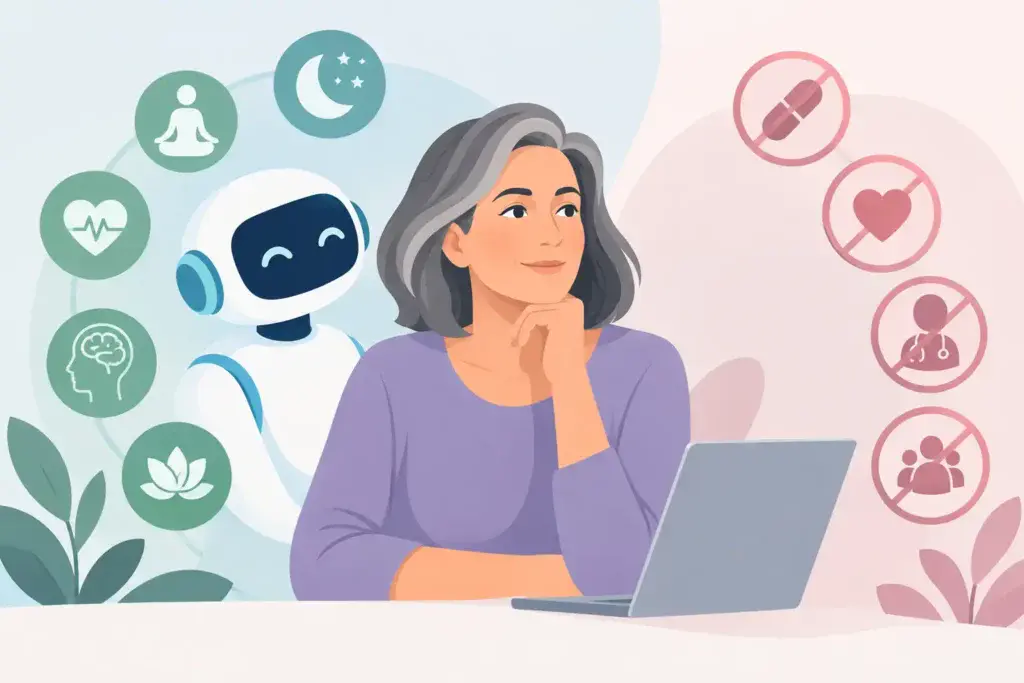
A night of broken sleep, a sudden wave of anxiety, and a forgotten word in the middle of a familiar sentence can feel disconnected until they happen again and again. AI menopause support may help bring those experiences into clearer view, offering a way to organize symptoms, reflect on patterns, and prepare for more productive health conversations. But it works best as a supportive tool, not a substitute for your judgment or medical care.
You are not imagining it if this stage of life feels hard to explain. Perimenopause and menopause can affect sleep, mood, energy, focus, temperature regulation, and more, sometimes in ways that change from month to month. A thoughtfully designed AI tool can reduce some of the mental load of keeping track of it all. The key is knowing where it can be useful, where it has limits, and how to use it without handing over decisions that deserve a human clinician.
What AI menopause support can help with
At its best, AI can turn scattered observations into a more usable picture. Instead of trying to remember the last six weeks while sitting in an exam room, you might use a tool to record symptoms as they occur: when you woke during the night, how intense a hot flash felt, whether anxiety appeared before your period, or how your energy changed after exercise.
Over time, an AI-supported tracker may help you spot possible patterns. Perhaps headaches are more frequent after several poor nights of sleep. Perhaps brain fog is strongest on days when hot flashes interrupt your rest. Or perhaps symptoms do not follow the pattern you expected at all. That information does not provide a diagnosis, but it can give you language for what you are experiencing.
AI can also make health information feel more approachable. A well-designed tool may explain common terms, help you create questions for a doctor visit, or summarize the concerns you have recorded in plain language. For someone who has felt rushed, dismissed, or unable to find the right words in an appointment, that preparation can be genuinely meaningful.
It can be especially useful for practical tasks that are easy to postpone when you are tired or overwhelmed. These include creating a symptom log, drafting a concise visit agenda, identifying questions about treatment options, and setting gentle reminders to check in with yourself. The goal is not to monitor every moment of your life. It is to create enough structure that your experience is easier to understand and communicate.
What AI cannot safely do
Menopause is a natural transition, but symptoms deserve thoughtful attention. AI cannot examine you, review your full medical history with clinical judgment, order testing, or rule out other conditions. Thyroid disorders, anemia, sleep apnea, depression, medication effects, and other concerns can overlap with menopause symptoms. Assuming every change is hormonal can delay needed care.
AI also cannot determine whether a treatment is right for you. Decisions about menopausal hormone therapy, nonhormonal medications, supplements, or changes to an existing prescription depend on factors such as your health history, family history, symptoms, preferences, and risks. A chatbot may provide general education, but it should never be the final voice on a treatment decision.
There is another limitation worth naming: AI can sound confident even when its answer is incomplete or wrong. It may miss context, rely on outdated information, or fail to recognize that a symptom needs urgent attention. Use it as a starting point for questions, not as proof that something is normal, harmless, or menopause-related.
Seek prompt medical care for symptoms such as chest pain, trouble breathing, fainting, signs of a stroke, thoughts of self-harm, severe headache unlike your usual headaches, or heavy bleeding. Postmenopausal bleeding, meaning any bleeding after you have gone 12 months without a period, should also be discussed with a clinician promptly. These are not situations for an AI conversation alone.
How to use AI without losing your own voice
The most helpful AI menopause support should strengthen your confidence, not make you feel managed by a machine. Start with your real experience. Before asking a tool to interpret anything, write down what happened, when it happened, how long it lasted, and how it affected your day. Include what was going on around it, such as stress, alcohol, travel, illness, movement, meals, or changes in medication.
Be specific with your questions. Rather than asking whether you are in menopause, try asking for help organizing the symptoms you have noticed or creating a short list of appointment questions. For example: I have had waking at 3 a.m., more frequent anxiety, and irregular periods for four months. Help me make a symptom summary for my doctor. This keeps the tool in an appropriate role while making the output more useful.
Then check any health guidance against a qualified source, especially if it involves medication, doses, testing, or a symptom that is new or severe. If an answer feels alarming, overly certain, or vague, pause. A calm follow-up question can help, but a clinician is often the right next step.
You also do not need to accept every suggestion. If daily tracking makes you more anxious, a weekly check-in may be better. If a detailed symptom score feels impersonal, a short journal entry might reveal more. The right system is the one you can use consistently without turning your health into another full-time job.
A simple prompt for appointment preparation
AI can be useful when you need help turning a complicated month into a clear conversation. After keeping notes for a few weeks, you might ask it to organize your observations into three sections: your main symptoms, the ways they affect daily life, and the questions you want to ask. Review the result carefully, edit it in your own words, and bring it to your appointment.
A good discussion guide may include questions such as whether your symptoms could have more than one cause, what treatment approaches fit your health history, what side effects to watch for, and when to follow up. You deserve time to ask these questions. A prepared note can help you stay focused when the appointment feels brief.
Privacy matters as much as convenience
Menopause conversations can be deeply personal. Before entering health information into an AI tool, take a moment to understand what happens to your data. Does the company explain whether your information is stored, shared, or used to train its systems? Can you delete your records? Is there a clear privacy policy written in language you can understand?
Avoid sharing highly sensitive details unless you are comfortable with the platform’s protections. This includes identifying information, medical record numbers, photos, and private details you would not want attached to an online account. A symptom tracker does not need to know everything about you to be helpful.
It also helps to separate convenience from trust. A tool that gives quick answers may still have weak privacy practices or limited health oversight. Look for transparency, clear boundaries, and language that encourages appropriate medical care rather than trying to keep every question inside the app.
Choosing a tool that supports, rather than overwhelms
The best tool for you depends on what you need most right now. If your main challenge is seeing patterns, prioritize simple symptom tracking and clear reports. If appointments leave you flustered, look for question-building or visit-preparation features. If you want reliable education, choose resources that distinguish between general wellness guidance and medical advice.
Be cautious of tools that promise to diagnose your hormones from a few answers, guarantee relief, or present one solution as right for everyone. Menopause care is personal. What helps one woman sleep better or feel more like herself may not be appropriate for another.
A supportive resource should leave you feeling steadier and better informed, not ashamed for missing a log entry or pressured to buy an answer. It should make room for uncertainty, because this transition is not always linear. Some weeks may be manageable; others may ask more of you.
AI can help you collect the pieces of your story. You remain the expert on how that story feels in your body and your life. Keep noticing, keep asking, and bring your voice with you into every care conversation. Clarity does not require having every answer at once – it begins with taking your experience seriously.
This article is for educational purposes only and is not medical advice. Always consult a qualified healthcare provider about your health.