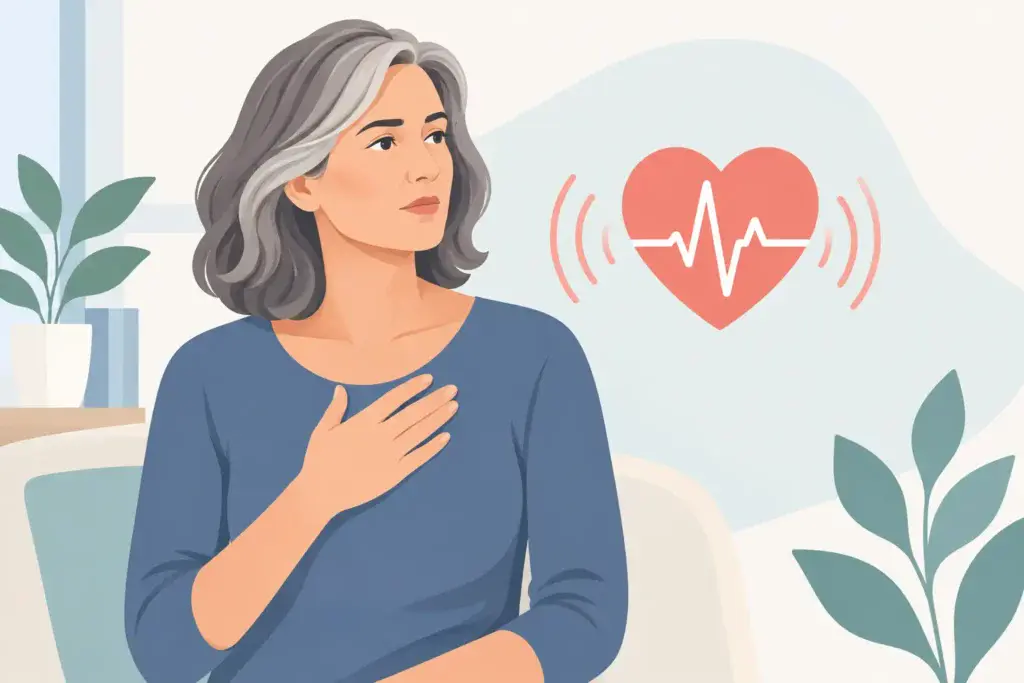
That sudden flutter in your chest can feel deeply unsettling, especially when it arrives at night, during a meeting, or while you are simply sitting still. If you are asking, “Are menopause palpitations normal?” the short answer is that they can be a common part of perimenopause and menopause. But common does not mean something you should automatically brush off.
Palpitations are the awareness of your heartbeat. It may feel fast, pounding, irregular, fluttery, skipped, or like a brief flip-flop in your chest. Hormonal changes can contribute, but several other health factors can cause similar sensations. You deserve both reassurance and a clear plan for knowing when to check in with a clinician.
Why menopause palpitations can happen
During perimenopause, estrogen and progesterone levels can rise and fall unevenly before eventually settling at lower levels after menopause. These shifts may affect the autonomic nervous system, which helps regulate heart rate, blood pressure, temperature, and the body’s stress response.
For some women, that can make the heart feel more reactive. A hot flash may bring a rush of warmth, sweating, anxiety, and a noticeable racing heartbeat. Poor sleep can leave the nervous system more sensitive the next day. Stress, which may already be higher during this life stage, can add another layer.
Palpitations often occur alongside other changes, including night sweats, disrupted sleep, anxious feelings, irregular periods, headaches, or increased sensitivity to caffeine. Seeing the pattern can be comforting, but it is not enough to diagnose the cause on your own.
Hormones are not always the whole explanation
Menopause may be part of the picture, yet palpitations can also be related to dehydration, alcohol, nicotine, caffeine, certain cold medicines, thyroid conditions, anemia, low blood sugar, anxiety, heart rhythm disorders, or medication side effects. This is why a new, frequent, or changing symptom is worth discussing with a healthcare professional.
There is a balance here: you are not imagining this sensation, and you do not need to assume the worst. A thoughtful evaluation can rule out other causes and help you feel more confident about what your body is telling you.
When are menopause palpitations normal, and when are they urgent?
Brief palpitations that come and go, particularly around hot flashes, stress, caffeine, or poor sleep, are often not an emergency. Still, “normal” is not the same as harmless in every situation. The details matter: how long an episode lasts, how often it happens, what it feels like, and whether other symptoms occur.
Seek emergency medical care right away if palpitations come with chest pain or pressure, shortness of breath, fainting, near-fainting, severe dizziness, new confusion, or pain spreading to the jaw, arm, back, or shoulder. These symptoms need prompt assessment, regardless of whether you are in menopause.
Make a non-urgent appointment soon if palpitations are new, happening more often, lasting several minutes or longer, waking you regularly from sleep, occurring with exercise, or feeling distinctly irregular. It is also wise to check in sooner if you have a history of heart disease, high blood pressure, diabetes, thyroid disease, high cholesterol, or a strong family history of heart problems.
Women are sometimes taught to minimize symptoms or explain them away as stress. You do not have to choose between panic and dismissal. Bringing a clear record to your appointment can make the conversation more productive.
What to track before your appointment
A few notes can help your clinician distinguish a temporary trigger from a pattern that needs more investigation. Use your phone, a notebook, or a symptom tracker to record the date and time of each episode, how long it lasted, and how it felt. Note what you were doing just before it began, such as resting, exercising, eating, having caffeine, or waking from sleep.
It can also help to track hot flashes, sleep quality, stress level, alcohol intake, menstrual changes if you are still having periods, and any new supplements or medications. If you wear a device that records heart rate, you can include the reading, but do not rely on it as a diagnosis. Consumer devices can be useful clues, not final answers.
At your visit, consider sharing whether the palpitations began around the same time as other perimenopause symptoms and whether they are affecting your sleep, work, movement, or peace of mind. Your clinician may review medications, listen to your heart, order blood work, or recommend an electrocardiogram or heart monitor depending on your symptoms and history.
Gentle steps that may reduce triggers
No single solution exists because triggers differ from person to person. Small experiments are often more useful than trying to change everything at once.
Start with the basics: drink fluids consistently, eat regular meals, and prioritize sleep where you can. Dehydration, long gaps between meals, and exhaustion can make a pounding heartbeat feel more likely or more intense. If hot flashes are a clear trigger, keeping your bedroom cooler and using breathable layers may help reduce nighttime episodes.
Take an honest look at stimulants. Coffee, energy drinks, nicotine, some pre-workout products, and decongestants can all contribute to palpitations in sensitive people. You do not necessarily need to give up coffee forever. Try reducing the amount, switching to half-caf, or avoiding it later in the day for two weeks while tracking symptoms.
Alcohol can be another common trigger, especially when it disrupts sleep or intensifies night sweats. Gentle movement, paced breathing, and regular meals may support a steadier nervous system, but they are not substitutes for medical evaluation when symptoms persist or are concerning.
What about menopause treatment?
If palpitations are connected to hot flashes, sleep disruption, or anxiety during the menopause transition, treating those symptoms may help some women feel better overall. Options can include lifestyle changes, nonhormonal medications, hormone therapy, or support for anxiety and sleep. The right approach depends on your health history, symptom severity, and personal preferences.
Hormone therapy is not appropriate for everyone, and it should not be started solely to self-treat unexplained palpitations. A clinician can help you weigh benefits and risks after considering your cardiovascular history, age, time since menopause, and other health factors.
How to advocate for yourself in the exam room
You do not need medical language to be taken seriously. A simple, specific description is powerful: “For the past six weeks, I have had a fluttering heartbeat three nights a week. It lasts about two minutes, sometimes follows a hot flash, and it is disrupting my sleep.”
You might ask, “Could this be related to perimenopause, and what else should we rule out?” You can also ask whether an ECG, blood work, medication review, thyroid testing, or a wearable heart monitor would make sense for your situation. If you leave without understanding the plan, it is reasonable to ask what symptoms should prompt you to call back or seek urgent care.
A symptom journal can turn a vague, frightening experience into useful information. It also creates a record of how your symptoms change over time, which can be especially valuable during the unpredictable months or years of perimenopause.
A steadier way to respond when it happens
When a brief palpitation occurs and you do not have emergency symptoms, pause before spiraling. Sit down if you feel lightheaded, take slow breaths, and quickly note the time and what was happening. Notice whether it passes in seconds, minutes, or continues.
That pause is not about ignoring your body. It is about responding with calm attention rather than fear. Menopause can bring unfamiliar sensations, and your body deserves curiosity, care, and appropriate medical support. With a few tracked details and the right conversation, you can navigate this symptom with more clarity and confidence.
This article is for educational purposes only and is not medical advice. Always consult a qualified healthcare provider about your health.