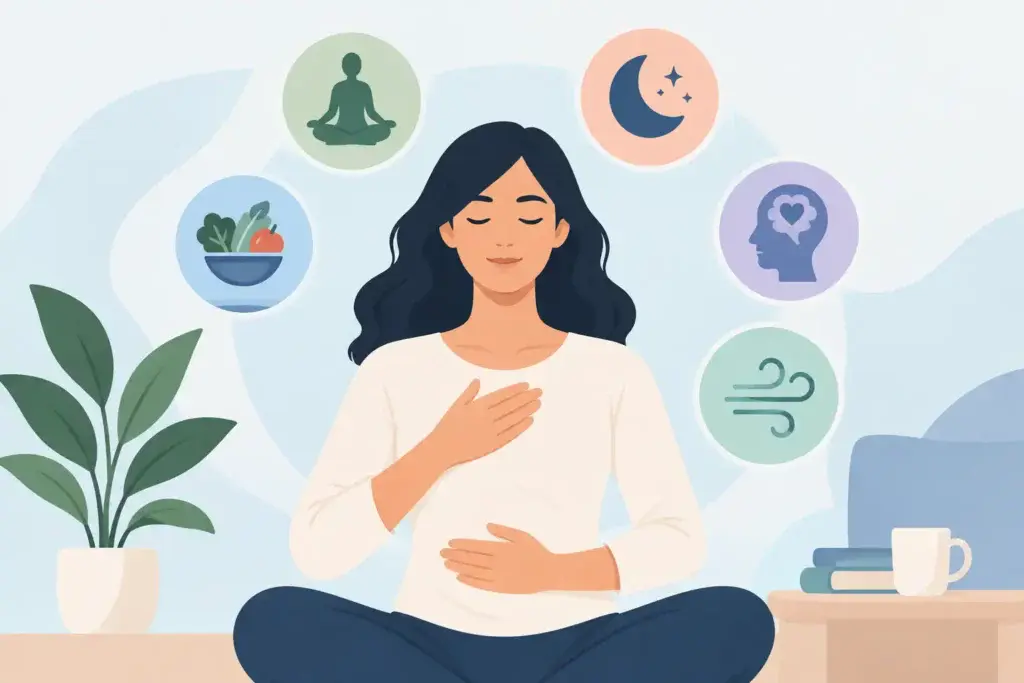
A rush of worry at 3 a.m. A racing heart before a meeting you have handled many times before. A sudden sense that something is wrong, even when you cannot point to a clear reason. During perimenopause and menopause, these experiences can feel unsettling and deeply personal. Hormonal anxiety coping strategies can help you create steadier ground while you learn what your body may be asking for.
You are not imagining it, and you are not failing at stress management. Anxiety can become more noticeable during hormonal transition, even for women who have never considered themselves anxious. The goal is not to force yourself to feel calm at all times. It is to recognize patterns, lower the intensity of the moment, and get appropriate support when anxiety begins to affect your sleep, relationships, work, or sense of safety.
Why hormonal changes can make anxiety feel different
Estrogen does more than support reproductive health. It also interacts with brain chemicals involved in mood, sleep, and the stress response. As estrogen fluctuates in perimenopause, some women notice more irritability, worry, low mood, or physical sensations that resemble anxiety, such as a pounding heart, sweating, dizziness, or chest tightness.
Sleep disruption can add another layer. Night sweats, frequent waking, or early-morning waking can leave your nervous system with less capacity to handle ordinary pressure the next day. Caffeine, alcohol, skipped meals, thyroid concerns, certain medications, and major life stressors can also contribute. That is why it helps to look at anxiety in context rather than assuming there is one single cause.
Hormones may be part of the picture, but they are not the only explanation. New or worsening anxiety deserves a thoughtful conversation with a healthcare professional, especially if symptoms are intense or feel unlike your usual experience.
Hormonal anxiety coping strategies for the moment
When anxiety rises, your body may be looking for evidence that you are safe. Reasoning with yourself can be useful, but it often works better after you have first helped your nervous system settle.
Start with a slower exhale
Try breathing in gently for a count of four and out for a count of six. Continue for one or two minutes without forcing a deep breath. A longer exhale can signal to your body that immediate danger has passed. If counting feels stressful, simply let your out-breath be a little longer than your in-breath.
Pair this with a simple grounding statement: “This is a wave of anxiety. It feels uncomfortable, but it will pass.” The statement does not need to feel completely believable at first. Its purpose is to create a little distance between you and the alarm your body is sounding.
Name what is happening around you
Anxiety pulls attention into frightening predictions. Grounding brings it back to the present. Look for five things you can see, four things you can physically feel, three things you can hear, two things you can smell, and one thing you can taste. You can also hold a cool glass of water, step outside for fresh air, or place both feet firmly on the floor.
These are not cures for the underlying cause of anxiety. They are small ways to interrupt the spiral so you can choose your next step from a calmer place.
Reduce the pressure to solve everything immediately
Hormonal anxiety often arrives alongside a strong urge to figure everything out right now: Why do I feel this way? What if it gets worse? What does this mean? Give yourself permission to postpone the larger questions for 20 minutes. Write them down if you need to, then return to one practical action: drink water, eat something nourishing, take a short walk, or send a message to someone you trust.
Build a daily foundation that supports steadier moods
Lifestyle changes cannot erase every symptom, and they should never be presented as a substitute for medical care. Still, daily rhythms can make anxiety more manageable, particularly when hormones and sleep are unpredictable.
Regular meals matter more than many women realize. Going long stretches without food can contribute to shakiness, irritability, and a racing heart, which can be easy to mistake for anxiety. Aim for meals and snacks that include protein, fiber-rich carbohydrates, and healthy fats. This may help support more stable energy through the day.
Caffeine is another useful area to investigate with curiosity rather than judgment. Some women can tolerate their usual coffee during perimenopause, while others find that even one cup increases jitters, hot flashes, or middle-of-the-night waking. Consider tracking how much you have, when you have it, and how you feel several hours later before deciding whether a change would help.
Movement can also be a form of emotional regulation. A brisk 10-minute walk, gentle strength training, stretching, or dancing in your kitchen can release some of the physical activation anxiety creates. The best option is usually the one you can repeat without turning it into another demand on your already full day.
Sleep deserves special attention, though perfection is not realistic. Keep your bedroom cool when possible, create a predictable wind-down routine, and avoid treating a difficult night as proof that the next day is ruined. If insomnia is persistent, bring it to your clinician. Sleep problems are common in perimenopause, but common does not mean you have to simply endure them.
Track patterns without becoming consumed by them
A symptom tracker can turn a vague, frightening experience into useful information. Rather than recording every thought, keep it simple for two to four weeks. Note your anxiety level, sleep quality, cycle changes if you still have periods, hot flashes or night sweats, caffeine and alcohol, meals, movement, and significant stressors.
You may begin to see patterns. Perhaps anxiety peaks after several poor nights of sleep, during a certain phase of your cycle, or after afternoon caffeine. Perhaps it is unrelated to your cycle but connected to a demanding caregiving season or an unresolved health concern. Both kinds of information are valuable.
Tracking is meant to create clarity, not hypervigilance. If detailed notes make you feel more anxious, use a brief daily rating from one to five and one sentence about what stood out. Novelle Journey encourages tools that help you feel more prepared and informed, not more monitored.
Talk with your healthcare provider about the full picture
You do not need to arrive at an appointment with a diagnosis. You only need a clear description of what has changed. Consider sharing when the anxiety began, how often it occurs, any physical symptoms, sleep changes, menstrual changes, and the ways it affects your daily life. Bring your tracker if you have one.
Your clinician may want to consider possible contributors such as perimenopause, thyroid conditions, anemia, medication effects, depression, panic disorder, or other health concerns. Depending on your health history and symptoms, options may include counseling, cognitive behavioral therapy, medication for anxiety or depression, treatment for sleep concerns, or a discussion about menopausal hormone therapy. The right path depends on your personal medical history, risk factors, preferences, and the symptoms you are experiencing.
If you have chest pain, fainting, severe shortness of breath, or symptoms that could indicate a medical emergency, seek urgent care. If anxiety includes thoughts of harming yourself or feeling unable to stay safe, call or text 988 in the United States for immediate crisis support, or contact emergency services.
Let support be part of the strategy
Hormonal transition can be isolating when the people around you do not understand why you suddenly feel unlike yourself. Choose one person who can offer calm company rather than quick fixes. You might say, “I am having a hard anxiety day. I do not need you to solve it, but I would appreciate a check-in.”
Professional support can be equally meaningful. A therapist who understands anxiety, life transitions, or women’s health can help you build skills that fit your real circumstances. Support is not a sign that you are unable to cope. It is one more way of caring for yourself through a demanding season.
Your body may be changing, but you do not have to meet every difficult feeling alone. With patient observation, practical calming tools, and care that takes your symptoms seriously, you can move through this chapter with more confidence and compassion for yourself.
This article is for educational purposes only and is not medical advice. Always consult a qualified healthcare provider about your health.