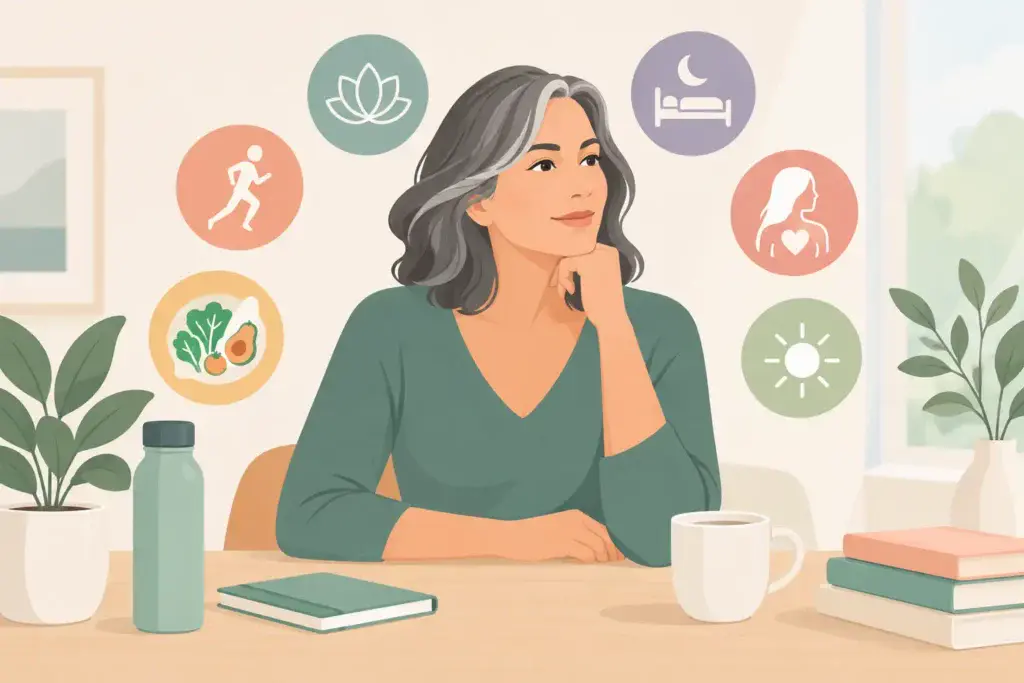
Some mornings, menopause can feel like a collection of unrelated problems: a poor night of sleep, a short fuse, a foggy afternoon, then another night spent kicking off the covers. If you are wondering how to build menopause routine habits that bring more steadiness to your days, start with this: you do not need to overhaul your life to support your body.
A helpful routine is not a strict schedule or a test of willpower. It is a small set of repeatable supports that helps you notice what is changing, respond with care, and gather useful information for your healthcare provider. Your needs may shift across perimenopause, menopause, and post-menopause. That does not mean you are doing it wrong. It means your routine should be flexible enough to meet you where you are.
Start by choosing one area that feels hardest
When symptoms pile up, it is tempting to address everything at once: food, exercise, supplements, sleep, stress, weight changes, and medical appointments. That approach can become exhausting quickly. Instead, choose the symptom that has the greatest effect on your daily life right now.
For some women, that is waking at 3 a.m. and being unable to fall back asleep. For others, it is anxiety that feels unfamiliar, brain fog at work, painful sex, fatigue, or hot flashes that interrupt conversations and concentration. Naming your main concern does not minimize the rest. It simply gives your routine a clear starting point.
Try finishing this sentence in a journal: “The change I most want support with this month is ______.” Then ask what would make that issue 10 percent easier. A realistic answer might be a consistent bedtime, a few minutes of movement after lunch, or finally writing down symptoms before a doctor visit.
Build your menopause routine around anchors, not perfection
Anchors are actions tied to moments that already happen in your day. They are easier to maintain than an ambitious plan that requires extra time, energy, and motivation you may not have.
Your morning anchor might be drinking water before coffee and taking a moment to rate your sleep. Your midday anchor could be stepping outside, eating a balanced lunch, or noticing whether a hot flash followed alcohol, a spicy meal, stress, or a warm room. Your evening anchor may be setting out breathable sleepwear, dimming lights, or doing a brief brain-dump journal entry.
The best routine is the one you can return to after a hard day. If a 45-minute workout makes you feel strong and supported, wonderful. If your current capacity is a 10-minute walk or gentle stretching, that counts too. Menopause care does not need to be earned through intensity.
Create a calmer sleep support plan
Sleep disruption is one of the most common reasons women seek menopause support, and it can amplify nearly every other symptom. A sleep routine cannot eliminate every night sweat or early awakening, but it can reduce avoidable friction.
Keep the goal modest: make your bedroom and pre-bed habits work with your body rather than against it. Consider a cooler room, layered bedding you can adjust easily, and moisture-wicking pajamas if night sweats are an issue. A consistent wake time can be more useful than forcing an early bedtime when you are not sleepy.
Pay attention to patterns without becoming rigid. Caffeine, alcohol, late heavy meals, stress, and screens may affect sleep differently from person to person. If you notice a reliable connection, experiment with one adjustment for a week or two. If sleep remains persistently poor, especially alongside loud snoring, gasping, depression, or significant daytime sleepiness, bring it to a clinician. Not every sleep problem in midlife is “just menopause.”
Support energy with regular nourishment and movement
Hormonal changes can coincide with shifts in appetite, body composition, and energy. This can make wellness advice about food and exercise feel loaded or discouraging. A more supportive approach focuses on nourishment, strength, and steadier energy rather than punishing rules.
Aim for meals that include protein, fiber-rich carbohydrates, colorful produce, and healthy fats when accessible to you. Regular meals may help some women avoid the sharp energy dips that make irritability and cravings feel more intense. Hydration matters too, particularly if hot flashes leave you waking sweaty or if you are increasing activity.
Movement is not one-size-fits-all. Strength training can support muscle and bone health, while walking, swimming, cycling, yoga, and dance may support mood, mobility, and cardiovascular health. Start with the kind of movement you are most likely to repeat. If joint pain, dizziness, pelvic symptoms, or a medical condition complicates exercise, ask for individualized guidance.
Track patterns so you have clearer conversations
Symptoms can feel random when you are living through them. Tracking creates a record you can look back on when memory is fuzzy or an appointment feels rushed. It also helps separate a one-off difficult day from a pattern worth discussing.
You do not need to track every detail of your life. For two to four weeks, note your cycle changes if you still have periods, sleep quality, hot flashes or night sweats, mood, energy, headaches, and any symptoms that concern you. Add a short note about possible context, such as a stressful workday, alcohol, travel, illness, or a new medication.
A simple daily check-in can include:
- Sleep: How long did you sleep, and how rested do you feel?
- Symptoms: What showed up, how intense was it, and when did it happen?
- Mood and energy: What felt noticeably different from your usual baseline?
- Support: What seemed to help, even a little?
- Questions: What do you want to remember for your next appointment?
This is not about proving that your symptoms are real. You are not imagining them, and you deserve to be taken seriously. Tracking is a tool for your own clarity and for more specific conversations about options, including lifestyle support, therapy, nonhormonal treatment, hormone therapy, or referrals when appropriate.
Make room for emotional care, not just symptom management
Menopause can change how you feel in your body and how you recognize yourself. You may be carrying work, caregiving, relationships, and the expectation to keep functioning as though nothing has changed. A routine that only focuses on productivity can miss the emotional weight of this transition.
Build in one practice that helps you reconnect with yourself. That could be a five-minute journal prompt, a voice note after a difficult day, a regular check-in with a friend, therapy, prayer, time outdoors, or simply a boundary around one obligation that drains you. The practice does not have to look impressive. It needs to feel supportive.
If anxiety, low mood, rage, or loss of interest feels severe, persistent, or unlike you, seek professional support promptly. Mental health symptoms deserve care in their own right, whether or not they are connected to hormonal changes.
Review your routine every two weeks
A menopause routine should be a living plan. Every couple of weeks, look at your notes and ask: What is helping? What is not realistic? What symptom needs more attention? Keep what is useful, adjust what is not, and resist the urge to add five new habits at once.
You might find that your first routine is simply a sleep check-in, a protein-forward breakfast, two short walks each week, and a symptom log. That is a meaningful foundation. Once it feels familiar, you can build from there.
For education and reflection, tools such as a symptom tracker, wellness journal, or doctor-visit question list can help organize what you are experiencing. Novelle Journey is built around this kind of practical clarity: turning scattered experiences into patterns you can understand and discuss.
Your routine does not need to make menopause disappear. It can give you a steadier way to care for yourself while you navigate this next chapter with more confidence, information, and self-trust.
This article is for educational purposes and does not replace personalized medical advice. Speak with a qualified healthcare professional about new, severe, or concerning symptoms and before starting or changing treatment.
This article is for educational purposes only and is not medical advice. Always consult a qualified healthcare provider about your health.