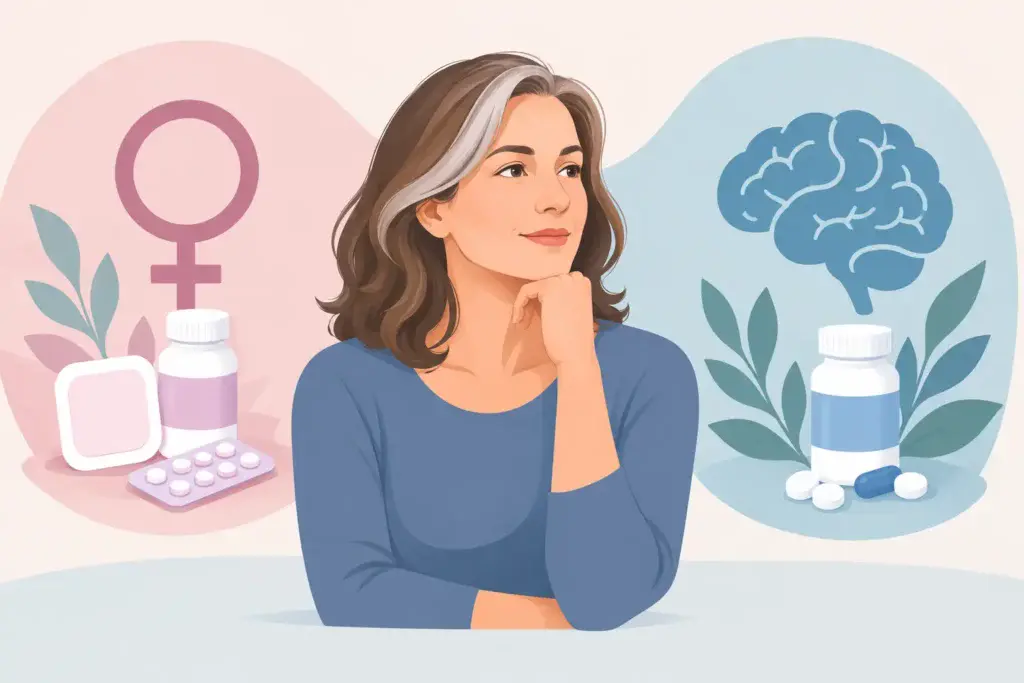
A sudden wave of anxiety at 3 a.m., tearfulness that feels unlike you, or a shorter fuse after years of feeling steady can be deeply unsettling. When these changes arrive alongside irregular periods, hot flashes, or disrupted sleep, the question of HRT versus antidepressants often comes up. You are not imagining the connection between hormones, sleep, and mood – but the right support is personal, and it is not always an either-or decision.
Both options can be appropriate for some women in perimenopause or menopause. They work differently, carry different considerations, and should be discussed with a qualified clinician who understands your health history. The goal is not to find a one-size-fits-all answer. It is to understand what may be driving your symptoms so you can make a confident, informed decision.
Why menopause can affect mood so strongly
Estrogen does far more than regulate the menstrual cycle. It also interacts with brain chemicals involved in mood, stress response, sleep, and temperature regulation. During perimenopause, estrogen levels can rise and fall unpredictably. For some women, that fluctuation can contribute to anxiety, low mood, irritability, poor concentration, and a sense of feeling emotionally off balance.
At the same time, night sweats and insomnia can leave you exhausted. Chronic sleep disruption alone can intensify anxiety, lower resilience, and make ordinary pressures feel much harder to manage. Work demands, caregiving, relationship changes, and the emotional weight of this life stage may also be part of the picture.
That does not mean every mood symptom in midlife is caused by hormones. Depression and anxiety are real medical conditions that deserve careful attention at any age. The timing, pattern, severity, and impact of your symptoms all matter.
HRT versus antidepressants: the central difference
Hormone replacement therapy, often called HRT or menopausal hormone therapy, replaces hormones that decline around menopause. For many women, it is especially effective for vasomotor symptoms – hot flashes, night sweats, and related sleep disruption. By easing these symptoms, HRT may also improve mood, energy, and day-to-day functioning for some people.
Antidepressants are medications designed to treat depression and certain anxiety disorders. Some types, particularly SSRIs and SNRIs, can also reduce hot flashes for some women. They do not replace estrogen or address the hormonal transition itself, but they may be a valuable treatment when depression or anxiety is a central concern.
The distinction matters because similar symptoms can have different roots. If low mood appeared alongside new hot flashes, irregular cycles, and sleep changes, hormonal fluctuation may be an important part of the conversation. If depression has been persistent across life stages, includes loss of interest or hopelessness, or is significantly affecting daily life, an antidepressant, therapy, or both may be more directly helpful.
Sometimes both treatments are considered. A woman may use HRT for disruptive hot flashes and an antidepressant for an established mood disorder. Another may find that HRT improves sleep and physical symptoms enough that mood becomes more manageable without an antidepressant. There is no prize for choosing one approach over another. The best plan is the one that fits your symptoms, preferences, risks, and goals.
When HRT may be worth discussing
HRT may be part of the conversation if you are experiencing bothersome hot flashes, night sweats, sleep disruption, vaginal or urinary symptoms, or other menopause-related changes alongside mood shifts. It can be particularly relevant when these symptoms began during perimenopause or menopause and appear to move together.
Estrogen therapy may be prescribed on its own for women who no longer have a uterus. For women with a uterus, progesterone or a progestogen is usually added to protect the uterine lining. HRT comes in several forms, including patches, gels, sprays, creams, and pills. The route and dose can affect the benefits, side effects, and risk profile.
HRT is not right for everyone. A clinician will consider factors such as a history of certain cancers, unexplained vaginal bleeding, blood clots, stroke, heart disease, liver disease, migraines, and your personal and family medical history. The details matter, so this is not a decision to make from a symptom checklist alone.
It is also helpful to know that HRT is not generally presented as a primary treatment for major depression. It may support mood when menopausal symptoms and hormone changes are playing a substantial role, but it does not replace a full mental health evaluation when symptoms are significant.
When antidepressants may be a better fit
Antidepressants may be recommended when symptoms meet criteria for depression or an anxiety disorder, when mood symptoms are severe, or when HRT is not advisable or not desired. They may also be considered for women whose hot flashes are troublesome but who cannot use or prefer not to use hormone therapy.
SSRIs and SNRIs are commonly discussed in this setting. Some women notice benefits in mood, anxiety, or hot flashes within several weeks, though response varies. Finding the right medication and dose can take time. Side effects can include nausea, headaches, sleep changes, sexual side effects, dry mouth, or changes in appetite. These effects are not inevitable, and they should be part of an open conversation rather than something you feel expected to simply tolerate.
If you have taken an antidepressant before, share what worked, what did not, and any side effects you experienced. A prior response can offer useful clues. If you are considering stopping an antidepressant, do not stop suddenly without guidance. Many need to be tapered gradually to reduce withdrawal symptoms.
Looking beyond the prescription question
Medication can be an important tool, but it is rarely the entire plan. Therapy can offer practical support for anxiety, grief, relationship changes, and the identity shifts that sometimes accompany midlife. Cognitive behavioral therapy can also help some women manage insomnia and the distress associated with hot flashes.
Your clinician may also want to rule out other contributors to mood changes, such as thyroid disease, anemia, nutrient deficiencies, medication effects, sleep apnea, or substance use. This is not about dismissing your menopause experience. It is about giving your symptoms the full attention they deserve.
Small patterns can provide meaningful information, too. Notice whether your mood changes after a poor night of sleep, during hot flashes, around cycle shifts, or after alcohol. Track your energy, concentration, physical symptoms, and menstrual changes in the same place. Over a few weeks, that record can turn a vague feeling of “something is wrong” into a clearer clinical picture.
How to prepare for a productive appointment
You do not need to arrive with a diagnosis. You only need to bring your experience. Before your visit, write down when symptoms began, how often they occur, and how they affect work, relationships, sleep, and daily life. Include your cycle changes, hot flashes, medications and supplements, medical history, and family history.
It can help to ask: “Could these mood changes be related to perimenopause?” “What are the likely benefits and risks of HRT for me?” “Would an antidepressant address my main symptoms?” and “What should we monitor if I start treatment?” If you leave feeling rushed or unheard, it is reasonable to seek another clinician who will take your concerns seriously.
Seek urgent help right away if you are having thoughts of harming yourself, feel unable to stay safe, or are experiencing a mental health crisis. In the U.S., you can call or text 988 to reach the Suicide & Crisis Lifeline.
Your next step does not have to be a final decision. It may simply be tracking your symptoms for two weeks, scheduling an appointment, or naming what has changed. Clear information and a thoughtful conversation can help you move forward with more support and less uncertainty.
This article is for educational purposes only and is not medical advice. Always consult a qualified healthcare provider about your health.