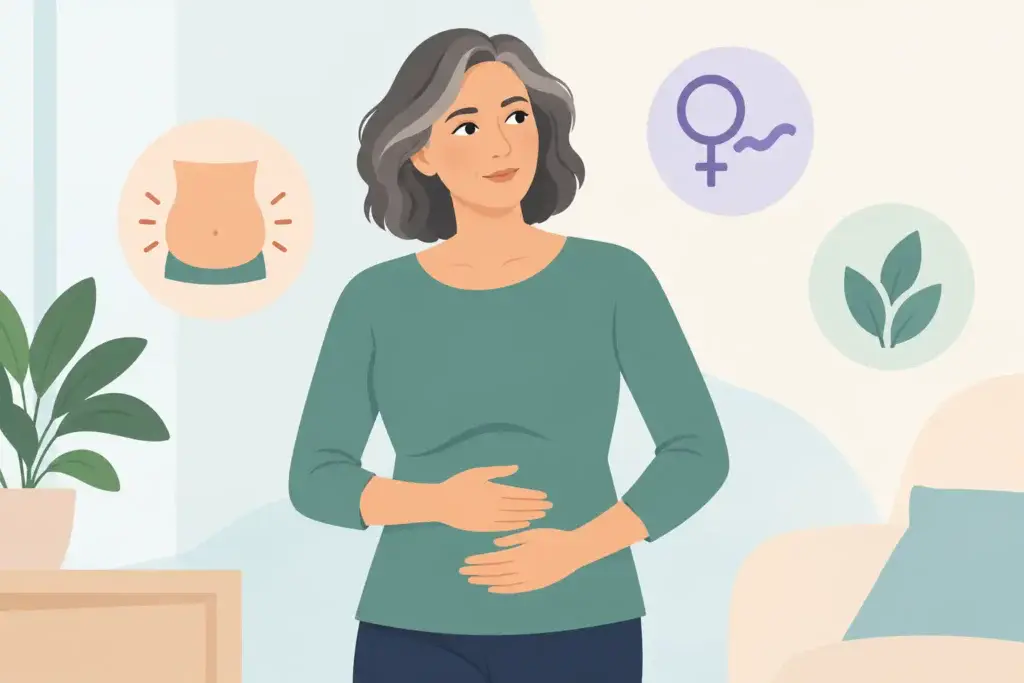
That suddenly tight waistband, the uncomfortable fullness after a familiar meal, the feeling that your stomach has changed overnight – it can be unsettling. If you are asking, “Is menopause bloating normal?” the short answer is: it can be. Bloating is a common concern during perimenopause and menopause, but it still deserves your attention, especially when it is new, persistent, or affecting how you feel in your body.
You are not imagining it. Hormonal shifts can affect digestion, fluid balance, and how your body responds to foods and stress. At the same time, not every symptom that appears during menopause is caused by menopause. Understanding the difference can help you find relief and know when to speak with a clinician.
Why menopause can cause bloating
Estrogen and progesterone do more than influence periods, temperature regulation, and mood. They also interact with the digestive system. During perimenopause, these hormones can rise and fall unpredictably before settling at lower levels after menopause. Those changes may affect how quickly food moves through your gut and how much fluid your body holds onto.
For some women, slower digestion means more gas, constipation, and a swollen or pressured feeling in the abdomen. For others, bloating is more noticeable around the time they once had a menstrual cycle, even if periods have become irregular or have stopped. Water retention can also make your midsection feel fuller for a few days at a time.
Sleep disruption and stress may add another layer. When you are exhausted from night sweats or managing a demanding season of life, you may be more likely to eat quickly, skip meals, reach for highly processed foods, or experience changes in gut sensitivity. None of this means you have done anything wrong. It simply means your body may need a little more steady support than it did before.
Bloating and weight change are not the same
Bloating is usually a temporary sensation of pressure, fullness, or visible abdominal distension. It may fluctuate through the day, often worsening after meals and easing after a bowel movement or overnight.
Weight gain is a more lasting change in body weight or body composition. Menopause can shift where the body stores fat, particularly around the abdomen, but bloating does not automatically mean you have gained weight. Separating these two experiences can reduce frustration and help you describe your symptoms more clearly at a medical appointment.
Is menopause bloating normal every day?
Occasional bloating can fall within the broad range of menopause symptoms, particularly during perimenopause. Daily bloating, however, is worth exploring rather than simply accepting. The cause may still be manageable and benign, such as constipation, a food intolerance, or changes in eating patterns. But persistent symptoms should not be automatically dismissed as hormones.
Pay attention to the pattern. Does the bloating come and go? Does it follow certain meals? Is it paired with constipation, diarrhea, reflux, pelvic pressure, or changes in appetite? Details like these can give you and your clinician a clearer starting point.
It also depends on your personal health history. Conditions such as irritable bowel syndrome, celiac disease, thyroid disorders, and pelvic floor changes can become more noticeable in midlife. Some medications and supplements, including certain forms of iron, can also contribute to constipation and bloating.
Gentle ways to ease bloating
There is no single menopause-bloating fix, and restrictive eating plans are rarely the most helpful first step. A calmer approach is to build small, repeatable habits that support digestion while you learn how your body responds.
Start with the basics: regular meals, enough fluids, and gradual movement. A short walk after eating can support digestion and may reduce that heavy, stuck feeling. If constipation is part of the picture, increasing fiber slowly through foods such as vegetables, beans, fruit, and whole grains may help. Adding a large amount of fiber all at once, though, can worsen gas and discomfort, so gradual changes matter.
It may also help to slow down at meals. Eating quickly, talking while chewing, drinking carbonated beverages, and chewing gum can all increase the amount of air you swallow. These are not rules you need to follow perfectly. Think of them as simple experiments when your symptoms are active.
Some women notice that alcohol, very salty foods, large late-night meals, or particular carbohydrates make bloating more likely. Rather than cutting out several food groups at once, try observing one possible trigger for a week or two. This creates useful information without turning food into another source of stress.
If you are considering over-the-counter remedies, supplements, or probiotics, check with a pharmacist or clinician first. What helps one person may not help another, and some products can interact with medications or worsen digestive symptoms.
Track the pattern before your appointment
A brief symptom record can turn a vague concern into a more productive healthcare conversation. You do not need to track every bite or every sensation. A few notes can be enough to reveal useful patterns.
For two to four weeks, consider recording:
- when bloating occurs and how long it lasts
- bowel habits, including constipation or diarrhea
- meals, alcohol, carbonated drinks, and any clear food patterns
- sleep, stress, movement, and menopause symptoms such as hot flashes
- changes in medications, vitamins, or supplements
Bring this record to your appointment, along with a list of questions. You might ask whether your symptoms could be related to hormonal changes, constipation, medication effects, or another digestive or gynecologic condition. You can also ask what evaluation makes sense based on your age, history, and symptoms.
A symptom tracker is not about becoming hypervigilant. It is a tool for clarity. When so much about perimenopause can feel unpredictable, a record can help you see what is changing and communicate it with more confidence.
When bloating needs prompt medical attention
Most bloating is not an emergency, but persistent abdominal symptoms deserve care. Contact a clinician if bloating is new and frequent, lasts for several weeks, or is becoming more severe. It is especially important to speak up if it comes with pelvic or abdominal pain, feeling full quickly when eating, loss of appetite, unexplained weight loss, unusual vaginal bleeding, urinary urgency or frequency, vomiting, fever, or a major change in bowel habits.
These symptoms can have many possible causes, most of which are not cancer. Still, ongoing bloating can overlap with signs of conditions that need evaluation, including ovarian and gastrointestinal concerns. You deserve a thorough response, not reassurance that ends the conversation before your symptoms have been understood.
Seek urgent medical care for severe or sudden abdominal pain, a swollen abdomen with vomiting, black or bloody stools, fainting, chest pain, or trouble breathing.
A steadier way forward
Menopause can make your body feel unfamiliar at times, and bloating can be one of the more visible, uncomfortable changes. You do not have to minimize it, and you do not need to assume the worst. Notice the pattern, support your digestion with gentle consistency, and bring persistent symptoms to a clinician who will listen. Clear information and a few well-kept notes can make the next conversation feel less overwhelming and more like a step toward feeling at home in your body again.
This article is for educational purposes only and is not medical advice. Always consult a qualified healthcare provider about your health.