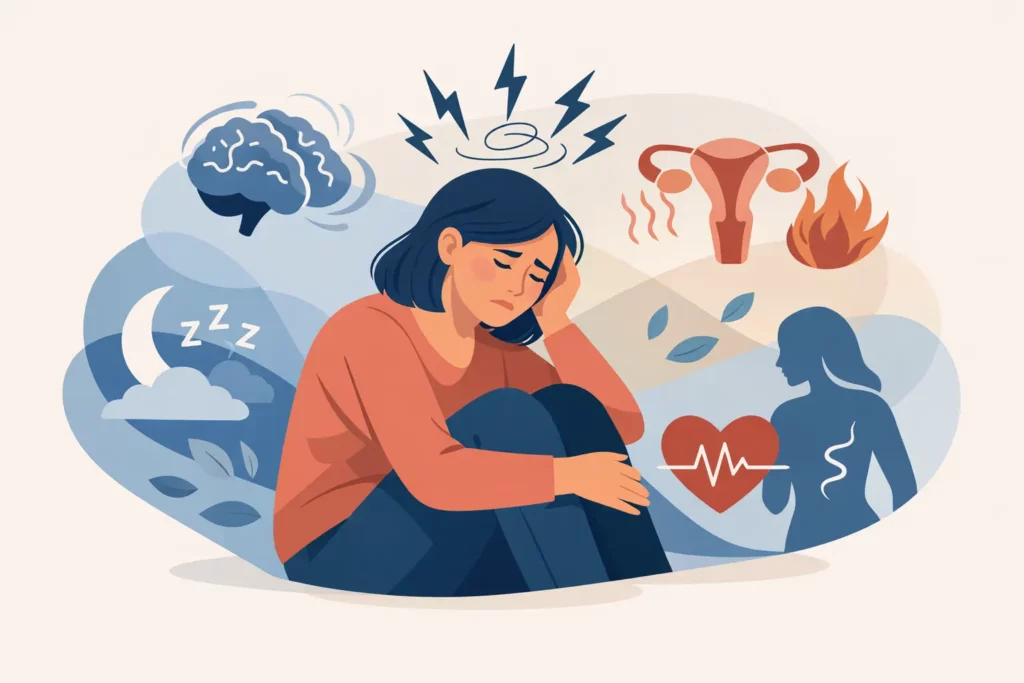
That sense of being suddenly on edge for no clear reason can be deeply unsettling. For many women, menopause anxiety symptoms show up before they realize hormones may be part of the picture. You are not imagining it, and you are not overreacting. Anxiety can become more noticeable during perimenopause and menopause, even in women who have never thought of themselves as anxious before.
What makes this especially hard is how easy it is to second-guess yourself. If your heart races at night, your mind jumps to worst-case scenarios, or everyday stress feels oddly harder to manage, it can seem like something has changed overnight. In reality, these shifts are often connected to a broader hormonal transition that can affect mood, sleep, stress response, and emotional steadiness.
What menopause anxiety symptoms can feel like
Anxiety during menopause does not always look like panic in the obvious sense. Sometimes it is a constant hum of worry. Sometimes it is physical first, with a pounding heart, tight chest, nausea, shakiness, or a restless feeling that seems to come out of nowhere. Sometimes it is mental, with racing thoughts, irritability, a sense of dread, or feeling unable to settle.
Many women describe a mix of symptoms rather than one clear pattern. You might notice you are more easily overwhelmed, more sensitive to stress, or more reactive than usual. You may feel keyed up at bedtime even when you are exhausted. You may also find yourself avoiding situations that never used to bother you, simply because your nervous system feels less resilient.
These experiences can overlap with other menopause-related changes. Hot flashes can mimic panic. Poor sleep can make anxiety worse. Brain fog can make everyday tasks feel harder, which in turn increases stress. When several symptoms happen at once, it can create a cycle that is frustrating and hard to untangle.
Why anxiety can increase during menopause
Hormonal change is one of the main reasons anxiety can become more noticeable in this stage of life. Estrogen and progesterone influence neurotransmitters involved in mood regulation, including serotonin and GABA. When hormone levels fluctuate, especially during perimenopause, emotional balance can feel less predictable.
This does not mean hormones are the only factor. Menopause often overlaps with major life demands such as caregiving, career pressure, aging parents, relationship changes, or health concerns. If you are already carrying a full mental load, hormonal shifts can lower the buffer that once helped you cope.
Sleep disruption matters too. Repeated wake-ups, night sweats, and lighter sleep can leave your body in a more stressed state. When sleep is fractured, your ability to regulate emotions often drops. That can make normal stress feel sharper and anxiety feel more intense.
There is also an individual piece to this. Some women have a history of anxiety, depression, trauma, or sensitivity to hormonal changes around PMS or postpartum. Others do not. Either way, menopause can change the baseline, and that is worth taking seriously.
Common menopause anxiety symptoms
Menopause anxiety symptoms can be emotional, physical, or both. Some of the most common include excessive worry, irritability, feeling unusually tense, difficulty relaxing, a racing heartbeat, chest tightness, dizziness, sweating, trembling, stomach discomfort, and a sense of dread that does not match the moment.
You may also notice sleep-related anxiety, especially waking in the early morning with your mind already racing. Some women describe social anxiety that feels new, while others notice health anxiety becoming more intense during this phase. Trouble concentrating can add another layer, because it may leave you feeling less confident and more easily stressed.
The timing can vary. For some, symptoms flare before a period, then ease. For others, they appear in waves with no obvious pattern. That is why tracking matters. A symptom tracker can help you see whether anxiety is tied to sleep loss, cycle shifts, caffeine, alcohol, stress, or hot flashes rather than being random.
When it might be something else
Although anxiety can absolutely be part of menopause, it should not be assumed that every symptom is hormonal. Heart palpitations, chest pain, shortness of breath, and dizziness can have other causes. Thyroid disorders, medication side effects, blood sugar swings, and certain heart conditions can overlap with anxiety symptoms.
This is one of those areas where balance matters. You do not need to panic over every sensation, but you also do not need to dismiss yourself. If symptoms are new, intense, or worsening, checking in with a healthcare provider is a reasonable next step. That is especially true if anxiety is interfering with work, relationships, sleep, or daily functioning.
Seek urgent care if you have chest pain, trouble breathing, fainting, or symptoms that feel severe or sudden. Menopause can explain a lot, but it should not become a reason to ignore red flags.
How to talk to a healthcare provider about menopause anxiety symptoms
Many women struggle to describe what is happening because the experience feels scattered. One day it is insomnia, another day it is heart palpitations, then crying spells, then a wave of dread in the grocery store. Bringing a simple written record can make the conversation clearer and more productive.
Track when symptoms happen, what they feel like, how long they last, and what else is going on around them. Note any changes in your menstrual cycle, sleep, hot flashes, alcohol intake, caffeine intake, and major stressors. This gives your provider a pattern to work with, rather than a handful of disconnected moments.
It also helps to be direct. You can say, “I think I may be having menopause-related anxiety, and I want to understand what is contributing to it.” If you feel dismissed, ask specific questions about hormonal change, mental health support, medication options, sleep disruption, and whether any lab work or rule-outs are appropriate.
What can help
Support looks different for different women. If anxiety is mild and clearly linked to poor sleep, stress overload, or hormonal fluctuation, improving the basics may help more than you expect. Regular meals, reducing excess caffeine, limiting alcohol intake, gentle movement, consistent sleep routines, and nervous-system-calming practices can make symptoms feel more manageable.
That said, lifestyle support is not always enough, and that is not a personal failure. Some women benefit from therapy, especially cognitive behavioral therapy for anxiety or insomnia. Others may discuss hormone therapy with a qualified clinician if they have broader menopause symptoms and are a good candidate. Some may benefit from non-hormonal medications for anxiety, sleep, or mood.
It depends on the full picture. If anxiety is mostly tied to hot flashes and sleep loss, treating those symptoms may ease the anxiety too. If there is a longer history of anxiety or depression, mental health treatment may need to be a central part of the plan. The goal is not to force one explanation, but to find the combination of support that fits your symptoms and health history.
Small patterns that are worth noticing
One of the most helpful shifts is moving from “What is wrong with me?” to “What pattern am I seeing?” That question creates space for clarity. You may notice that your anxiety spikes after a few nights of poor sleep, around certain points in your cycle, after wine, or during stretches when you are giving to everyone else and recovering nowhere.
This kind of awareness does not solve everything, but it does give you something solid to work with. It can help you prepare, make better daily choices, and have more focused conversations with your provider. For many women, naming the pattern is the first moment things begin to feel less chaotic.
If you are in this season now, try not to judge yourself for the way your body and mind are responding. Menopause can affect far more than periods and hot flashes. When anxiety enters the picture, what you need most is not self-criticism. It is clearer information, steadier support, and the reminder that this chapter is real, manageable, and worthy of care.
This article is for educational purposes only and is not medical advice. Always consult a qualified healthcare provider about your health.