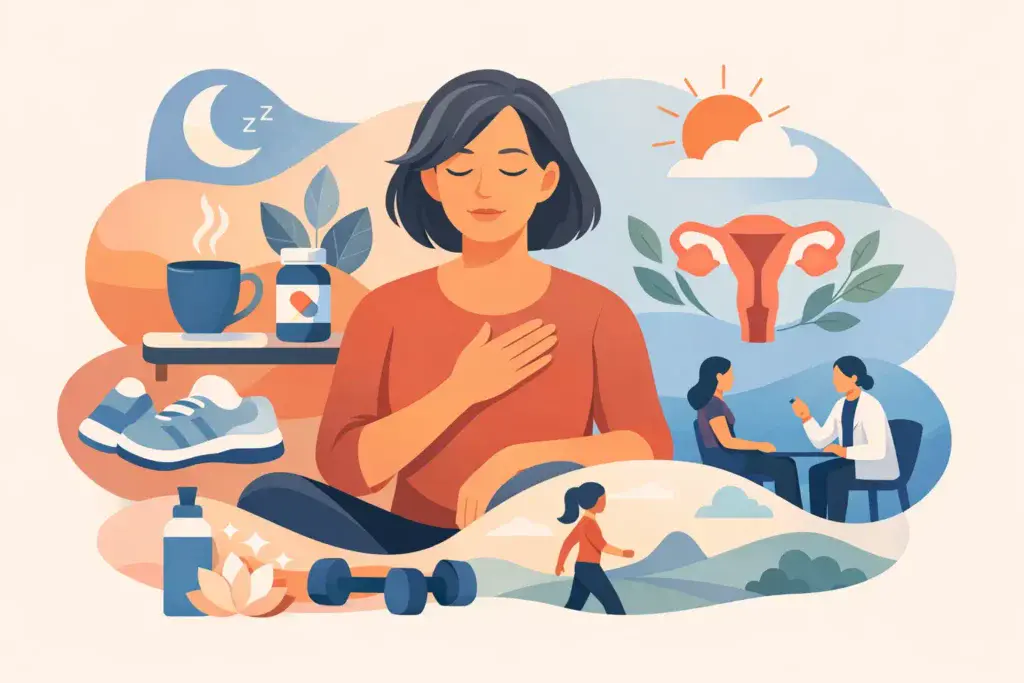
Some women realize something is shifting when sleep starts falling apart for no obvious reason. Others notice anxiety that feels new, a shorter fuse, skipped periods, or a body that suddenly seems to respond differently to stress, food, and exercise. If that sounds familiar, this menopause support guide is here to bring structure to what can feel scattered and hard to explain.
You are not imagining it. Perimenopause and menopause can affect far more than hot flashes, and the experience is rarely identical from one woman to the next. What helps most is not chasing a perfect routine overnight. It is learning how to notice patterns, understand your options, and build support that fits your real life.
What a menopause support guide should actually do
Good menopause information should leave you feeling clearer, not more overwhelmed. That means it should help you connect symptoms to hormonal changes, separate common experiences from potential red flags, and give you practical ways to prepare for conversations with a healthcare provider.
Support also needs to be broader than symptom relief alone. Menopause can affect sleep, mood, focus, energy, relationships, confidence, work performance, and how you feel in your body. A useful guide makes room for both the physical and emotional side of that experience.
There is also a key nuance here: not every symptom in midlife is caused by perimenopause or menopause. Thyroid issues, iron deficiency, medication side effects, high stress, depression, and sleep disorders can overlap. Hormones may be part of the picture, but they are not always the whole picture. That is one reason tracking and medical follow-up matter.
Start with pattern tracking, not guesswork.
When symptoms feel random, it is easy to doubt yourself. A simple tracking habit can turn vague frustration into clearer evidence.
You do not need an elaborate system. Start by noting your cycle changes if you are still having periods, along with a few symptoms that matter most to you. Sleep quality, mood, anxiety, hot flashes, night sweats, headaches, fatigue, brain fog, joint discomfort, and vaginal dryness are often useful places to begin. Include context too – stress, alcohol, exercise, and major schedule shifts can all affect how symptoms show up.
After a few weeks, patterns often become easier to see. You may notice that poor sleep makes everything feel worse, that anxiety spikes before a period, or that certain foods worsen night sweats. This does not mean every pattern has a simple fix, but it gives you something more concrete than, “I just feel off.”
Tracking is especially helpful before a doctor visit. It can make conversations more specific and productive, particularly if you have ever felt dismissed or rushed.
Common symptoms and why support needs to be personalized
Hormonal changes can influence the brain, metabolism, blood vessels, skin, muscles, and reproductive tissues. That is why menopause can feel so wide-ranging. Still, the most common symptoms tend to cluster in a few areas.
Sleep disruption is one of the biggest. Sometimes it is caused by night sweats. Sometimes it is tied to anxiety, early waking, or a sense that your body is suddenly less resilient to stress. If sleep is suffering, support often needs to start there, because poor sleep can intensify mood swings, brain fog, cravings, and fatigue.
Mood changes can be subtle or significant. Some women feel more irritable, emotionally flat, or easily overwhelmed. Others experience anxiety that seems out of character. If you already have a history of anxiety or depression, hormonal shifts can make things feel less predictable. That does not mean you have to simply endure it.
Body changes are another common source of stress. Weight may redistribute, muscle can become harder to maintain, and recovery after exercise may feel slower. This is frustrating, especially if you are doing many of the same healthy habits that once worked well. Support here should be realistic and compassionate, not based on shame or extreme routines.
Genitourinary symptoms often get less attention than they deserve. Vaginal dryness, discomfort with sex, urinary urgency, or more frequent urinary tract infections can all be related to menopause. These symptoms are common and treatable, but many women do not realize they are connected to hormonal changes.
Daily support that helps in real life
A menopause support guide should include practical tools, but the best plan is the one you can actually sustain. Try thinking in layers instead of all-or-nothing fixes.
The first layer is nervous system support. That can sound abstract, but in practice it often means protecting sleep, reducing overstimulation late at night, eating regularly enough to avoid blood sugar swings, and creating a little more recovery time than you may have needed before. Midlife hormones can make the body less forgiving of chronic stress.
The second layer is movement. You do not need punishing workouts. Strength training, walking, mobility work, and consistency matter more than intensity for many women in this stage. If you are exhausted, the answer is not always to push harder. Sometimes it is to build back steadily.
The third layer is food support. Most women do better with enough protein, fiber, hydration, and meals that keep energy more stable. Caffeine and alcohol are worth paying attention to because they can worsen sleep disruption, anxiety, and hot flashes in some women. But this is highly individual. The goal is information, not restriction for its own sake.
The fourth layer is symptom-specific care. Cooling strategies, breathable sleepwear, lubricants or vaginal moisturizers, therapy support, mindfulness practices, and medication options can all have a place. What works depends on your symptoms, health history, and preferences.
When to talk with a healthcare provider
You do not need to wait until symptoms are unbearable. If changes are affecting your sleep, mood, concentration, daily functioning, or quality of life, that is reason enough to bring them up.
It can help to go into the appointment with a short written summary. Include your age, cycle changes, top symptoms, how long they have been happening, and what seems to make them better or worse. If your main concerns are poor sleep, anxiety, hot flashes, low libido, vaginal dryness, or heavy bleeding, say so directly.
Some situations deserve prompt medical attention. Heavy or prolonged bleeding, bleeding after menopause, chest pain, severe depression, new migraines, fainting, and symptoms that seem sudden or extreme should not be brushed off as “just hormones.”
A good appointment may include discussion of lifestyle support, lab work when appropriate, nonhormonal options, or hormone therapy. The right approach depends on your medical history and symptom profile. It is okay to ask questions. It is okay to ask for clarification. It is also okay to seek a second opinion if you do not feel heard.
A calmer way to think about treatment options
Many women are caught between two unhelpful messages: that hormone therapy is the answer to everything, or that it is inherently unsafe for everyone. Neither is accurate.
For some women, hormone therapy can be an effective treatment for symptoms like hot flashes, night sweats, and vaginal dryness, especially when started within an appropriate timeframe and with medical guidance. For others, nonhormonal approaches may be a better fit because of health history, personal preference, or symptom type.
This is where a balanced menopause support guide matters. Treatment decisions should be informed, individualized, and made with a qualified clinician. The goal is not to follow trends. It is to find support that matches your body, your risks, and your priorities.
The emotional side of menopause support
One of the hardest parts of this transition is how easy it is to start doubting yourself. If your concentration is off, your patience is thinner, or your body feels unfamiliar, it can chip away at your confidence in ways that are difficult to explain.
That is why support should include language for what you are experiencing. Journaling can help you identify recurring stressors and symptom patterns. A discussion guide can make doctor visits less intimidating. A symptom tracker can turn scattered moments into something more organized. These tools do not solve everything, but they can help you feel more anchored.
At Novelle Journey, that kind of clarity is part of the point. When information is organized in a calm, practical way, it becomes easier to make decisions without spiraling into confusion.
Build your support system before you feel desperate
Menopause is not a test of how much discomfort you can tolerate quietly. It is a health transition, and support works better when it is built early. That support might include a trusted clinician, a few simple tracking habits, better boundaries around rest, and resources that help you prepare instead of panic.
You do not need to solve every symptom this week. Start by paying attention, writing things down, and choosing one area that would make the biggest difference if it were improved. A little more sleep, a little more clarity, and a little more self-trust can go a long way as you navigate your next chapter with confidence.
This article is for educational purposes only and is not medical advice. Always consult a qualified healthcare provider about your health.