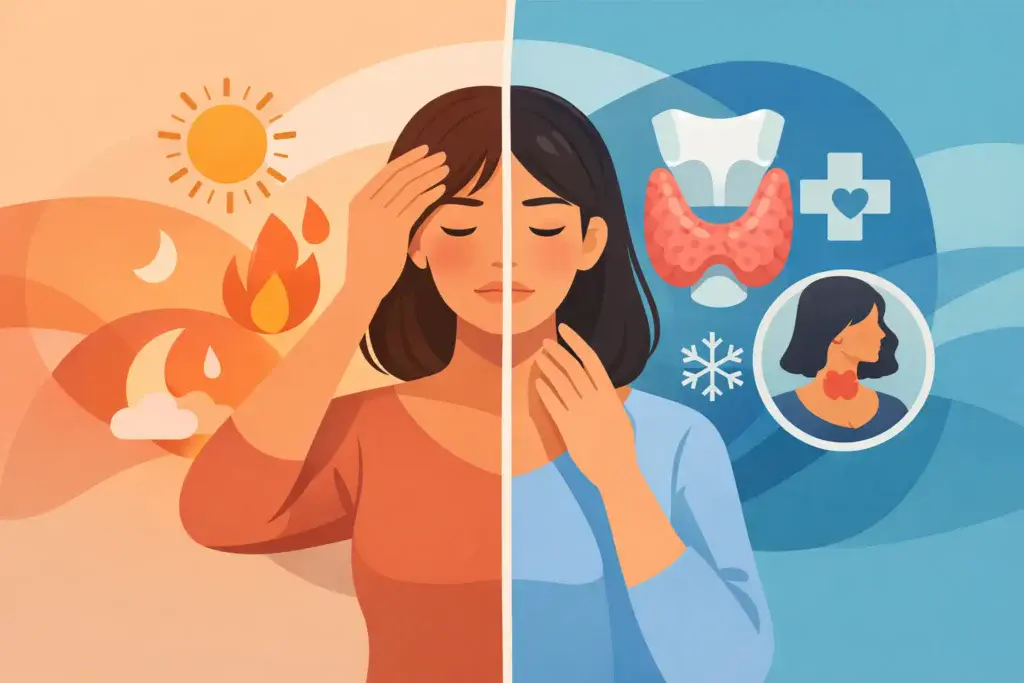
A restless night, a racing heart, a foggy afternoon, a body that suddenly feels unfamiliar. When these changes arrive in your 40s or early 50s, it is easy to assume they are simply part of the transition. But perimenopause vs thyroid symptoms can be genuinely difficult to sort out because both can affect energy, mood, sleep, weight, temperature comfort, and periods.
You are not imagining the overlap, and you do not have to solve it alone. Perimenopause is a normal life stage, while thyroid conditions are medical issues that may need treatment. Sometimes it is one, sometimes it is the other, and sometimes both are happening at once. The goal is not to self-diagnose. It is about noticing patterns, bringing a clear history to your clinician, and ensuring your concerns receive a thoughtful evaluation.
Why the symptoms can look so similar
Your thyroid is a small gland in your neck that helps regulate metabolism, energy use, heart rate, body temperature, digestion, and more. When it produces too little or too much thyroid hormone, the effects can reach many parts of the body.
Perimenopause is the years leading up to menopause, when estrogen and progesterone levels fluctuate. Those shifts can influence the brain, blood vessels, sleep, mood, menstrual cycle, and your body’s response to stress. Because both systems have wide-ranging effects, the symptom lists can look remarkably alike.
Fatigue, anxiety, disrupted sleep, changes in concentration, weight shifts, irregular periods, and feeling unusually hot or cold can occur in either situation. That does not mean every symptom has a hormonal explanation. Iron deficiency, medication effects, depression, sleep apnea, blood sugar changes, and other health concerns can also play a role. A broad, curious approach is often more useful than trying to find one answer immediately.
Perimenopause vs thyroid symptoms: key clues
Symptoms alone cannot confirm a diagnosis, but the timing, pattern, and combination of changes can offer useful clues.
Clues that may point toward perimenopause
Perimenopause often begins with a change in your usual menstrual pattern. Periods may come closer together, farther apart, become heavier or lighter, or feel less predictable than they once did. This is especially meaningful if you are in your late 30s, 40s, or early 50s, though age alone does not tell the whole story.
Hot flashes and night sweats are also more closely associated with perimenopause. You might feel a sudden wave of heat in your face, chest, or whole body, sweat at night, or wake with your heart pounding. Sleep can become fragmented even when you are exhausted. Vaginal dryness, discomfort with sex, changes in urinary urgency, and lower libido can also reflect shifting estrogen levels.
Mood changes during perimenopause can be real and disruptive. Some women notice increased irritability, anxiety, sadness, or a shorter emotional fuse, often alongside sleep loss and cycle changes. Symptoms may rise and fall rather than stay the same every day.
Clues that may point toward hypothyroidism
Hypothyroidism means the thyroid is underactive. It can cause persistent fatigue, feeling cold when others are comfortable, constipation, dry skin, hair thinning, a puffy face, muscle aches, low mood, and unexplained weight gain or difficulty losing weight.
Periods may become heavier, longer, or more frequent with hypothyroidism, which can make the picture even more confusing during perimenopause. Some people also notice a slower heart rate, hoarseness, or swelling. These symptoms tend to build gradually and may feel more constant than the fluctuating pattern many women experience in perimenopause.
Clues that may point toward hyperthyroidism
Hyperthyroidism means the thyroid is overactive. It may cause a fast or irregular heartbeat, tremor, sweating, heat intolerance, frequent bowel movements, anxiety, trouble sleeping, muscle weakness, and unintentional weight loss despite a normal or increased appetite.
This can easily be mistaken for hot flashes or anxiety related to perimenopause. But ongoing palpitations, noticeable hand tremors, persistent diarrhea, or weight loss without trying deserve timely medical attention. Some people with hyperthyroidism also develop eye symptoms, such as irritation, swelling, or a more prominent appearance of the eyes.
The cycle can be a useful source of information
A cycle and symptom record can help reveal what memory alone often misses. For two to three months, note the first day of each period, bleeding level, sleep quality, hot flashes or night sweats, mood, energy, bowel changes, heart symptoms, and any new medications or supplements.
Also record context. Did a racing heart happen during a night sweat, after caffeine, while resting, or repeatedly throughout the day? Does fatigue worsen before a period, after several poor nights of sleep, or remain steady all month? A pattern does not prove the cause, but it gives your clinician more to work with than a long list of disconnected symptoms.
If your periods are becoming very heavy, track how often you change pads or tampons, whether you pass large clots, and whether bleeding interferes with normal activities. Heavy bleeding can contribute to iron deficiency, which can in turn cause fatigue, shortness of breath, brain fog, and heart palpitations.
What to discuss at your appointment
You deserve an appointment that looks at the whole picture, not just one symptom in isolation. Tell your clinician when changes began, how they affect daily life, and whether there is a family history of thyroid disease, autoimmune conditions, early menopause, or heart rhythm concerns.
A clinician may order a thyroid-stimulating hormone test, often called TSH, along with free T4 and sometimes additional thyroid testing based on the results and your history. Thyroid testing is usually more reliable for identifying thyroid dysfunction than a single hormone test is for confirming perimenopause.
That is because perimenopause hormones naturally rise and fall. For many women over 45 with typical cycle changes and symptoms, clinicians diagnose perimenopause primarily through symptoms and menstrual history rather than a one-time hormone panel. Testing may still be appropriate in certain situations, including early or unusual symptoms, a history of surgery, or concern for another condition.
It can also be reasonable to ask whether a complete blood count, iron studies, glucose testing, or other evaluation fits your symptoms. The right tests depend on your medical history, medications, age, bleeding pattern, and specific concerns. More testing is not always better, but being dismissed without a conversation is not good care either.
Questions worth bringing with you
Consider writing down a few direct questions: Could my symptoms be related to my thyroid, perimenopause, or both? Which tests would help rule out thyroid disease or anemia? What changes should prompt me to call sooner? If treatment is recommended, how will we know whether it is helping?
A written symptom log and question list can make it easier to stay focused when appointments feel rushed. Novelle Journey encourages this kind of preparation not because you need to prove your symptoms, but because clear details can support clearer care.
When to seek care sooner
Make a routine appointment if you have new or worsening fatigue, cycle changes, hot flashes, persistent anxiety, weight changes, constipation, hair loss, or temperature intolerance that is affecting your quality of life. These symptoms are common, but common does not mean you have to endure them simply.
Seek urgent medical care for chest pain, fainting, severe shortness of breath, a very rapid or irregular heartbeat, confusion, or thoughts of harming yourself. Contact a clinician promptly for bleeding that soaks through a pad or tampon every hour for more than two hours, bleeding after menopause, or bleeding accompanied by dizziness or weakness.
New neck swelling, difficulty swallowing, or a persistent sensation of pressure in the neck also warrants evaluation. These symptoms do not automatically mean a serious thyroid problem, but they should not be brushed aside.
Give yourself room for a fuller answer.
The question is rarely just, “Is this perimenopause or my thyroid?” Your health may be shaped by sleep, stress, nutrition, medications, iron levels, movement, life circumstances, and hormonal shifts all at once. That complexity can feel frustrating, but it also means there are several possible paths toward feeling better.
Bring your observations, ask for the evaluation you need, and allow the answer to unfold over time if necessary. Clarity often begins with one small act of self-trust: recognizing that a change in how you feel is worth paying attention to.
This article is for educational purposes only and is not medical advice. Always consult a qualified healthcare provider about your health.