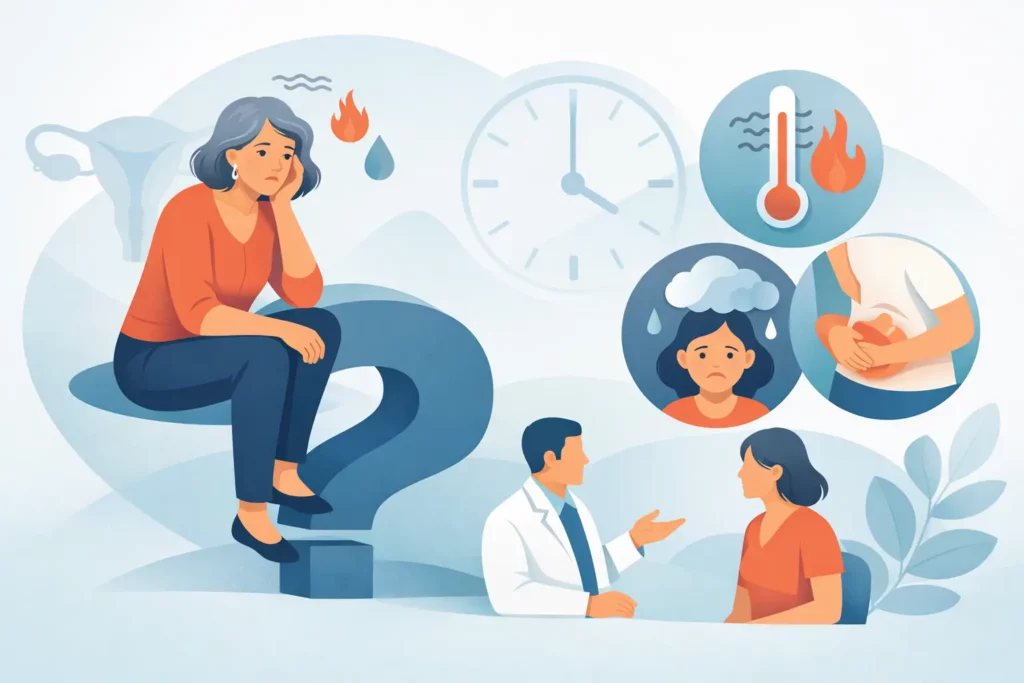
A hot flash that interrupts a meeting can be disruptive. A night of poor sleep can leave you exhausted and unlike yourself. These experiences can be part of perimenopause or menopause, but knowing when menopause symptoms should worry you can bring welcome clarity. You are not imagining what you feel, and you do not have to decide on your own whether a symptom is “normal enough” to ignore.
Menopause can overlap with many other health changes, from thyroid conditions and anemia to anxiety, heart disease, and gynecologic concerns. The goal is not to assume the worst. It is to notice patterns, understand the signs that deserve prompt attention, and seek care with confidence.
What can be common during menopause?
Perimenopause often begins years before periods stop. During this transition, estrogen and progesterone can fluctuate unpredictably, which may affect far more than your menstrual cycle. Hot flashes, night sweats, sleep disruption, vaginal dryness, changes in sexual comfort, mood shifts, brain fog, joint aches, headaches, and changes in bleeding can all occur.
Common does not mean easy, minor, or something you must simply tolerate. If symptoms are affecting your work, relationships, rest, mental health, or sense of self, that alone is a good reason to talk with a healthcare professional. There are lifestyle approaches, nonhormonal options, and hormone therapies that may be appropriate depending on your health history and goals.
The distinction that matters most is this: menopause symptoms tend to follow a recognizable pattern over time, while sudden, severe, unusual, or escalating symptoms deserve a closer look.
When should menopause symptoms worry you right away?
Some symptoms should not wait for a routine appointment. Seek emergency care or call 911 if you have chest pain or pressure, sudden shortness of breath, fainting, new weakness or numbness on one side of the body, trouble speaking, sudden confusion, or a severe “worst-ever” headache. Women’s heart symptoms can sometimes feel less obvious than the classic image of crushing chest pain. They may include unusual breathlessness, nausea, cold sweats, dizziness, pain in the jaw, back, shoulder, or arm, or profound fatigue.
These symptoms may occur during midlife, but they should never automatically be blamed on hormones. A panic-like feeling can be frightening, and anxiety can increase during perimenopause. Still, new or intense symptoms that could point to a heart, lung, or neurologic emergency need urgent evaluation first.
Heavy bleeding also needs timely attention. Contact a clinician promptly if you are soaking through a pad or tampon every hour for more than two hours, passing large clots, feeling faint, or experiencing severe pelvic pain. Heavy bleeding can lead to anemia and may sometimes signal a condition unrelated to menopause.
Bleeding changes that deserve a medical conversation
Irregular periods are common in perimenopause. Cycles may become shorter, longer, lighter, heavier, or more spaced out before they stop. Yet a changing cycle is not a reason to dismiss every form of bleeding.
Make an appointment if bleeding becomes much heavier than your usual pattern, lasts more than a week, occurs between periods, or happens after sex. Bleeding after menopause is especially important to check. Once you have gone 12 consecutive months without a period, any vaginal bleeding or spotting should be evaluated, even if it happens only once and even if it is painless.
Often, there is a noncancerous explanation, such as vaginal thinning, a polyp, or a fibroid. But postmenopausal bleeding can also be an early sign of endometrial cancer, and early assessment is the responsible next step. You deserve a clear answer rather than reassurance without evaluation.
Symptoms that may not be menopause at all
Menopause can make it tempting to connect every new symptom to hormones. Sometimes that connection is correct. Sometimes another condition needs attention, treatment, or both.
Consider scheduling a visit if you notice persistent fatigue that does not improve with rest, a racing or irregular heartbeat, unexplained weight loss, ongoing diarrhea or constipation, heat intolerance that feels extreme, new tremors, or significant hair loss. Thyroid conditions can resemble menopause in several ways, including sleep changes, anxiety, palpitations, and shifts in weight or energy.
Likewise, brain fog can be a real and frustrating part of the menopause transition. But sudden confusion, worsening memory that affects daily safety, personality changes, or difficulty managing familiar tasks should be discussed promptly. Depression, anxiety, sleep apnea, medication side effects, vitamin deficiencies, and other health conditions can all affect concentration and mood.
Persistent pelvic pressure, bloating, feeling full quickly, new urinary urgency, or pelvic pain also deserve attention, particularly if symptoms are new, frequent, or worsening. These concerns are often caused by treatable conditions, but they are worth bringing to a clinician rather than waiting them out.
Mental health symptoms deserve the same care
Hormonal shifts, disrupted sleep, caregiving demands, work stress, and the emotional weight of midlife change can all affect mental health. Feeling more irritable, anxious, tearful, or emotionally raw during perimenopause is not a personal failure. It is information about what support you may need.
Reach out to a healthcare professional or mental health provider if low mood, anxiety, panic, or irritability is persistent, worsening, or making everyday life feel difficult to manage. If you have thoughts of harming yourself, feel unsafe, or believe you may act on those thoughts, call or text 988 in the US for immediate crisis support, or call 911 if there is immediate danger.
You do not need to wait until you are in crisis to ask for help. Support can include therapy, sleep care, medication when appropriate, menopause treatment, and practical changes that reduce the load you are carrying.
How to prepare for a more useful appointment
A short symptom record can turn a vague conversation into a more focused one. For two to four weeks, track the symptom itself, when it happens, how intense it feels, what seems to trigger or ease it, your sleep, your menstrual pattern, and any medications or supplements you use. If you are having hot flashes, note whether they occur overnight, during stress, after alcohol, or without a clear trigger.
Bring your family history, especially any history of blood clots, breast or uterine cancer, heart disease, osteoporosis, or early menopause. This information can help guide a discussion about treatment options and which evaluations may make sense.
It can also help to write down your top two or three concerns before the visit. You might say, “My sleep is worsening, and I am having heart palpitations. I want to understand whether this could be perimenopause and what else we should rule out.” Clear language makes room for clear care.
If you feel dismissed, it is reasonable to ask what else could explain your symptoms, what warning signs to watch for, and when you should follow up. You can also seek a second opinion. Good care should leave you feeling heard and informed, not embarrassed for asking questions.
Trust the pattern, and trust yourself
Menopause is a transition, not a diagnosis that explains away every change in your body. A symptom can be hormonally related and still deserve treatment. A symptom can be frightening and still turn out to have a manageable explanation. Both can be true.
Pay attention when something is sudden, severe, persistent, or simply different from your usual experience. Keeping a record and bringing your observations to a medical visit can help you move from uncertainty to a plan. Your body is giving you information, and you deserve support that takes it seriously.
This article is for educational purposes only and is not medical advice. Always consult a qualified healthcare provider about your health.