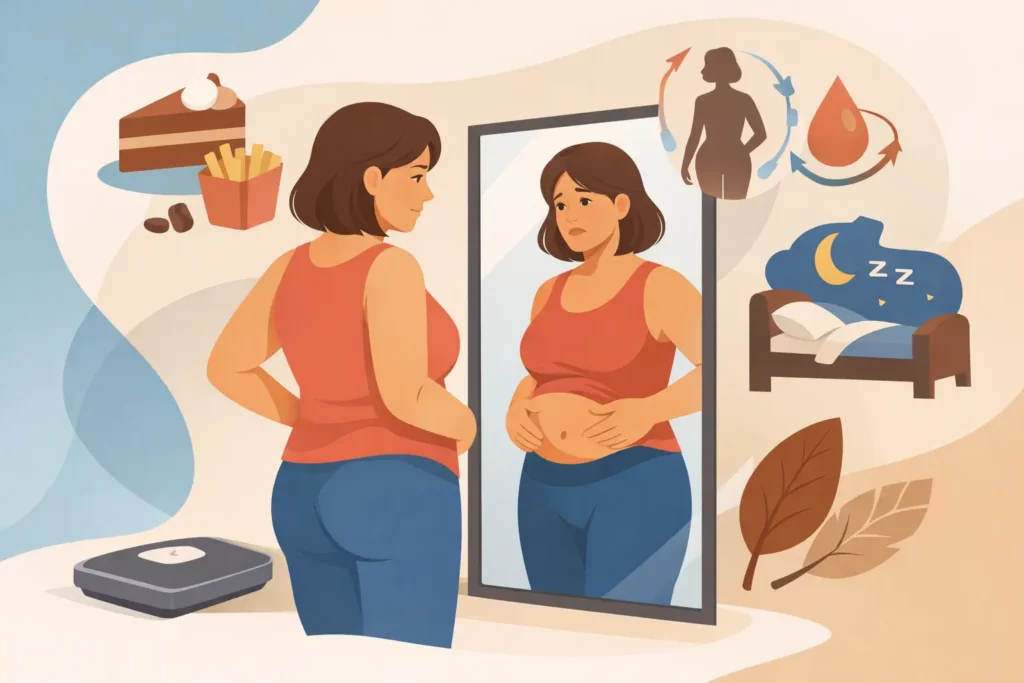
One day, your usual habits seem to work, and the next they do not. If you have been asking why am I gaining weight in perimenopause, you are not imagining it. Many women notice that their body composition starts to change during this stage, even when their eating, exercise, and overall routine look very similar to what they have always done.
That disconnect can feel frustrating, especially if the advice you hear is overly simple. Eat less. Move more. Try harder. But perimenopause is a time of real hormonal and metabolic change, and weight shifts during this transition are rarely about willpower alone. Understanding what is changing can help you respond with more clarity and less self-blame.
Why am I gaining weight in perimenopause?
The short answer is that several things often happen at once. Hormones fluctuate, sleep becomes less reliable, stress can rise, muscle mass naturally declines with age, and the body may start storing fat differently. None of this means weight gain is guaranteed, but it does mean the old rules may no longer work in the same way.
Perimenopause is not just one hormonal drop. It is a transition marked by swings in estrogen and progesterone, sometimes dramatic ones. Those fluctuations can affect appetite, insulin sensitivity, fluid retention, energy levels, and where your body tends to hold fat. For many women, weight gain is most noticeable around the abdomen, even if the scale has not changed dramatically.
It is also worth separating weight from body composition. Sometimes the number on the scale rises, but in other cases, the bigger change is that muscle decreases while body fat increases. Clothes fit differently. Waistbands feel tighter. Recovery from workouts changes. This is one reason the experience can feel confusing.
Hormones play a role, but not the only one
Estrogen affects the body throughout, including how fat is stored and how the body responds to insulin. As estrogen becomes more erratic and eventually declines, fat distribution often shifts away from the hips and thighs and more toward the midsection. That change can happen even without a major increase in calories.
Progesterone changes matter too. Lower or fluctuating progesterone can contribute to sleep disruption and bloating. Some women feel puffy and heavier at certain points in the month, even when that is partly fluid rather than fat. If your weight seems to fluctuate more than it used to, hormones may be part of the picture.
At the same time, hormones are not a catch-all explanation. Perimenopause often overlaps with a demanding phase of life. Careers may be intense. Aging parents may need support. Teenagers or young adults may still be at home. Chronic stress, rushed meals, less recovery time, and inconsistent exercise can all add up. The body does not experience these factors separately.
Sleep disruption changes more than your mood
One of the most overlooked answers to why am I gaining weight in perimenopause is poor sleep. Night sweats, early waking, anxiety, and lighter sleep are all common in this transition. When sleep suffers, hunger and fullness signals can become less reliable. Cravings often increase, especially for quick energy foods.
Poor sleep also affects insulin sensitivity and stress hormones. The result is not simply feeling tired. You may feel hungrier, less motivated to exercise, and more likely to reach for foods that feel comforting in the moment. That is a physiological response, not a personal failure.
If your weight changed around the same time your sleep worsened, that connection is worth paying attention to. In many cases, improving sleep support is part of weight support.
Muscle loss can quietly lower your calorie needs
Starting in our 30s and 40s, muscle mass gradually declines unless we actively work to maintain it. This matters because muscle is metabolically active tissue. When muscle decreases, the body may burn fewer calories at rest than it used to.
That shift is subtle. You may be eating roughly the same way you did five or ten years ago, but your body may not need exactly the same amount of energy. This does not mean you need extreme restrictions. It means your body may benefit more from strength training, adequate protein, and recovery than from punishing cardio or constant dieting.
This is one of the biggest trade-offs women face in midlife. The habits that once created quick results, like under-eating and over-exercising, can backfire by increasing stress, worsening fatigue, and making muscle loss more likely.
Stress and cortisol can amplify the problem
Perimenopause can be emotionally and physically demanding. If stress is high for long periods, cortisol patterns may shift in ways that affect appetite, blood sugar, sleep, and fat storage. Some women notice more abdominal weight gain during especially stressful stretches of life.
Stress does not cause all perimenopausal weight gain, and cortisol is often oversimplified online. But it is fair to say that chronic stress can make the situation harder. When you are depleted, healthy routines become more difficult to maintain, and the body may feel less resilient overall.
This is why supportive strategies matter. The goal is not to be perfect. It is to create conditions that help your body feel steadier.
What actually helps when your body feels different
If you are wondering why am I gaining weight in perimenopause, the most helpful next step is usually not a harsh reset. It is a more accurate picture of what is changing.
Start by looking for patterns. Has your sleep changed? Are you strength training, or mainly doing cardio? Are you eating enough protein to support muscle? Have stress, alcohol, or late-night snacking increased because your evenings feel harder? Are you feeling hungrier on low-sleep days? A simple symptom and habit tracker can be surprisingly useful here because it helps turn a vague feeling into something you can work with.
For many women, strength training becomes a key support during perimenopause. It helps preserve muscle, supports metabolic health, and may improve insulin sensitivity over time. That does not mean intense daily workouts. Consistent resistance training a few times a week can be meaningful.
Protein also matters more than many women realize. If meals are mostly built around convenience carbs and not enough protein, fullness may not last and muscle support may fall short. A steadier approach often looks like building meals around protein, fiber, and enough nourishment to avoid the cycle of restriction and rebound eating.
It also helps to be honest about recovery. If your body is under-slept and overstressed, adding more intensity is not always the answer. Sometimes walking, strength work, better sleep support, and more regular meals do more than trying to burn off every calorie.
When to talk with a healthcare provider
Not every weight change in midlife is simply perimenopause. Thyroid issues, insulin resistance, depression, certain medications, and other health conditions can also affect weight, energy, and body composition. If weight gain feels sudden or significant, or is accompanied by other symptoms such as extreme fatigue, hair changes, missed periods, heavy bleeding, or mood shifts, it is reasonable to bring the full picture to a clinician.
This is especially true if you feel dismissed with generic advice. Specific information helps. Track your cycle changes, sleep quality, mood, hot flashes, appetite, exercise, and weight or waist changes if that feels helpful to you. Organized notes can make a doctor visit more productive and help you advocate for a fuller evaluation.
Depending on your health history and symptoms, your provider may discuss screening for thyroid concerns, blood sugar issues, cholesterol changes, or other factors that can overlap with perimenopause. In some cases, treatment for menopausal symptoms, including sleep disruption, may indirectly help with weight-related challenges by improving overall function.
A calmer way to think about perimenopause and weight
It is understandable to want your old body back. But many women feel better when they shift the question from how do I force this body to behave like it used to, to what does this body need from me now. That change in perspective does not mean giving up. It means responding with more precision and less punishment.
Weight gain in perimenopause is common, but it is not a simple story, and it is not a referendum on your discipline. Your body may be asking for different support than it needed before – more muscle-building, better sleep, steadier meals, less all-or-nothing pressure, and a more connected understanding of your symptoms.
You deserve information that helps you feel clear, not blamed. And if this season feels confusing, that does not mean you are failing. It means your body is changing, and with the right support, you can navigate that next chapter with more confidence.
This article is for educational purposes only and is not medical advice. Always consult a qualified healthcare provider about your health.