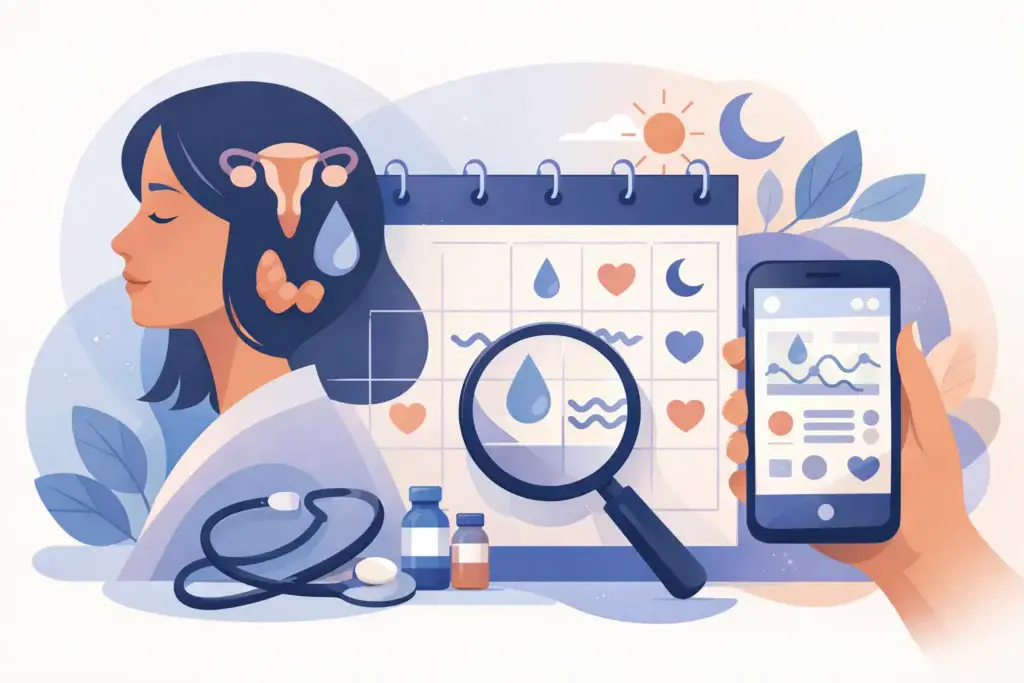
A 3 a.m. wake-up, a sudden wave of anxiety, and a foggy afternoon can feel like separate problems. A guide to hormone symptom tracking gives those experiences a shared place to land, so you can begin seeing patterns rather than carrying a long, exhausting list in your head.
You are not imagining what you feel. Perimenopause and menopause can affect sleep, mood, temperature regulation, concentration, energy, and menstrual patterns in ways that are real but not always predictable. Tracking will not diagnose the cause of a symptom, but it can create the clarity you need to care for yourself and have a more focused conversation with a healthcare provider.
Why hormone symptom tracking can be so helpful
Hormonal changes do not arrive on a tidy schedule. In perimenopause, estrogen and progesterone can fluctuate before periods stop, which may mean a few calm weeks followed by a difficult stretch of sleep disruption, heavier bleeding, irritability, or hot flashes. Symptoms can also overlap with stress, thyroid conditions, medication changes, depression, anemia, and many other health concerns.
That is why a useful tracker records more than whether you had a symptom. It captures its timing, intensity, and context. Over several weeks, you may notice that night sweats cluster before a period, headaches follow poor sleep, or anxiety rises after alcohol or during a particularly demanding week. Those observations are more useful than trying to remember how you felt two months ago in a 15-minute appointment.
Tracking can also be reassuring. Some days will be harder than others, but a record may show that a symptom has a pattern, has improved after a change, or deserves more attention because it is becoming more frequent. The goal is not perfect data. It is a clearer picture of your lived experience.
What to track in a guide to hormone symptom tracking
Start small enough that you will actually keep going. A five-minute daily check-in is usually more valuable than a detailed spreadsheet you abandon after three days. Choose the symptoms that affect your quality of life most right now, then add details only when they help.
For many women, the most useful categories include sleep, hot flashes or night sweats, mood, anxiety, energy, brain fog, headaches, joint or body aches, vaginal or urinary changes, libido, and changes in weight or appetite. If you are still having periods, track bleeding days, flow, spotting, cramps, and cycle length as well.
A simple 0-to-3 scale keeps the process manageable:
- 0 means absent
- 1 means mild and noticeable, but manageable
- 2 means moderate and disruptive
- 3 means severe or interfered with work, relationships, sleep, or daily life
Alongside the score, add one or two short notes. For example: “Woke at 2:40 a.m., sweaty, took 45 minutes to return to sleep,” or “Felt tearful after a stressful meeting, improved after a walk.” Specific notes provide context without asking you to write a full journal entry every day.
Include the context around your symptoms
Hormones are one part of the picture, not the whole picture. A tracker works best when it gently captures the factors that may shape how symptoms feel. This is not about blaming yourself for a difficult day or trying to control every variable. It is about noticing what supports you.
Consider recording your bedtime and wake time, movement, alcohol use, caffeine timing, major stressors, illness, travel, and medication or supplement changes. You may also want to note whether you used a treatment for symptoms, such as a cooling strategy, vaginal moisturizer, therapy exercise, or prescribed medication, and whether it helped.
Keep the notes brief. “Two glasses of wine,” “long flight,” “started new dose,” or “caregiver stress” may be all you need. If a pattern repeats, it becomes easier to decide what is worth discussing or adjusting. If no pattern appears, that is useful information too.
If you are postmenopausal
Once you have gone 12 consecutive months without a period, you may no longer need cycle tracking. Your record can focus on symptom frequency, severity, sleep, mood, vaginal or urinary comfort, and the response to any treatments.
Any bleeding after menopause should be discussed with a healthcare provider promptly. Even light spotting deserves medical attention. A tracker can document when it occurred and any related symptoms, but it should not delay care.
Choose a tracking rhythm you can sustain
Daily tracking is helpful when symptoms are frequent, changing quickly, or affecting your ability to function. It may also help when you are starting a new treatment or making a meaningful lifestyle change. Try a daily check-in for two weeks, then review what you have captured.
For longer-term use, some women prefer a weekly reflection. You might rate your overall sleep, energy, mood, and symptom burden for the week, then write down the most noticeable change. This is often enough once patterns are familiar.
Give yourself at least six to eight weeks before drawing broad conclusions, unless a symptom is severe or new and needs earlier medical attention. Hormonal transitions can be uneven. One good week does not necessarily mean a problem is resolved, and one difficult week does not mean you have failed.
Turn your notes into useful patterns
Set aside 10 minutes at the end of each week to look back. Ask yourself: Which symptoms appeared most often? What was most disruptive? Did anything seem to help? Are symptoms connected to your cycle, sleep, stress, or a treatment change?
Look for trends, not proof. For example, if you have three nights of waking hot and notice fatigue and low mood the following day, that is a meaningful connection to bring up with your provider. If you have recurring urinary urgency, vaginal dryness, or pain with sex, write that down too. These symptoms are common in menopause, but common does not mean you should simply tolerate them.
It can help to create a short monthly snapshot: your top three symptoms, their average severity, the days they affected your life most, and any questions you have. This is especially useful if appointments feel rushed or if you tend to minimize how difficult symptoms have been once you are sitting in the exam room.
Bring a clear record to your healthcare visit
You do not need to hand over every daily entry. Bring a one-page overview or use your notes to explain the pattern in plain language: when symptoms began, how often they happen, how severe they are, what you have tried, and what you hope to improve.
You might say, “For the past two months, I have been waking with night sweats four nights a week, and I am struggling to focus at work the next day,” rather than simply, “I have not been sleeping well.” Both statements are valid, but the first gives your provider a clearer starting point.
Ask about possible causes, evaluation options, and treatment choices that fit your health history and priorities. Hormone therapy may be appropriate for some women and not others. Nonhormonal medications, sleep support, vaginal therapies, counseling, and targeted lifestyle changes can also play a role. Your symptoms, medical history, personal preferences, and risk factors all matter.
Know when tracking is not enough
A symptom tracker is a support tool, not a substitute for medical care. Seek urgent help for chest pain, trouble breathing, sudden weakness or numbness, fainting, thoughts of self-harm, or a sudden severe headache unlike your usual headaches.
Schedule timely medical care for new or worsening heavy bleeding, bleeding after menopause, persistent pelvic pain, unexplained weight loss, significant changes in mood, or symptoms that interfere with everyday life. It is reasonable to ask for a fuller evaluation when something feels different, intense, or simply not right.
Your notes do not have to be polished to be valuable. A few honest words each day can become a record of what your body has been asking for – and a steadier foundation for navigating your next chapter with confidence.
This article is for educational purposes only and is not medical advice. Always consult a qualified healthcare provider about your health.