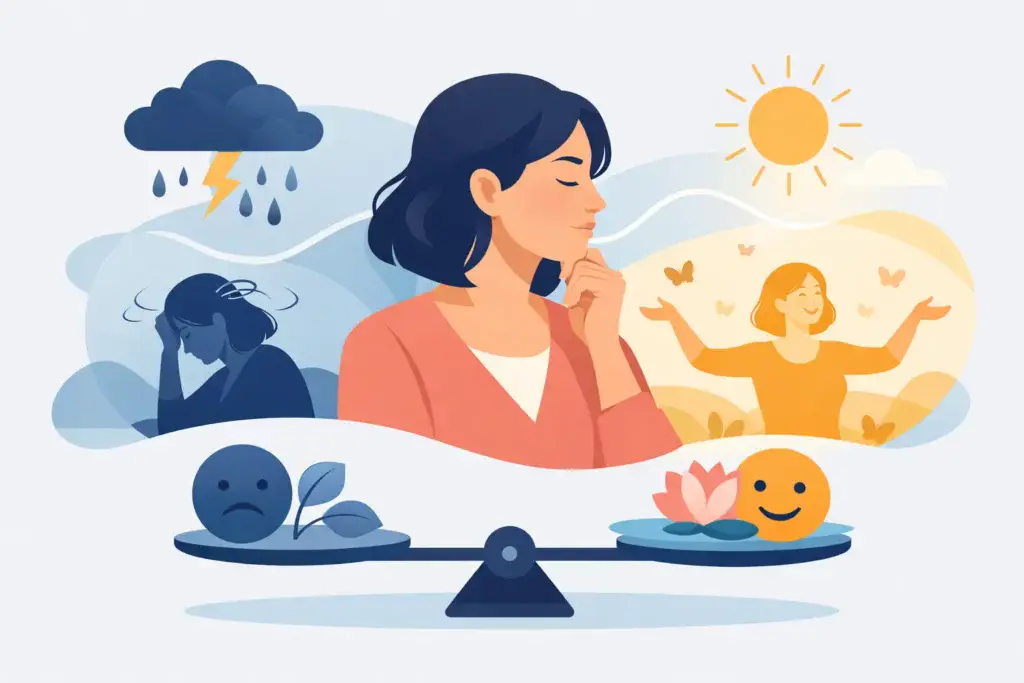
A sharp wave of irritability after a normal workday. Anxiety that arrives at 3 a.m. A lower mood that feels unfamiliar, even when nothing obvious has changed. If you are wondering how to regulate perimenopause mood, start here: you are not imagining these shifts, and you do not have to simply push through them.
Perimenopause can affect mood through changing estrogen and progesterone patterns, but hormones are rarely the whole story. Sleep disruption, hot flashes, life stress, caregiving, work demands, alcohol, blood sugar swings, and a personal history of anxiety or depression can all add weight to an already sensitive system. The goal is not to force yourself to feel positive all the time. It is to notice patterns, reduce pressure on your nervous system, and get the right support when mood changes interfere with daily life.
Why Perimenopause Can Feel So Emotionally Intense
During perimenopause, hormone levels do not decline in a smooth, predictable line. They can fluctuate significantly from month to month, or even within a cycle. Estrogen influences brain chemicals involved in mood, while progesterone and its byproducts can affect calmness, sleep, and stress response. For some women, these changes are subtle. For others, they can make emotions feel closer to the surface.
This does not mean every difficult feeling is “just hormones.” That phrase can be dismissive and unhelpful. Perimenopause may lower your emotional buffer, making existing pressures feel harder to manage. A missed night of sleep, a tense conversation, or an overloaded calendar can have a larger effect than it once did.
Mood changes can include irritability, tearfulness, low motivation, anxious thoughts, rage, feeling overwhelmed, or less patience than usual. Some women notice symptoms mainly before a period; others experience a less predictable pattern as cycles become irregular. Tracking what is happening can turn a confusing experience into useful information.
How to Regulate Perimenopause Mood With Daily Anchors
When mood feels unpredictable, large lifestyle overhauls can create more pressure. Start with a few steady anchors that support your body consistently, rather than aiming for perfection.
Protect sleep as a mood-support tool
Poor sleep can magnify anxiety, sadness, and irritability the next day. In perimenopause, sleep may be disrupted by night sweats, waking often, racing thoughts, or early-morning waking. Addressing sleep is not a luxury – it is one of the most practical ways to support emotional steadiness.
Keep your wake-up time fairly consistent, even after a rough night. Create a cool, dark sleep environment and use breathable bedding if you are waking hot. Try to give yourself a short transition out of work and caregiving mode before bed, whether that is a shower, light stretching, a paper book, or a few quiet minutes of journaling.
Caffeine, alcohol, and late heavy meals affect people differently. You do not necessarily need to eliminate them, but it is worth noticing whether afternoon coffee, evening wine, or certain meals correspond with overnight waking. The most useful change is the one you can actually sustain.
Eat regularly enough to reduce energy crashes
Skipping meals or relying on quick snacks can lead to blood sugar drops that feel a lot like anxiety: shakiness, irritability, fatigue, difficulty concentrating, and an urgent need to escape the moment. Regular meals with protein, fiber-rich carbohydrates, and healthy fats can help create steadier energy throughout the day.
This is not a call for rigid food rules. It is an invitation to give your body reliable fuel, especially on busy days. A yogurt with fruit and nuts, eggs with whole-grain toast, or beans added to a salad can be simple starting points. If your mood reliably dips in the late afternoon, look at when you last ate before assuming the feeling is purely emotional.
Move in a way that lowers stress, not adds to it
Movement can support mood, sleep, and resilience during perimenopause, but the right amount depends on your energy, health history, and current symptoms. A brisk walk, strength training, dancing in your kitchen, or a gentle yoga class can all count.
If intense workouts leave you wired, exhausted, or unable to sleep, that is useful feedback. You may benefit from adjusting intensity, timing, recovery, or frequency rather than giving up movement altogether. The best routine is not the most punishing one. It is the one that helps you feel more grounded afterward.
Build a pause between feeling and reacting
Perimenopause irritability can feel immediate. You may recognize that a reaction is larger than the situation only after the words have left your mouth. A brief pause practice creates a little more room for choice.
When you feel activated, try naming the experience plainly: “I am overstimulated,” “I am tired,” or “I need ten minutes before I respond.” Then change your physical state if you can – step outside, drink water, take slow breaths with a longer exhale, or put both feet on the floor and notice your surroundings. This will not solve every hard moment, but it can interrupt the escalation cycle.
Track the Pattern, Not Just the Bad Day
A symptom tracker is one of the clearest tools you can use. Instead of asking, “Why am I suddenly like this?” you can begin asking, “What tends to happen before this?” Over several weeks, look for connections among your cycle, sleep, hot flashes, stress levels, alcohol intake, exercise, meals, and mood.
Keep it simple enough to use. Each day, note your mood on a one-to-five scale, sleep quality, cycle day or bleeding changes, physical symptoms, and any major stressors. You might also write one sentence about what helped, even slightly. Perhaps a walk eased agitation, a difficult meeting triggered a headache and a hot flash, or three nights of poor sleep came before a tearful day.
Patterns are not proof, and they are not a reason to blame yourself. They are practical data. They can also help you communicate more clearly in a healthcare appointment, especially if you have ever felt that your symptoms were brushed aside.
When Lifestyle Support Is Not Enough
Daily habits matter, but they are not the only answer. If mood changes are frequent, intense, or affecting your relationships, work, or ability to care for yourself, it is appropriate to speak with a clinician. You deserve care that takes both your mental health and hormonal transition seriously.
A clinician may consider whether symptoms are related to perimenopause, depression, anxiety, thyroid conditions, medication effects, anemia, sleep disorders, or other concerns. Treatment is individual. Depending on your symptoms and medical history, options may include therapy, cognitive behavioral therapy for insomnia, antidepressant or anti-anxiety medication, menopause hormone therapy, or treatment focused on hot flashes and sleep.
Hormone therapy can be helpful for some women, particularly when hot flashes and night sweats are contributing to poor sleep and mood disruption. It is not the right choice for everyone, and it should be discussed in the context of your health history, goals, and risks. Likewise, antidepressants can be valuable tools, not a personal failure or a sign that your symptoms are not real.
Consider bringing your tracker and a short list of questions to your appointment. You might ask: Could these symptoms be connected to perimenopause? What else should we rule out? How might my sleep and hot flashes be affecting my mood? What treatment options fit my medical history?
Know When to Seek Urgent Support
Perimenopause can be difficult, but severe depression and thoughts of self-harm should never be handled alone. Seek urgent mental health support or emergency care if you are thinking about hurting yourself, feel unable to stay safe, experience panic that feels unmanageable, or notice a dramatic change in behavior, judgment, or ability to function.
In the United States, you can call or text 988 for the Suicide & Crisis Lifeline. If there is immediate danger, call 911 or go to the nearest emergency room.
Your mood is not a measure of your strength, gratitude, or ability to handle this chapter well. It is information from a body in transition. With patient pattern-tracking, supportive routines, and care that listens, you can create more steadiness – and move through perimenopause with greater clarity and confidence.
This article is for educational purposes only and is not medical advice. Always consult a qualified healthcare provider about your health.