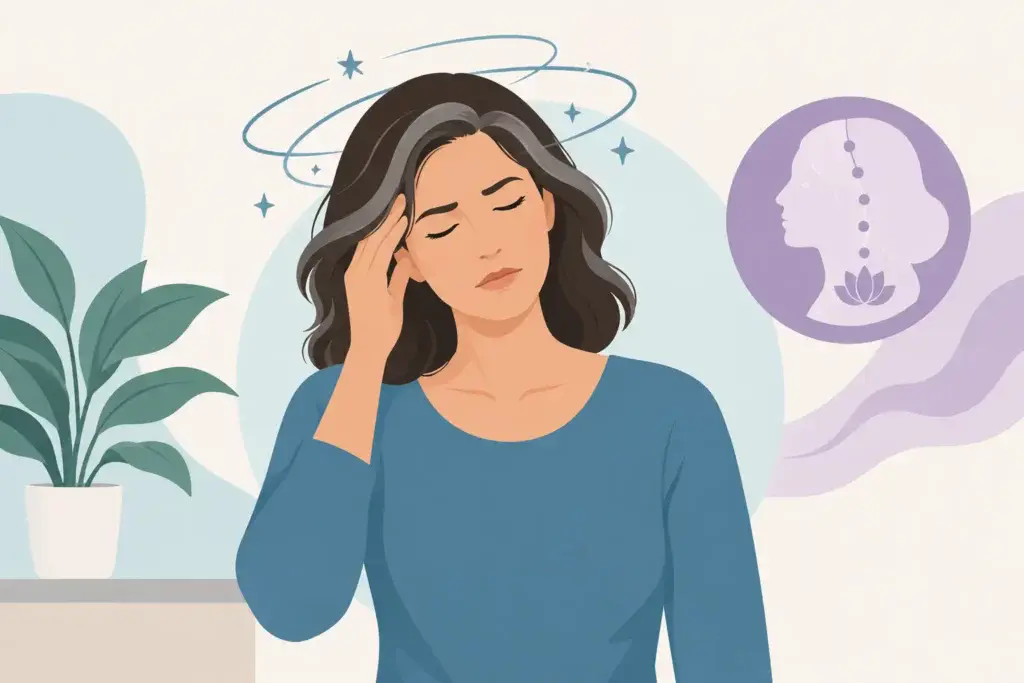
A wave of lightheadedness while standing at the kitchen counter. A brief spinning sensation when you roll over in bed. Feeling slightly off-balance for no obvious reason. If you have started asking, ” Is dizziness linked to perimenopause, you are not imagining that this symptom can feel unsettling – especially when it arrives alongside sleep changes, anxiety, headaches, or irregular periods.
Dizziness can occur during the perimenopause transition, and hormonal fluctuations may be one piece of the picture. But dizziness also has many possible causes, some unrelated to hormones. The most supportive approach is to take the symptom seriously without assuming the worst: notice its pattern, support your body in the moment, and know when it is time to check in with a clinician.
Is Dizziness Linked to Perimenopause? Yes, Sometimes
Perimenopause is the years leading up to menopause, when estrogen and progesterone can rise and fall unpredictably. These hormones affect far more than the menstrual cycle. They also interact with the nervous system, blood vessels, sleep, mood, and the systems that help regulate blood pressure and body temperature.
Because of that, some women notice lightheadedness, a floating sensation, brief spells of imbalance, or dizziness during this transition. For some, it happens around a period or alongside hot flashes. For others, it appears after a poor night of sleep, during a stressful stretch, or when they have gone too long without eating or drinking enough water.
The connection is not always direct or simple. Research on dizziness specifically during perimenopause is still evolving, and dizziness is not one of the most defining symptoms used to identify the transition. Still, hormone shifts may make certain underlying triggers more likely or more noticeable.
How hormonal changes may contribute
Estrogen has effects throughout the body, including in areas involved in balance and circulation. When estrogen fluctuates, some people may become more sensitive to changes in blood pressure, hydration, blood sugar, or migraine activity. A hot flash can also create a sudden rush of warmth, sweating, a faster heartbeat, and a momentary lightheaded feeling.
Progesterone changes can matter, too. Lower or shifting progesterone may contribute to poorer sleep, heightened stress sensitivity, and anxiety symptoms. Each of those can leave you feeling unsteady, foggy, or disconnected from your usual sense of balance.
That does not mean every dizzy spell is “just hormones.” Perimenopause can overlap with new health concerns that deserve their own attention. Giving yourself credit for noticing a change is a wise first step, not overreacting.
What “Dizzy” Can Mean
The word dizziness covers several different sensations, and describing yours clearly can help a healthcare professional narrow down possible causes.
Lightheadedness can feel like you may faint or need to sit down. It may occur after standing quickly, skipping meals, dehydration, illness, or a drop in blood pressure.
Vertigo is the sense that you or the room is spinning or moving. It is often related to the inner ear and may be triggered by turning your head, getting in or out of bed, or looking upward.
Imbalance can feel like swaying, veering, or being less steady while walking. Vision changes, medication effects, nerve issues, migraines, and inner-ear conditions can all play a role.
Anxiety-related dizziness may feel like floating, unreality, shakiness, or mild unsteadiness, often with rapid breathing, a racing heart, or chest tightness. Anxiety is common in perimenopause, but physical symptoms should not automatically be attributed to stress without considering other causes.
Other Causes Worth Considering
Perimenopause may be part of the context, but it should not become the explanation for everything. Common possibilities include dehydration, low blood sugar, anemia, low blood pressure, viral illness, medication side effects, migraine, thyroid changes, and inner-ear conditions such as benign positional vertigo.
Heavy or prolonged periods during perimenopause can be particularly relevant. Blood loss may contribute to iron-deficiency anemia, which can cause fatigue, shortness of breath, palpitations, headaches, and lightheadedness. If your periods have changed significantly and dizziness is becoming frequent, that combination is worth bringing to your clinician.
Sleep disruption can also have a larger effect than it seems. Repeated waking from night sweats, insomnia, or sleep apnea can affect concentration, blood pressure regulation, mood, and steadiness the next day. If dizziness appears after several difficult nights, record that pattern rather than dismissing it.
What to Do When Dizziness Happens
If you feel dizzy, pause what you are doing and sit or lie down somewhere safe. Avoid driving, climbing stairs, or using equipment until the sensation has passed. Sip water, have a balanced snack if you have not eaten recently, and stand up slowly when you are ready.
It can also help to make a brief note in a symptom tracker or phone note. Record the date and time, what the sensation felt like, how long it lasted, what you were doing beforehand, your sleep the night before, meals, hydration, stress level, menstrual timing, hot flashes, and any new medications or supplements. You do not need a perfect record. A few weeks of simple observations can reveal useful patterns.
If a medication seems connected to dizziness, do not stop taking it on your own. Ask the prescriber or pharmacist whether dizziness is a known side effect and whether an adjustment is appropriate.
Supportive daily habits
Small, steady habits can reduce common triggers. Regular meals with protein and fiber may help prevent energy dips. Consistent hydration can be especially useful if you have hot flashes or sweat at night. Gentle movement, such as walking or strength training within your comfort level, supports balance and cardiovascular health over time.
It may also be worth noticing alcohol, excess caffeine, and long gaps between meals. These do not affect everyone the same way, and there is no need for rigid rules. The goal is to learn what makes your own symptoms more likely, then make changes that feel realistic and supportive.
When to Contact a Healthcare Professional
Make an appointment if dizziness is new, recurring, worsening, interfering with daily life, or occurring with heavy periods, headaches, hearing changes, palpitations, fatigue, or fainting. A clinician can review your symptoms, medical history, medications, blood pressure, and whether testing for concerns such as anemia, thyroid changes, or blood sugar issues makes sense.
Seek urgent medical care right away for dizziness with chest pain, trouble breathing, fainting, a severe or sudden headache, new weakness or numbness on one side, facial drooping, confusion, speech difficulty, vision loss, trouble walking, or persistent vomiting. These symptoms may signal an emergency and should not be watched at home.
Preparing for a More Productive Appointment
Women in midlife are sometimes told a symptom is simply part of getting older. Hormonal transition can be a meaningful factor, but you deserve a conversation that considers the full picture. Bringing specific observations can make it easier to advocate for the evaluation you need.
You might say: “I have had episodes of lightheadedness three times a week for the past month. They tend to happen after poor sleep and during heavier bleeding. Could we talk through possible causes beyond perimenopause and whether any tests would be helpful?”
That framing is clear, factual, and collaborative. It acknowledges the hormonal transition without closing the door on other explanations.
Your body may be changing, but confusion does not have to be the default. Tracking dizziness with care, responding to warning signs, and asking thoughtful questions can help you move through this chapter with more clarity and confidence.
This article is for educational purposes only and is not medical advice. Always consult a qualified healthcare provider about your health.