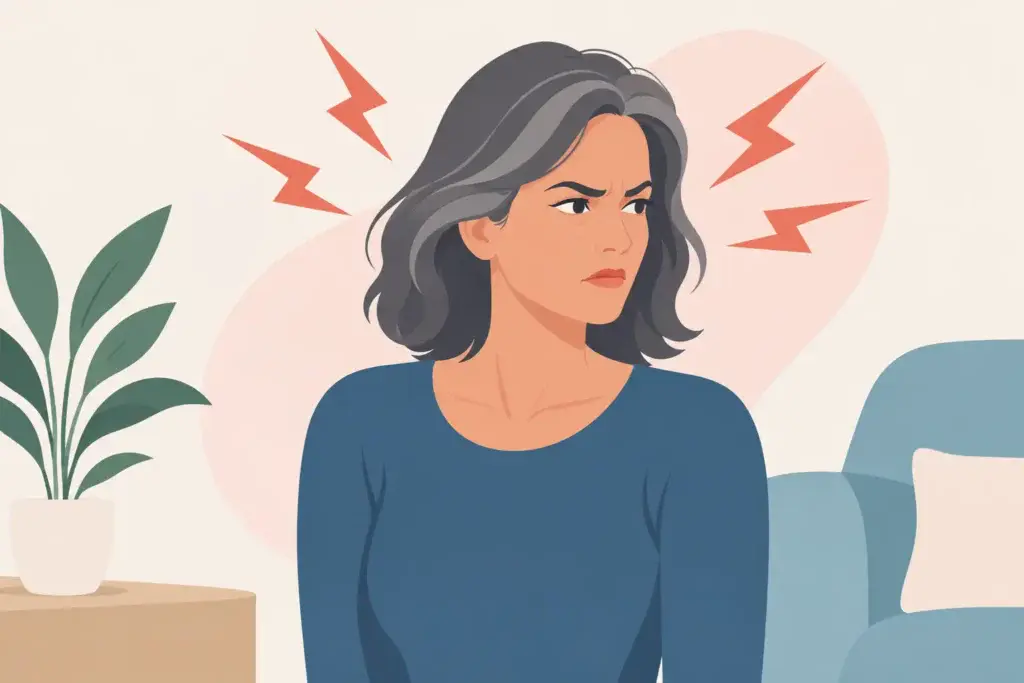
A small frustration that would normally pass can suddenly feel impossible to tolerate: the unanswered text, the noisy kitchen, the person who asks one more thing of you at the end of a long day. If you are wondering if rage is a menopause symptom, you are not imagining the change. Intense irritability or anger can happen during perimenopause and menopause, and it can feel unsettling when it seems unlike you.
Rage is not always listed among the most familiar menopause symptoms, but mood changes are common. The key is to take the feeling seriously without assuming hormones are the only explanation. Understanding the pattern can help you respond with more compassion for yourself and bring clearer information to your healthcare provider.
Is Rage a Menopause Symptom? The Short Answer
It can be. During perimenopause, estrogen and progesterone levels rise and fall unevenly before eventually declining after menopause. These hormones interact with brain chemicals involved in mood, stress response, and sleep. For some women, that hormonal variability can make patience feel thinner, reactions feel sharper, and emotional recovery take longer.
Menopause-related anger may look like snapping over a minor inconvenience, feeling disproportionately irritated by noise or demands, or having an outburst followed by guilt, confusion, or exhaustion. Some women describe it as a sudden surge of heat in the body followed by an urgent need to get away. Others notice a quieter but persistent resentment that was not there before.
That experience is real. It also does not mean you are becoming an angry person or failing to cope. Often, it signals that your emotional bandwidth is stretched.
Why Anger Can Feel So Intense During This Transition
Hormonal shifts are one piece of the picture, not the whole story. Perimenopause often arrives during a particularly demanding season of life. You may be managing work, parenting, caregiving, relationships, finances, and your own changing health all at once. A body that is no longer sleeping well has fewer reserves for all of it.
Sleep disruption is especially relevant. Night sweats, insomnia, and early waking can leave your nervous system more reactive the next day. When you are tired, everyday frustrations can register as threats rather than inconveniences. Anxiety can amplify this cycle, making your thoughts race and your body feel permanently on alert.
Vasomotor symptoms, including hot flashes and night sweats, can contribute too. A sudden rush of heat, sweating, heart pounding, or dizziness may feel frightening or intrusive. Repeatedly anticipating those symptoms can create tension that spills into irritability.
Grief may also lie beneath the anger. Changes in your body, sexuality, energy, appearance, fertility, or sense of identity can bring loss as well as uncertainty. Anger sometimes surfaces first because it feels more protective than sadness or fear.
When It May Be More Than Menopause
It is understandable to connect new anger to hormonal changes, especially if it began during perimenopause. Still, rage should not automatically be dismissed as “just menopause.” Thyroid conditions, anemia, medication changes, chronic pain, alcohol use, depression, anxiety disorders, and major life stress can all affect mood and irritability.
A history of severe premenstrual mood symptoms, postpartum depression or anxiety, trauma, or previous depression may make mood changes during perimenopause more likely. This does not mean you are destined to struggle. It simply gives your clinician useful context when discussing support options.
Pay attention to the intensity and impact. A short temper that improves after rest and stress relief calls for a different response than anger that is frequent, escalating, damaging relationships, or making it hard to work or care for yourself. If you have thoughts of harming yourself or someone else, feel out of control, or fear what you might do during an outburst, seek immediate crisis support or emergency care.
Look for Patterns, Not Perfection
The most useful question is often not, “Why am I so angry?” but, “What tends to happen before this feeling arrives?” Tracking can turn a confusing experience into information you can use.
For two to four weeks, keep a brief daily note of your mood, sleep quality, cycle changes (if you still have periods), hot flashes, food and alcohol intake, stress level, movement, and any medication or supplement changes. Keep it simple enough to maintain. You are not trying to prove that every difficult feeling is hormonal. You are looking for patterns.
You might notice that irritability peaks in the days before a period, follows several poor nights of sleep, or is more intense after alcohol. You may find that the late-afternoon crash is the most vulnerable part of your day, especially if you haven’t eaten regularly. Those observations can guide practical changes and make a medical appointment more productive.
A journal can also create a small pause between feeling and reaction. When anger rises, try writing one sentence: “Right now, I need…” The answer may be quiet, food, help, a boundary, a walk, or simply permission to step away before continuing a conversation.
What Can Help in the Moment
No single strategy works for everyone, and you don’t need to manage this perfectly. The goal is to lower the intensity enough to choose your next step rather than react from the peak of the feeling.
Start with the body. Slow your exhale, put both feet on the floor, unclench your jaw, or leave the room for a few minutes if you can do so safely. A cool drink, fresh air, or a brief walk can help interrupt the physical momentum of anger. These are not cures for hormonal changes, but they can give your nervous system a chance to settle.
Then consider the practical supports that make anger less likely to build. Consistent meals with protein and fiber can reduce the shakiness and blood sugar swings that sometimes worsen irritability. Regular movement can support mood and sleep, whether that means strength training, a walk, yoga, or something you genuinely enjoy. Reducing alcohol may be worthwhile if you notice it disrupts sleep or lowers your tolerance the following day.
Boundaries matter here too. Menopause can expose the unsustainable parts of a life you have been carrying for years. Asking for help, protecting a bedtime, declining an extra obligation, or taking a break from a heated discussion is not selfish. It is a form of health support.
Talking With Your Healthcare Provider About Menopause Anger
You deserve more than a vague suggestion to “reduce stress.” If mood changes are affecting your life, bring them up directly. A symptom tracker can help you describe when the anger began, how often it happens, whether it relates to your cycle or sleep, and what it is costing you emotionally or practically.
You might say: “Over the past three months, I have had intense irritability several times a week, especially after poor sleep. It feels different from my usual stress response, and I want to discuss whether perimenopause could be contributing.” This gives your provider a clear starting point.
Depending on your health history, your clinician may discuss therapy, treatment for anxiety or depression, sleep support, lifestyle changes, or menopause hormone therapy. Hormone therapy can be helpful for some women, particularly when hot flashes and night sweats are contributing to poor sleep and mood changes, but it is not the right choice for everyone. The benefits and risks depend on factors such as your age, symptoms, medical history, and the type and timing of treatment.
If you leave an appointment feeling dismissed, it is reasonable to seek another perspective. You know what is typical for you. Clear notes and specific examples can help you advocate for the care you need.
Make Room for Support, Not Shame
Anger during menopause can bring a painful layer of self-judgment. You may worry about your partner, children, coworkers, or the version of yourself you thought you should be. Repairing after an outburst matters, but shame rarely makes the next moment easier.
Try a more accurate frame: something in your body, your environment, or your emotional load needs attention. That does not excuse hurtful behavior. It does offer a path forward that includes accountability and care.
You can take this symptom seriously, ask better questions, and build support around the patterns you notice. With more clarity and the right care, anger does not have to define this chapter of your life.
This article is for educational purposes only and is not medical advice. Always consult a qualified healthcare provider about your health.