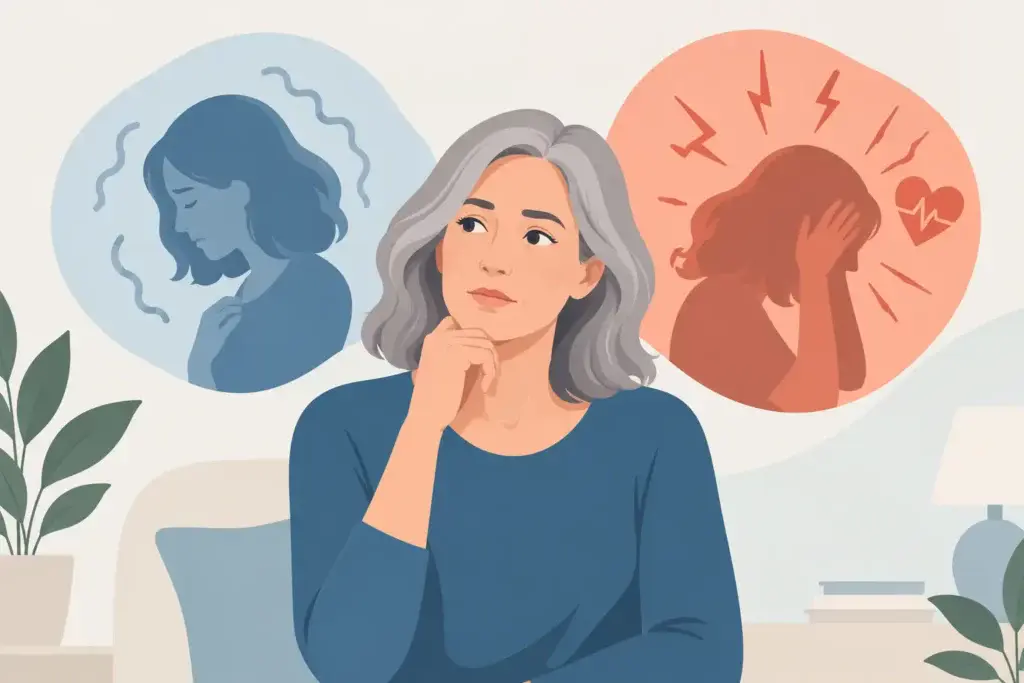
A racing heart at 2 a.m. can feel frightening, especially when it arrives alongside hot flashes, broken sleep, and a sense that you are no longer quite yourself. With menopause anxiety vs panic attacks, the symptoms can overlap enough to make it hard to tell what is happening in the moment. You are not imagining the physical intensity, and you do not have to sort it out alone.
Perimenopause and menopause can change how your body responds to stress, sleep loss, temperature shifts, and everyday demands. Anxiety may be new for some women, while others notice that a long-managed tendency toward worry suddenly feels louder. Panic attacks can also begin or worsen during this transition. Understanding the patterns can help you feel more prepared and have a clearer conversation with your healthcare provider.
Why menopause can make anxiety feel unfamiliar
During perimenopause, estrogen and progesterone do not simply decline in a smooth line. They fluctuate, sometimes significantly, before eventually settling at lower levels after menopause. These hormones interact with brain systems involved in mood, sleep, and the stress response. That does not mean every anxious feeling is caused by hormones, but hormonal shifts can make your nervous system feel more reactive.
Sleep disruption often adds another layer. Night sweats, early waking, or frequent awakenings can leave you running on less rest for weeks or months. When the body is tired, ordinary pressures may feel harder to manage, and physical sensations such as a faster heartbeat can seem more alarming.
Life context matters, too. Midlife can bring caregiving, work changes, relationship shifts, grief, health concerns, or children leaving home. Menopause may be part of the picture without being the entire explanation. A good assessment makes room for both your hormones and your lived experience.
Menopause anxiety vs panic attacks: the key differences
Anxiety is a broad state of worry, unease, fear, or heightened alertness. It may build slowly and linger for hours, days, or longer. You might find yourself replaying conversations, anticipating worst-case outcomes, feeling irritable, struggling to focus, or noticing persistent muscle tension and stomach discomfort. Menopause-related anxiety may also rise around hot flashes, poor sleep, or certain points in your cycle during perimenopause.
A panic attack is a sudden surge of intense fear or severe discomfort that typically peaks within minutes. It can happen with an obvious trigger, such as a crowded store or stressful meeting, but it can also seem to come from nowhere. Common symptoms include a pounding heart, shortness of breath, chest tightness, shaking, sweating, nausea, dizziness, tingling, chills, or a feeling of losing control.
The distinction is not always neat. Ongoing anxiety can create the conditions for panic, particularly when you become afraid of bodily sensations. A hot flash, for example, may bring heat, sweating, and a rapid heartbeat. If your brain interprets those sensations as danger, panic can quickly follow. Conversely, a panic attack can leave you worried about having another one, creating a cycle of anticipatory anxiety.
Neither experience is a personal failure. Both are real health concerns that deserve care.
A pattern can offer useful clues
Consider the timing, speed, and recovery of your symptoms. Anxiety often has a longer runway. You may feel increasingly on edge through a difficult week, after several bad nights of sleep, or during a period of hormonal change. Panic tends to feel abrupt and overwhelming, with a sharp peak and then a gradual settling, even if you feel drained afterward.
Keeping a brief record can make these patterns easier to see. Note the date and time, symptoms, intensity, sleep, hot flashes or night sweats, caffeine or alcohol use, meals, stressors, medications, and what helped. A symptom tracker is not meant to make you monitor yourself constantly. It is a practical way to replace a vague feeling of “something is wrong” with details you can discuss in an appointment.
When symptoms need urgent medical attention
It is never safe to assume that chest symptoms, breathing changes, or a fast heartbeat are “just menopause” or “just anxiety.” Heart conditions, thyroid disorders, anemia, medication effects, blood sugar changes, and other health concerns can resemble anxiety or panic.
Seek emergency care right away for new or severe chest pain or pressure, fainting, severe trouble breathing, sudden weakness or numbness, confusion, pain spreading to the jaw, arm, back, or shoulder, or symptoms that feel different from anything you have experienced before. It is better to be evaluated and reassured than to miss something urgent.
For symptoms that are recurring but not emergent, make a healthcare appointment. Tell your clinician when the symptoms started, how long they last, whether they occur with hot flashes or cycle changes, and whether they are affecting sleep, work, relationships, or your ability to leave home. Ask whether a review of your medications, thyroid function, heart rhythm, sleep, and mental health history would be appropriate.
What can help in the moment
When panic is rising, the goal is not to force yourself to “calm down.” Trying to fight the sensation can sometimes intensify it. Instead, gently remind yourself that the wave will crest and pass, while also staying alert to any signs that require emergency care.
Start by orienting to your surroundings. Name a few things you can see, feel your feet against the floor, or hold something cool in your hand. Slow, comfortable breathing can help, but avoid taking huge breaths or forcing a strict count if that makes you feel more air-hungry. Try exhaling longer than you inhale, at a pace that feels natural.
If a hot flash is part of the experience, reduce physical discomfort where you can. Step into a cooler space, loosen layers, sip water, or use a fan. These simple changes do not solve every anxious thought, but they can signal safety to an overstimulated body.
Afterward, speak to yourself with the same steadiness you would offer someone you love. Panic can be exhausting and embarrassing, but it is not proof that you are weak or “going crazy.” A short note about what happened can be more useful than hours of analyzing it.
Building support beyond the immediate moment
The most effective approach depends on your symptoms, health history, preferences, and daily reality. Some women benefit from therapy, particularly cognitive behavioral therapy, which can help interrupt the cycle between physical sensations, fearful thoughts, and avoidance. Others may want to discuss medication for anxiety, panic, sleep, or menopausal symptoms with a qualified clinician.
Menopausal hormone therapy may be appropriate for some people who have bothersome hot flashes and night sweats, and better symptom control may improve sleep and emotional well-being. It is not a universal treatment for anxiety or panic, and it is not right for everyone. Your clinician can help you weigh benefits, risks, personal history, and alternatives.
Daily foundations matter, though they should never be presented as a cure-all. Regular meals can reduce the shaky, lightheaded sensations that mimic panic. Gentle movement may ease stress and support sleep. Limiting caffeine, nicotine, and alcohol can be especially useful if you notice they trigger palpitations, hot flashes, nighttime waking, or next-day anxiety. Small experiments are often more sustainable than a complete lifestyle overhaul.
It can also help to prepare for appointments before you are sitting in the exam room. Write down your top three concerns, your symptom timeline, any questions about treatment options, and the impact on your life. If you feel dismissed, it is reasonable to ask for clarification, request an evaluation of other causes, or seek another opinion. Clear information is part of good care.
A calmer way to move forward
You do not need to decide on your own whether every difficult moment is menopause anxiety, a panic attack, or something else. Your job is simply to notice the pattern, respond to urgent symptoms promptly, and bring your full experience into the conversation with a clinician. With the right support and a clearer picture of what your body is communicating, this chapter can feel less frightening and more manageable.
This article is for educational purposes only and is not medical advice. Always consult a qualified healthcare provider about your health.