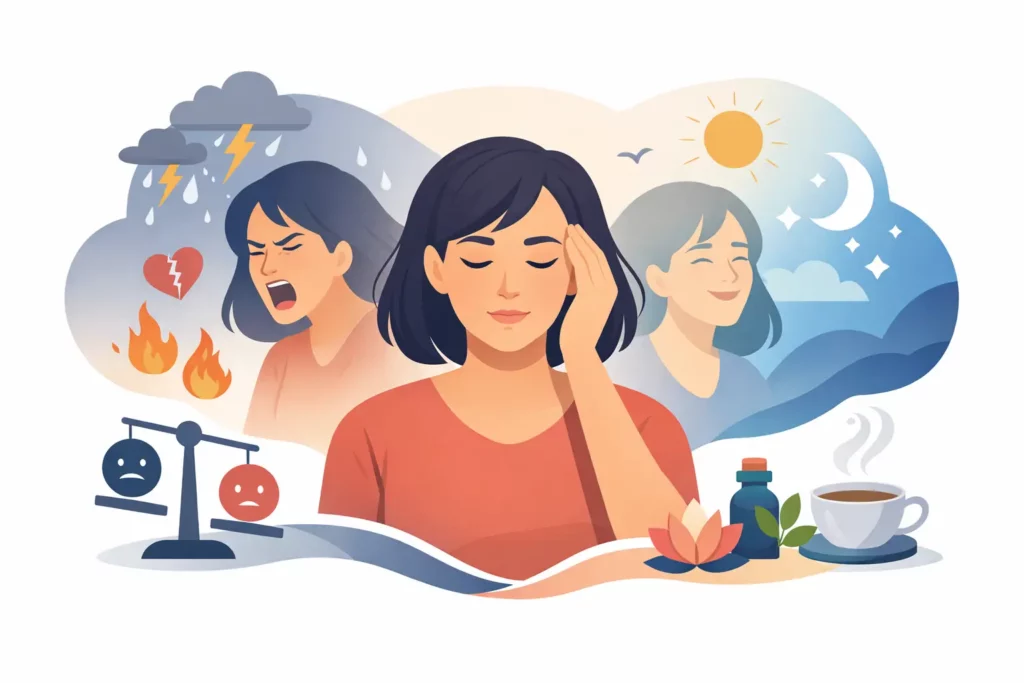
One day you feel mostly like yourself. The next, a small annoyance makes you want to cry, snap, or shut down completely. If you are searching for perimenopause mood swings help, you are not imagining it, and you are not overreacting. Mood changes during perimenopause can feel sudden and deeply personal, but they are also a common response to shifting hormones, disrupted sleep, rising stress, and the strain of carrying everyday life while your body changes.
What makes this stage especially frustrating is that mood swings are often described too vaguely. “Irritable” does not fully capture the feeling of being emotionally thin, less resilient, quick to anger, or unexpectedly tearful. Many women also notice anxiety, a sense of being overwhelmed, or feeling unlike themselves. That gap between what you are experiencing and what you have been told to expect can make it harder to ask for support.
Why perimenopause mood swings happen
Perimenopause is the transition leading up to menopause, and it can begin years before your periods stop completely. During this time, estrogen and progesterone do not decline in a smooth, predictable line. They fluctuate. Those shifts can affect brain chemicals involved in mood regulation, including serotonin and dopamine, which helps explain why emotions may feel less stable than usual.
Hormones are only part of the story. Sleep disruption often intensifies mood changes. If night sweats, insomnia, or early waking are wearing you down, your emotional bandwidth naturally gets smaller. Stress can also hit harder in midlife because many women are balancing work, caregiving, aging parents, relationships, and health concerns all at once. Perimenopause can lower the buffer you once had for handling pressure.
There is also an “it depends” piece here. Some women mainly notice irritability. Others feel more anxious or flat than moody. If you have a history of PMS, PMDD, anxiety, or depression, hormonal fluctuation may affect you more strongly. That does not mean your symptoms are inevitable, but it does mean your support plan may need to be more tailored.
What perimenopause mood swings help actually look like
The most effective support usually comes from a combination of insight, daily regulation, and medical guidance when needed. There is rarely one perfect fix. Instead, the goal is to reduce the intensity of swings, understand your triggers, and help your nervous system feel steadier over time.
Start by looking for patterns, not isolated bad days. Tracking your mood alongside your cycle, sleep, stress, and physical symptoms can be surprisingly clarifying. You may notice that irritability spikes before a period, or anxiety worsens after several nights of poor sleep. Once a pattern appears, your next step becomes clearer.
This is where calm structure helps. A simple symptom tracker can show whether your mood shifts are random or part of a repeatable hormonal rhythm. That information can also make doctor visits more productive because you bring specifics rather than trying to remember everything in the moment.
Track what changes, not just how bad it feels
You do not need an elaborate system. A brief daily note is enough if you stay consistent. Record your mood, sleep quality, menstrual cycle changes, stress level, and any physical symptoms that stand out, such as hot flashes, headaches, or breast tenderness. You are looking for connections.
For example, if your worst mood days follow fragmented sleep, sleep support may help more than pushing yourself to “be more patient.” If your mood crashes around a changing cycle pattern, that can point toward a hormonal component worth discussing with your clinician. Information reduces self-blame.
Protect sleep like it matters, because it does
Sleep loss can make every emotional shift feel sharper. Even if hormones are the root issue, poor sleep amplifies the effect. That is why sleep is one of the most practical places to begin.
A regular bedtime, lower evening alcohol intake, less late caffeine, and a cool sleep environment can help. If night sweats or insomnia are persistent, it may be time to talk with a healthcare provider rather than trying to push through. Better sleep will not solve everything, but it can lower the volume on mood swings enough that you feel more in control.
Support your nervous system before you hit a breaking point
When emotions feel volatile, many women wait until they are already overwhelmed to do something about it. It often works better to build in small stabilizing habits before the day gets away from you. That might mean a short walk, a protein-rich breakfast, stepping outside for ten minutes, or a brief breathing practice between meetings.
These are not cosmetic wellness rituals. There are ways of helping your body process stress more efficiently. Blood sugar swings, overstimulation, and constant urgency can all make perimenopausal mood changes feel worse. Gentle regulation is not a luxury here. It is part of symptom support.
When mood swings may need medical support
Sometimes lifestyle adjustments help a lot. Sometimes they help, but not enough. If mood swings are affecting your relationships, work, daily functioning, or sense of safety, you deserve more support.
Talking with a healthcare provider can help rule out related issues such as thyroid changes, iron deficiency, depression, or anxiety disorders that may overlap with perimenopause. Depending on your symptoms, treatment options may include hormone therapy, certain antidepressants, therapy, or a combination. The right choice depends on your health history, symptom pattern, and what feels manageable for you.
Hormone therapy is not the answer for everyone, but for some women it can meaningfully improve sleep, hot flashes, and mood-related disruption. For others, therapy or medication targeted to anxiety or depression may be more appropriate. This is where nuance matters. The best plan is not the most natural or the most aggressive. It is the one that fits your symptoms and reduces suffering safely.
Signs it is time to reach out sooner
If your mood changes feel severe, if you are having panic attacks, if you are crying frequently without relief, or if you feel hopeless, seek professional support promptly. The same is true if you have any thoughts of harming yourself. Perimenopause can affect mental health, but you do not have to sort that out alone.
Even if your symptoms seem less urgent, it is reasonable to ask for help if you are exhausted by feeling unlike yourself. You do not need to wait until things are unbearable to deserve care.
How to talk about mood swings without being dismissed
One of the hardest parts of this phase is explaining symptoms clearly enough to be taken seriously. Saying “I feel off” is true, but it often does not give a provider enough to work with. More specific language can help.
Try describing what happens, how often it happens, and what else is changing. You might say that you feel intensely irritable for several days before your period, that your sleep has worsened, that your cycle is now irregular, or that anxiety has increased alongside hot flashes. Concrete examples are easier to evaluate than general frustration.
It can also help to bring notes. A brief record of your mood, sleep, and cycle changes can turn a vague conversation into a useful one. That is one reason platforms like Novelle Journey center tools and symptom organization, not just information. Clarity is powerful, especially when you are trying to advocate for yourself.
Perimenopause mood swings help at home
Home support matters because mood swings do not happen in a doctor’s office. They happen on work calls, in traffic, at dinner, and at 3 a.m. when you are wide awake and feeling fragile. The goal at home is not perfect calm. It is building a little more steadiness into ordinary days.
Try making your baseline support more realistic. Eat regularly. Reduce the habits that leave you more depleted the next day. Notice whether alcohol, skipped meals, or overcommitting are making your symptoms harder to manage. Ask yourself what consistently makes a hard day slightly easier, then treat that as useful data, not wishful thinking.
It also helps to tell the people close to you what is happening. Not everyone will understand immediately, but a simple explanation can reduce friction. You might say that your hormones are shifting, your patience is lower than usual, and you are working on it. Support often begins with naming the change instead of silently absorbing it.
There may still be messy days. That does not mean you are failing. Perimenopause is a real transition, and mood changes are one of the ways it can show up. The more clearly you can see your patterns, the easier it becomes to respond with support instead of self-criticism.
You do not need to become someone new to get through this. You may just need better information, a steadier plan, and the reminder that feeling emotionally different right now does not mean you are losing yourself.
This article is for educational purposes only and is not medical advice. Always consult a qualified healthcare provider about your health.